

Florida’s DOGE Has Promoted Government Efficiency Under DeSantis
Premium domains for sale
Freedom Is Back In Style
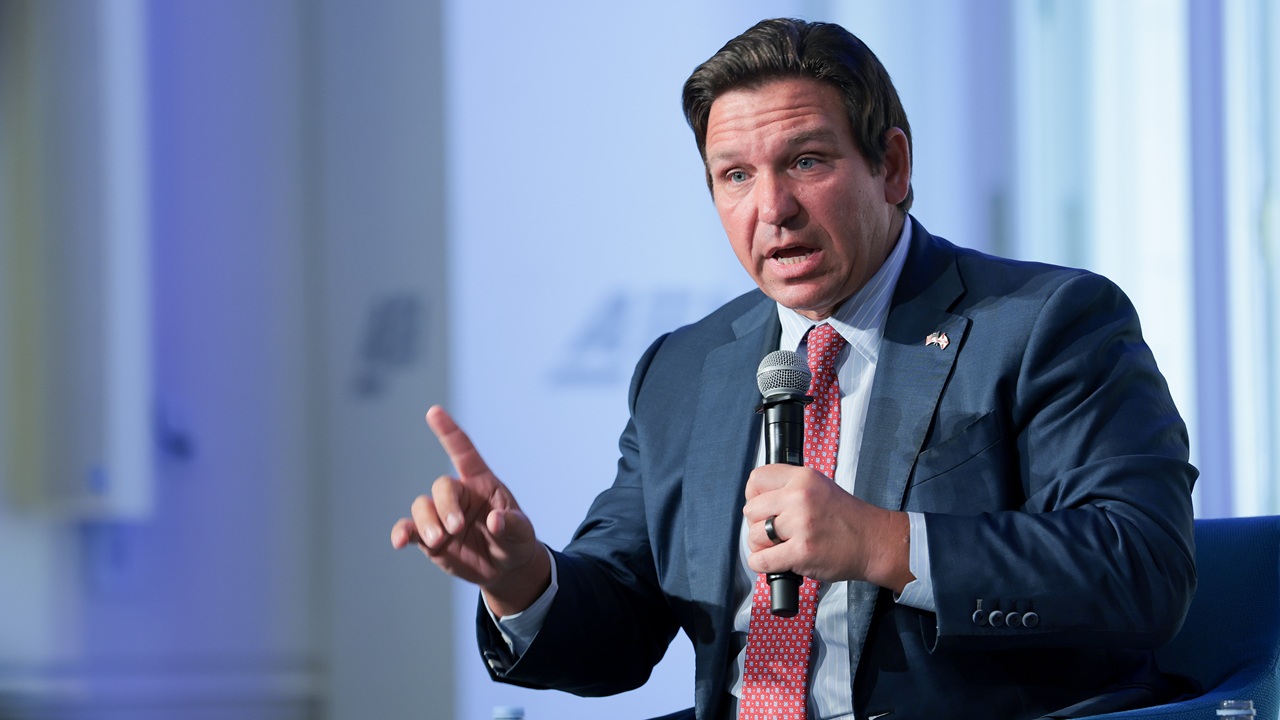
Saving taxpayer dollars by eliminating waste, fraud, and abuse is a priority at all levels of government. Floridians can rest easy knowing Gov. Ron DeSantis is dedicated to good governance and fiscal responsibility.
Freedom Is Back
In Style
Premium domains for sale
Federal spending attracts substantial media attention, but the scale of state and local spending—which handles the bulk of public services—requires systematic reviews to identify duplication and outdated programs and to hold budgets accountable.
Under DeSantis, Florida has paid down over one-third of its debt, filled its rainy-day fund, and saved taxpayer dollars through prudent measures such as restricting environmental, social, and governance investments with public funds. Most recently, he vetoed $1.6 billion from Florida’s fiscal year 2026-27 state budget.
To capitalize on this winning track record of fiscal accountability, Gov. DeSantis established the Florida Department of Government Efficiency in 2025 through Executive Order 25-44. The task force mirrors federal efforts, popularized by Elon Musk’s DOGE, by leveraging emerging AI technology to audit waste within state agencies, universities, and municipal governments.
Eric Soskin, a graduate of Harvard Law and former U.S. Department of Transportation inspector general, was appointed to lead FL-DOGE. The task force immediately identified $878 million in unused federal dollars that were then returned to the Treasury.
The Florida Legislature supported efforts through Senate Bill 2502, which authorized FL-DOGE to request information from cities, counties, and state universities and allowed financial penalties for noncompliance. With this authority, the task force conducted broad data requests, on-site reviews, and analyses of public spending records.
In January 2026, FL-DOGE released a report outlining wasteful spending by 12 local governments. The document contained jaw-dropping spending abuses varying from left-wing pet projects to poor stewardship of taxpayer dollars:
- Miami-Dade County budgeted a $9 million “art allowance” for a detention center and a $125 million climate-related shore power energy program for cruise ships.
- In Jacksonville, a capital improvement plan allocated $54 million more for bike lanes and sidewalks than for fire and rescue. Thirty million dollars in police and fire pensions were found to be invested with firms emphasizing DEI and ESG priorities.
- St. Petersburg taxpayers funded a chief equity officer and LGBTQ+ coordinator, making $219,000 and $87,000, respectively. The city even spent over $100,000 annually on LGBTQ+ Pride events.
- In Pensacola, “general government” spending grew by $2.58 million (up 40%) from fiscal year 2019-20 to 2024-25. One source is a taxpayer-funded city administrator making $200,000 annually, nearly four times the median salary.
These public findings, among others, identified waste and prompted legislative responses. For example, Senate Bill 1134 banned local governments from funding, promoting, or implementing DEI programs.
FL-DOGE additionally facilitated a series of AI pilot programs within local governments to help identify savings and further cut waste, making the case for public-private partnerships between firms and governments to promote efficiency.
In Manatee County, government officials partnered with Promota.ai to perform systems and data analyses. AI agents sifted through roughly $5 billion in public transactions and spending budgets, spotting red flags and formulating plans to recoup money or close loopholes. Efforts led to between $15-$50 million in annual savings opportunities.
Efficiency possibilities centered around identifying and canceling expired business licenses, duplicative software or licenses, and cases of blatant waste and fraud. This pilot program cost Manatee County only $4,900, meaning an average of $32 million in potential savings produces an outrageously good return on investment for taxpayers.
The Lee County school system saw similar savings potential after partnering with AI vendor Echelon. The school board had already saved $26.5 million in administrative cuts under conservative Superintendent Denise Carlin in her first two years. In collaboration with FL-DOGE partners, $5-$10 million in additional savings is projected for the year ahead.
These cases highlight viable public-private models for AI application within government to efficiently and inexpensively identify opportunities for fiscal savings. FL-DOGE’s work extends beyond initial efforts focused on weeding out waste within government spending, to newly revealed pilots working to actualize savings in all processes of government.
Florida’s approach to fiscal responsibility has positioned itself as a leader among states pursuing DOGE-style reforms. By combining traditional oversight, AI, and legislative tools, the governor’s office has advanced transparency and accountability—consistent with the state’s broad record of prudent governance.
For states seeking similar models to reduce budgetary waste, they should look to Florida and DeSantis for the DOGE playbook on how to win.
More from this network:
Domains for Sale · GOTPeople.org · TheDSAPlatform · The Truth About Socialism
What's Your Reaction?
 Like
0
Like
0
 Dislike
0
Dislike
0
 Love
0
Love
0
 Funny
0
Funny
0
 Wow
0
Wow
0
 Sad
0
Sad
0
 Angry
0
Angry
0

I am just an average American. My teen years were in the late 70s and I participated in all that that decade offered. Started working young, too young. Then I joined the Army before I graduated High School. I spent 25 years in, mostly in Infantry units. Since then I've worked in information technology positions all at small family owned companies. At this rate I'll never be a tech millionaire. When I was young I rode horses as much as I could. I do believe I should have been a cowboy. I'm getting in the saddle again by taking riding lessons and see where it goes.
Premium domains for sale














Comments (0)