

George Washington’s Bravery Reminds Us America Is Worth Fighting For
Premium domains for sale
Freedom Is Back In Style
This article is part of Upstream, The Daily Wire’s new home for culture and lifestyle. Real human insight and human stories — from our featured writers to you.
Freedom Is Back
In Style
Premium domains for sale
***
You’ve probably seen the viral slogan that pays homage to one of the finest displays of all-American spunk in our history.
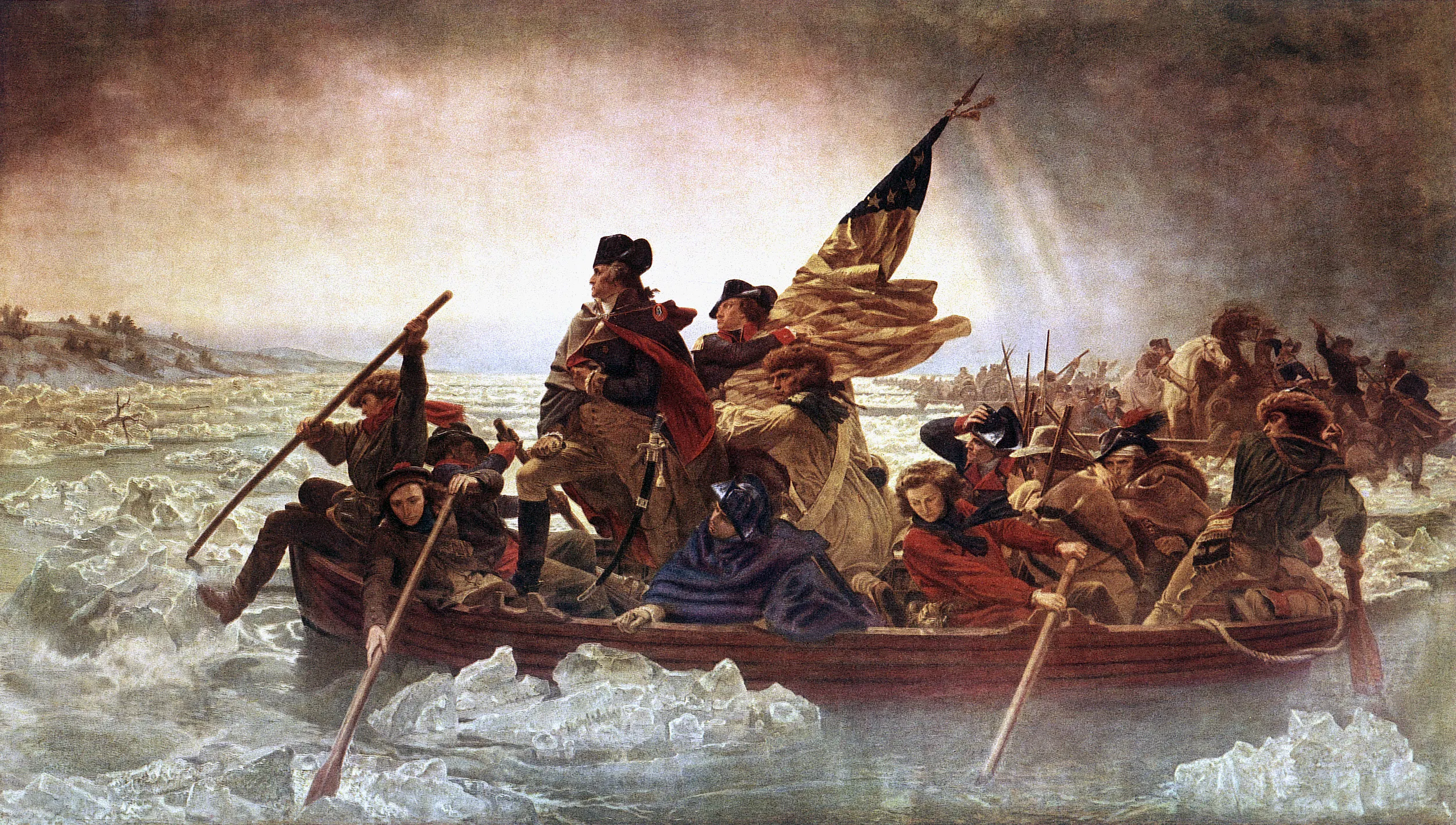
The phrase “Americans: We’ll cross a frozen river to kill you in your sleep on Christmas. Not kidding. We’ve done it before” can be found on mugs, t-shirts, and memes. The humorous mantra describes when General George Washington led his struggling army across the Delaware River in the freezing cold to launch a surprise attack on Hessian troops stationed in Trenton, New Jersey, on Christmas night in 1776. It was a pivotal moment in the Revolutionary War, when the future of our fledgling nation was grim and unclear.
In the weeks leading up to that surprise attack, Washington and his men experienced a series of defeats from the British in New York, forcing the Continental Army to retreat across New Jersey onto the shores of the Delaware River in Bucks County, Pennsylvania. The Continental Army was demoralized, greatly outnumbered by the British, and in desperate need of new enlistments.
In a letter to his brother written on December 18, 1776, Washington described how the British “pushed us from place to place till we were obliged to cross the Delaware [into Pennsylvania] with less than 3,000 men fit for duty” and shared his fears of failure.
“If every nerve is not strained to recruit the New Army with all possible Expedition I think the game is pretty near up,” Washington wrote. “We are at present in a very disaffected part of the Provence, and between you and me I think our affairs are in a very bad way.”
The brutal cold of Pennsylvania’s winter was rolling in, and Washington’s men lacked food, shelter, and shoes. Washington and his army weren’t receiving needed support from “disaffected” locals who focused on their own lives and remained apathetic toward America’s campaign for independence.
“These people would yield to, but not rally to, whoever held power. They had no strong political attachments and preferred to go about their daily lives with as little disruption as possible,” describes Kimberly McCarty on the Washington Crossing Historic Park website.
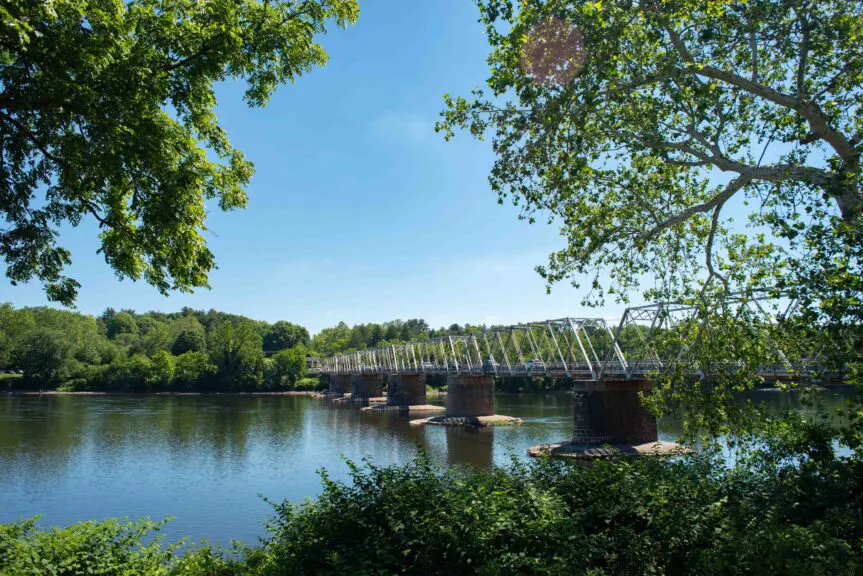
Photo by Meg Brock
The effort for independence needed a sizable morale boost if the nation was to survive. To garner support for the war effort and encourage the Continental Army, Thomas Paine, an English-American revolutionary writer, published the first pamphlet in a series called “The American Crisis” on December 19, 1776.
“These are the times that try men’s souls; the summer soldier and the sunshine patriot will, in this crisis, shrink from the service of his country; but he that stands it now, deserves the love and thanks of man and woman,” Paine wrote. “Tyranny, like hell, is not easily conquered; yet we have this consolation with us, that the harder the conflict, the more glorious the triumph. What we obtain too cheap, we esteem too lightly: It is dearness only that gives everything its value.”
Washington was so moved by Paine’s words that he had “The American Crisis” read to his troops in Bucks County on December 24, 1776, as they prepared for the surprise attack on Trenton.
The next day, while others celebrated the merriment of Christmas, Washington gathered his army and began crossing the Delaware River during a harsh winter storm. Unlike the “disaffected,” these men were willing to put aside their own comfort, safety, and livelihoods to secure American independence. It took hours to get all of the soldiers across the ice-filled river before marching nine miles to Trenton in the early morning for a surprise attack.
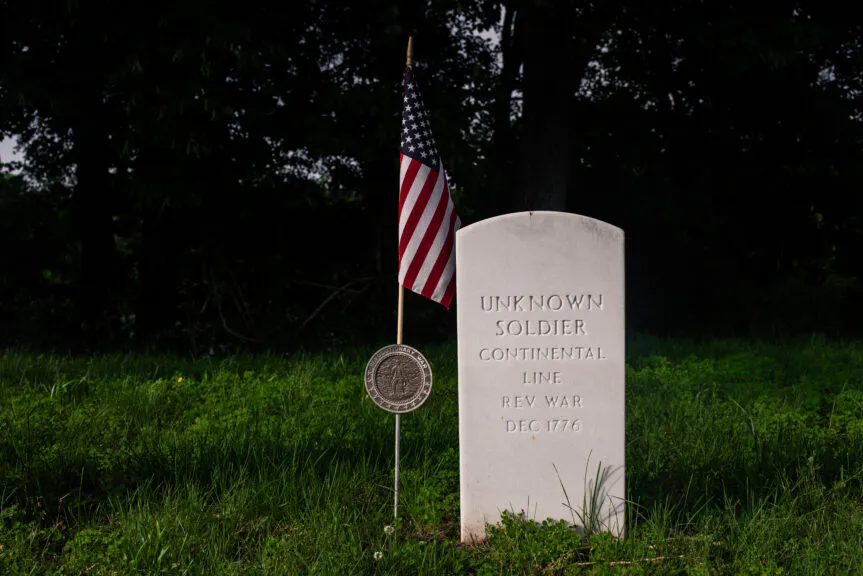
Photo by Meg Brock
I grew up near Washington’s Crossing and have walked the trails on the Jersey side of the Delaware River that Washington and his men may have taken on their journey to Trenton. It’s hard to even imagine how uncomfortable, dangerous, and difficult that trek must have been during a winter storm without proper shoes or clothing.
Against all odds, Washington’s army had a miraculous victory in Trenton. It was a turning point in the war that changed the course of our nation.
Washington’s Crossing became an iconic symbol of the American spirit when it was immortalized by the German-American painter Emanuel Leutze. Leutze’s painting of Washington and his men heroically weaving through chunks of ice to cross the Delaware River has been a fixture in popular culture for 175 years. The painting is currently hung at the Metropolitan Museum of Art, but you don’t have to travel to New York City to see its likeness. It can be found on the back of a New Jersey State Quarter, is featured in TV shows, and was recently recreated by legendary Philadelphia baseball mascot the Philly Phanatic.
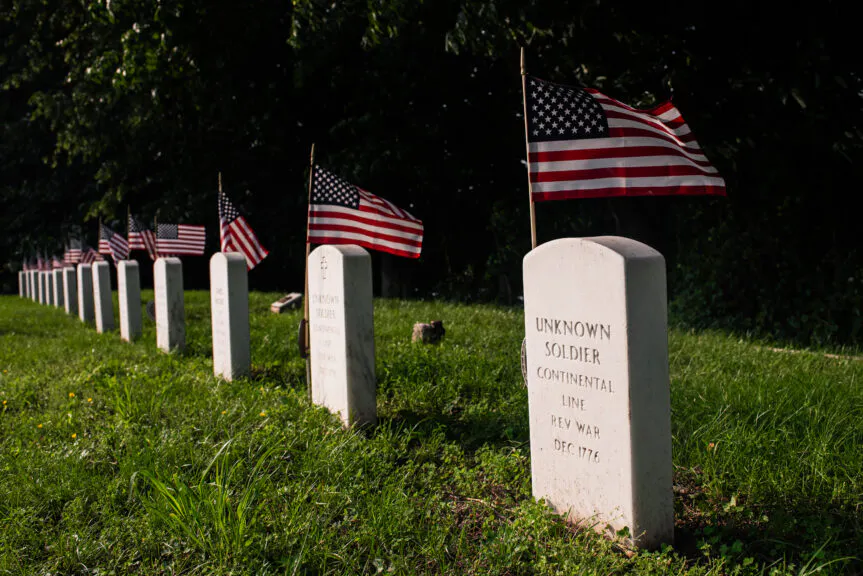
Photo by Meg Brock
More from this network:
Domains for Sale · GOTPeople.org · TheDSAPlatform · The Truth About Socialism
What's Your Reaction?
 Like
0
Like
0
 Dislike
0
Dislike
0
 Love
0
Love
0
 Funny
0
Funny
0
 Wow
0
Wow
0
 Sad
0
Sad
0
 Angry
0
Angry
0

I am just an average American. My teen years were in the late 70s and I participated in all that that decade offered. Started working young, too young. Then I joined the Army before I graduated High School. I spent 25 years in, mostly in Infantry units. Since then I've worked in information technology positions all at small family owned companies. At this rate I'll never be a tech millionaire. When I was young I rode horses as much as I could. I do believe I should have been a cowboy. I'm getting in the saddle again by taking riding lessons and see where it goes.
Premium domains for sale


















Comments (0)