

Hollywood’s Worst Nightmare Is Already Here
Premium domains for sale
Freedom Is Back In Style
This article is part of Upstream, The Daily Wire’s new home for culture and lifestyle. Real human insight and human stories — from our featured writers to you.
Freedom Is Back
In Style
Premium domains for sale
***
Last weekend marked a historic turning point at the box office that should give every normal American a reason to cheer. Two lower-budget horror films rooted in YouTube and online culture, “Obsession” and “Backrooms,” dominated the charts and delivered a powerful rebuke to Hollywood’s tired establishment. And just months before, independent movie “Iron Lung” did the same.
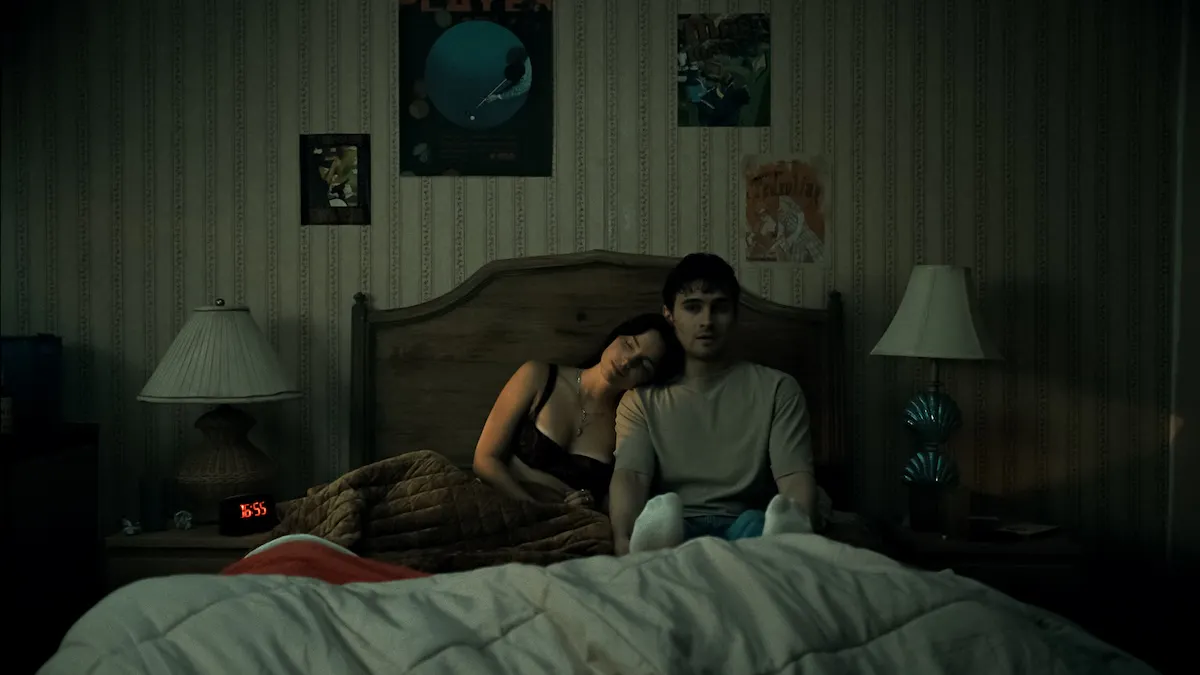
“Obsession,” directed by 26-year-old Curry Barker, is a supernatural psychological thriller about a hopeless romantic who makes a Faustian bargain to win his crush’s heart, only for the wish to spiral into a terrifying nightmare. Shot in just 20 days on a shoestring budget under $1 million, the film opened to $17.2 million and then grew an impressive 39% in its second weekend to $23.9 million. As of early June 2026, it has crossed $105 million domestically and $150 million worldwide. Barker previously honed his skills on YouTube via “That’s a Bad Idea,” teaming up on a successful horror short called “The Chair.”
“Backrooms,” helmed by 20-year-old Kane Parsons, adapts his viral internet creepypasta into a mind-bending found-footage horror experience where people fall through reality into endless, unsettling yellow rooms filled with existential dread and lurking horrors. Built from Parsons’ massively popular YouTube series, the film cost around $10 million and opened to a staggering $81 million domestically and $118 million globally, setting records for A24 and making Parsons the youngest director ever to land a number one movie.
“Iron Lung,” written, directed, starred in, and self-financed by popular YouTuber Markiplier (Mark Fischbach), is a claustrophobic sci-fi horror thriller based on the indie video game. It follows a convict piloting a rickety submarine through an ocean of blood on a distant moon in a desperate search for survival. Made for roughly $3 million, the film opened to $17.8 million domestically and has grossed over $51 million worldwide, proving a massive success for a self-distributed indie project.
Together, these YouTube-bred films crushed bigger studio fare and proved that fresh, unfiltered storytelling can capture audiences sick of being preached to. This success came from normal dudes focused on craft, hard work, and actual storytelling over identity politics. All three tested material directly with real viewers and improved based on honest feedback and hard data. They wisely skipped the conformity enforcers and built loyal audiences from the ground up through merit and persistence.
YouTube success forced Hollywood to pay attention. “Obsession” triggered a fierce bidding war and landed with Focus Features and Blumhouse. “Backrooms” earned A24’s full theatrical backing and the support of iconic horror producer James Wan. “Iron Lung” succeeded largely through grassroots fan power and self-distribution, in which Markiplier’s audience sent letters directly to theaters demanding that they play the movie and promising to show up in big numbers.
The gatekeeper problem
Sundance and the rest of the festival circuit have long been elitist echo chambers pushing progressive orthodoxies, identity dramas, climate hysteria, and attacks on masculinity and traditional values. The result? Taxpayer-subsidized flops that alienated everyday Americans and accelerated Hollywood’s theatrical decline.
Barker, Parsons, and Markiplier wisely skipped that entire rigged game. YouTube democratizes storytelling through algorithms that reward watch time, talent, and effort, not politics or DEI checklists. Creators can experiment cheaply using phones, free software, and online tutorials while testing ideas in public. Viewers respond instantly, and the analytics are brutally honest. What emerges is a system that rewards material people want to watch, not whatever happens to satisfy an ideological trend or leftist activism. By the time creators arrive at studios, they often already own their IP and bring a loyal audience with them.
Anticipating the critiques
Of course, the gender goblins will dismiss all this as “privilege” or “regression.” The goofs over at SlashFilm whined that the pipeline only works for “cishet white guys” due to algorithmic biases and other excuses. A Defector review sneered at these “YouTubers-turned-feature-horror-directors” as “barrel-scraping trend-chasing” with derivative work lacking depth.
That attitude only exposes how disconnected they are from normal people. Audiences want escapism, tension, and fun. YouTube’s transparent metrics prove anyone can compete if he has the drive. Entry barriers have never been lower, rewarding persistence over a victimhood mindset. The “anti-intellectual” smear collapses when their theory-obsessed approach keeps producing expensive flops that ignore what real Americans want.
Virality proved massive demand before any studio help arrived. This is authentic public validation, not insider favoritism.
A call to action for conservative filmmakers
This moment is bigger than three horror movies. It is a blueprint for taking back cultural ground that has been surrendered for far too long. Conservatives have complained about Hollywood’s leftward bias for decades. Now the path to change is clear and open.
Start simple: buy tickets for movies like “Obsession,” “Backrooms,” and “Iron Lung,” bring friends, and talk about them afterward. Markets notice momentum. Every dollar spent on entertainment that respects the audience starves the propaganda machine and rewards creators who prioritize story over sermons. These young directors bring raw ingenuity and a sharp instinct for what resonates with Gen Z, without the propaganda.
But passive support is not enough. It is time for conservatives to create. Young men and women with talent, faith, traditional values, and a strong work ethic should pick up cameras, write scripts, and launch YouTube channels. Experiment fearlessly. Test ideas with real audiences instead of seeking approval from leftist gatekeepers. The tools have never been cheaper or more accessible.
Barker, Parsons, and Markiplier did not wait for institutional permission; they built audiences first and forced the industry to notice. Conservatives who care about culture should think the same way. Start channels that celebrate Western values. Make short films that promote individual responsibility. Find collaborators who care about craftsmanship and conviction. Over time, real creative networks form — and eventually, so do lasting institutions.
Pursue excellence relentlessly. Reject victimhood and mediocrity. The cultural battlefield belongs to those willing to show up and compete. If conservatives commit to creating compelling art at scale, we can reclaim the stories that shape the next generation.
The opportunity is here already; in many ways, the rebellion has already begun.
***
Albert Hanover is the pseudonym of a film executive who requested anonymity for this article. He has worked in Hollywood for nearly three decades.
More from this network:
Domains for Sale · GOTPeople.org · TheDSAPlatform · The Truth About Socialism
What's Your Reaction?
 Like
0
Like
0
 Dislike
0
Dislike
0
 Love
0
Love
0
 Funny
0
Funny
0
 Wow
0
Wow
0
 Sad
0
Sad
0
 Angry
0
Angry
0

I am just an average American. My teen years were in the late 70s and I participated in all that that decade offered. Started working young, too young. Then I joined the Army before I graduated High School. I spent 25 years in, mostly in Infantry units. Since then I've worked in information technology positions all at small family owned companies. At this rate I'll never be a tech millionaire. When I was young I rode horses as much as I could. I do believe I should have been a cowboy. I'm getting in the saddle again by taking riding lessons and see where it goes.
Premium domains for sale











Comments (0)