

Homer’s ‘The Odyssey’ Is About Duty, Loyalty, and Family
Premium domains for sale
Freedom Is Back In Style
Editor’s note: This is a lightly edited transcript of today’s video from Daily Signal senior contributor Victor Davis Hanson. Subscribe to our YouTube channel to see more of his videos.
Freedom Is Back
In Style
Premium domains for sale
This is Victor Davis Hanson for the Daily Signal.
Christopher Nolan, the renowned British director, has a new film coming out, another remake of The Odyssey by Homer. It’s supposed to come out July 17.
Everybody’s been talking about it, not because they know what’s in it or they’re trying to guess how he treats this age-old epic, but because one of the stars, Lupita Nyong’o, and forgive me if I mispronounced her name, has been very vocal that, as she views the script and Homer’s work himself, there’s a matter of feminism that Homer did not highlight women sufficiently.
Homer wrote The Odyssey, remember, around 700 to 650 BC at the dawn of the Greek city-state. It’s the second of his two epics, The Iliad and The Odyssey, and it’s a much different epic than The Iliad, which takes place in about 11 weeks on the plain of Troy.
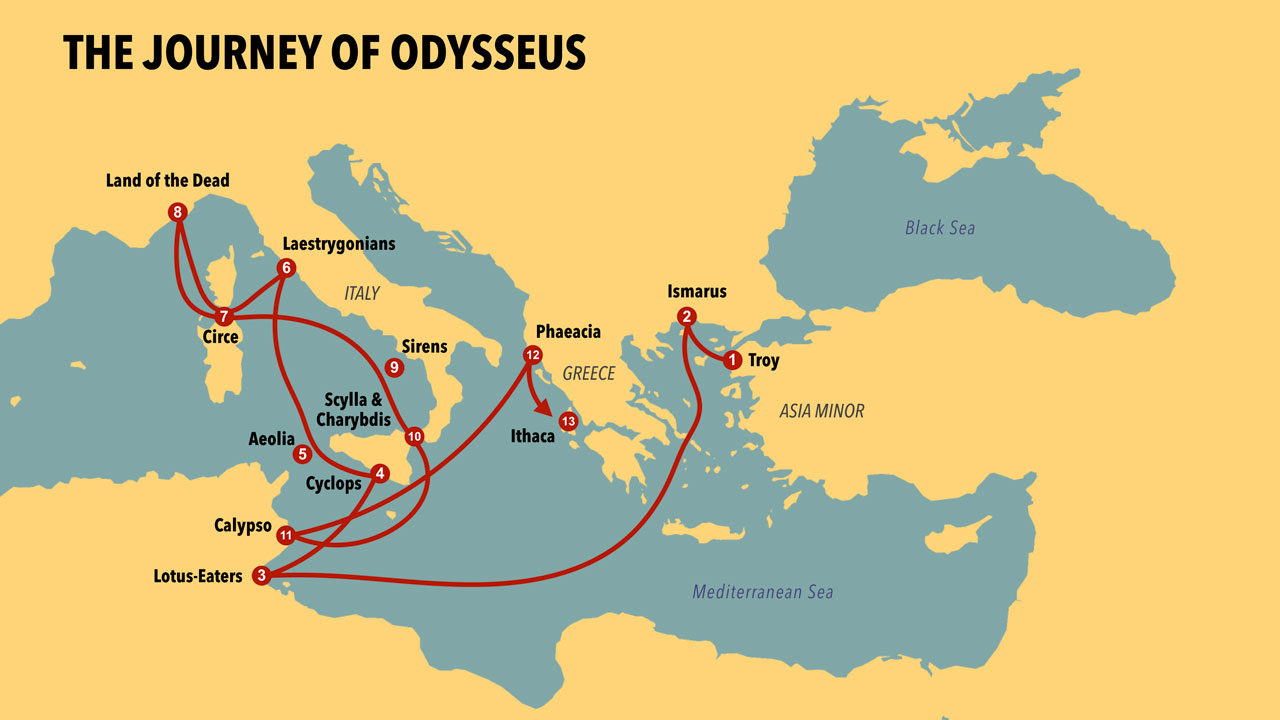
This is a panoramic view of the Mediterranean and traces the 20-year odyssey of the hero Odysseus to get back from Troy to the northeastern island off the coast of Greece, Ithaca.
What she said was that there was not a sufficient portrayal of women or they were not powerful enough. I couldn’t understand that. I taught The Odyssey for 20 years in English at the California State University system to a variety of students, probably 2,000 students in humanities courses, as well as a much smaller number in Greek.
And one thing one comes away with is that there’s no literature anywhere in the world at that time that has been more deferential or more interested in women.
Remember that Odysseus is trying to get home to his palace as king of Ithaca, and his wife Penelope is there for 20 years, and soon the suitors, and these are people who want to marry her for the purposes of expropriating the kingdom.
She’s got to deal with them. She has no enforcer. The men of Ithaca have all gone with Odysseus to Troy, and they’ve all been lost, and their families are angry. Everybody’s mad at Odysseus. He’s not there. The suitors then represent this anger, and they want to take over, one of them at least does, the palace.
But she brilliantly puts them off in hopes that someday he’ll come back. She weaves every evening and says that when she’s done with her shawl, blanket, tapestry, then she’ll marry one.
Then she unweaves it during the night, and they don’t catch on for a long, long time. And she sort of organizes the resistance, or she has loyal servants and people on Ithaca that are all waiting for Odysseus to come.
So when he comes, the suitors are in his house, but they haven’t taken it over thanks to Penelope.
He also is waylaid by two supernatural immortals. One is Circe the witch. I guess you’d call her a witch. She’s a sorceress, and she meets Odysseus and his crew on her own private island. They’re very rambunctious, her crew is.
They’re kind of coarse and crude. They drink. And she turns them into swine, pigs. Kind of a commentary on what women think of rowdy men that are empowered like Circe. And then she makes up with Odysseus and tries to help him. She becomes his lover. But the point is that she’s not a typical Greek woman of 650 BC.
She’s very powerful. He meets another woman, Calypso. He’s there on her island for seven years, and she’s a divine figure as well, and she makes love with him. She attends to his needs. She’s very unhappy when the god Hermes tells her that he must leave; it is now the will of Zeus to go back.
But she’s also a powerful character, as is the goddess Athena, who is the patron saint of Odysseus, and she makes numerous appearances in the book.
And what you get from her is even though she’s not quite Zeus, by her wisdom, courage, and influence, she’s really one of the two or three most powerful of the gods on Olympus, and she alone makes it possible for Odysseus to get home.
If you look at Helen, Helen is the one that supposedly caused the Trojan War because she ran off from her husband Menelaus with the kind of player Paris, and she’s known as the most beautiful woman in the world, the most powerful woman because of her beauty, and she’s disrupted the entire course of what would then be mythical history.
In actuality, it may be reminiscent of a Mycenaean campaign over to the coast of Asia Minor.
So there’s all sorts of characters in The Odyssey that are female, and they represent all aspects of femininity, from domestic loyalty to self-reliance to defining your own sexuality, all of them.
There’s even monsters such as Scylla, the monster Scylla, that kind of embodied angry women or the deadly feminine. So there are all aspects.
I don’t understand why Lupita Nyong’o said that she didn’t really feel that women were appreciated because then she admitted she’d never read The Odyssey.
How can you go in the United States to a premier college and then get a master’s from Yale and not have ever read The Odyssey?
And if not reading The Odyssey and reading it for the first time, you don’t think you would weigh in in advance of the movie to sort of say that women don’t play enough of a role?
The other issue very quickly is people were very controversial because she is Black, and of course Helen is described by Homer as fair, fair-armed, beautiful. And you get the impression from Homer’s description she’s white, as are most of the characters in The Odyssey.
The Iliad has the Ethiopians. They’re noble, and that’s a word in Greek which means sun-faced, meaning because they’re in Africa, they’re a little darker, but they’re always treated with respect and honor.
But people have complained, why are you having a Black character play a so-called white role? That used to be called character appropriation.
I don’t think it really matters unless the race is central to the character or, by changing the race or radically changing the appearance or the nationality or the ethnicity, it changes the intent of the author.
Historically, the same thing would be true. So I don’t think it would be wise to have a Black Abraham Lincoln, nor if you have a biopic of Martin Luther King Jr. to have a white person play Martin Luther King.
In the past, people have been criticized. We used to see Charles Bronson and Burt Lancaster as Indian chiefs. We saw Audrey Hepburn in one Western playing an Indian. That was always criticized. Sir Laurence Olivier played Othello even though he was not Black.
But I think people now, the idea is that white characters should not play Black characters, but Black characters should play white characters. It’s kind of reminiscent of cultural appropriation. If you’re white and you have blond hair, you probably shouldn’t have dreadlocks. If you’re Black and you want to wear a blond wig, it’s OK.
But by and large, we’re not going to worry about the color of the actress or actor. It’s how well these characters appear on the screen and to what degree they’re good or bad actresses next week when we see it.
Finally, what we all should be happy about is that you actually see a great work of literature put onto the screen. And we’ve had other versions. Kirk Douglas was Odysseus in one movie. We’ve had a recent one from Italy.
One of the things that is a little bit bothersome: This is the national epic of the Greek people. We’ve had all of these wonderful Greek actors for years that have been very successful in Hollywood and European film. There’s a number of them on the stage.
So why in the world, if you really wanted to portray the national epic of Greece, wouldn’t you find a Greek Helen or a Greek Penelope?
And I think that’s kind of tragic. It would be almost as if a director was making another version of How the West Was Won and there were no Americans in it. There were all Europeans or Africans or Asians, but no American actors, even though that was our past.
And so the same thing is true. That would be my only limitation, but I’m suspending judgment, of course, because we haven’t seen it.
So watch for the issue coming up in the media of cultural appropriation. Can one person of one race play a character of another race? And what is the role of women in The Odyssey? But these are all peripheral issues.
In finishing, the real issue is there’s a hero who fought at Troy. He offended the gods. They’re trying to punish him. And he wants to get back to his family, his wife, and his son.
And it takes him 10 years on the plain of Troy to fight. And when the war is over and he should go home, like most of the Greek heroes, Ajax and Agamemnon, they’re waylaid. Bad things happen to them. They get on the wrong side of the gods.
And we have a 10-year odyssey. And it’s brilliantly portrayed through flashbacks. And you’re going to meet Cyclops. You’re going to meet the Laestrygonians, the Lotus Eaters, Circe, Calypso, all of these mythical monsters that try to stop him.
And they cannot stop Odysseus. He wants to get home. And the suitors and the people at Ithaca cannot stop Penelope. She wants to preserve the kingdom in confidence that he will get home.
So in essence, it’s a monumental love story about duty, loyalty, and family.
We publish a variety of perspectives. Nothing written here is to be construed as representing the views of the Daily Signal.
More from this network:
Domains for Sale · GOTPeople.org · TheDSAPlatform · The Truth About Socialism
What's Your Reaction?
 Like
0
Like
0
 Dislike
0
Dislike
0
 Love
0
Love
0
 Funny
0
Funny
0
 Wow
0
Wow
0
 Sad
0
Sad
0
 Angry
0
Angry
0

I am just an average American. My teen years were in the late 70s and I participated in all that that decade offered. Started working young, too young. Then I joined the Army before I graduated High School. I spent 25 years in, mostly in Infantry units. Since then I've worked in information technology positions all at small family owned companies. At this rate I'll never be a tech millionaire. When I was young I rode horses as much as I could. I do believe I should have been a cowboy. I'm getting in the saddle again by taking riding lessons and see where it goes.
Premium domains for sale



















Comments (0)