

How Jamie Foxx made Tourette's advocate the latest Hollywood villain
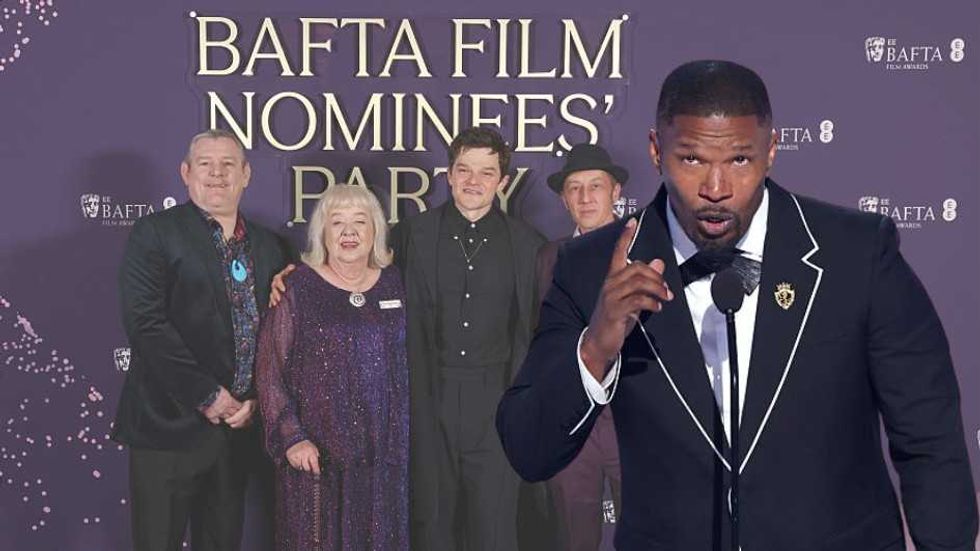
Here in America, we tend to treat racism as our defining moral emergency. Careers collapse over it, and institutions reorganize around preventing it.
Live Your Best Retirement
Fun • Funds • Fitness • Freedom
Yet we seem unable to distinguish deliberate racial animus from the mere presence of a forbidden word. The recent ugly incident at the BAFTAs — and its even uglier aftermath — makes this painfully clear.
Forced into public contrition to satisfy a ritual demand for outrage.
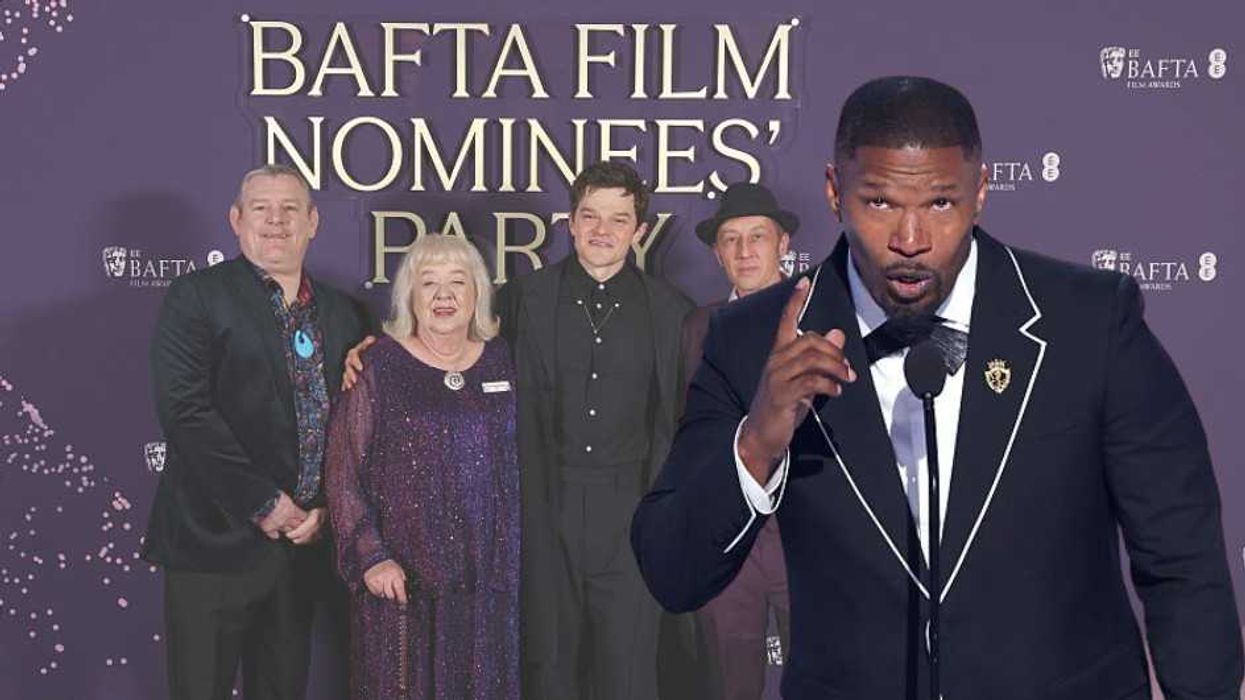
One of the films honored at this year's ceremony was "I Swear," a dramatized biography of Tourette syndrome advocate John Davidson. In attendance was Davidson himself.
Disruptive and involuntary
Tourette syndrome is a neurological disorder marked by involuntary motor and vocal tics that range from mild movements to disruptive speech; Davidson suffers from coprolalia (essentially Latin for "sh**t-talking") — the rare but notorious form involving uncontrollable obscenities that, in the popular imagination, has come to stand in for the entire condition.
"I Swear" portrays the trials of living with such a condition, which at one point led Davidson to attempt suicide by walking into a river. It depicts a man who has been bullied, punched, and otherwise assaulted throughout his life because he can’t stop himself from saying the wrong thing at the wrong time.
Even in his moment of triumph — with the film about his life winning five awards, including Best British Film, Best Actor, and Best Screenplay — Davidson's Tourette syndrome came back to haunt him.
'The opposite of what I believe'
Throughout the evening, Davidson experienced multiple vocal tics. While actors Michael B. Jordan and Delroy Lindo were presenting an award, one of those involuntary outbursts included the N-word. As Davidson would later tell Variety, he “ticked perhaps 10 different offensive words” that night; the racial slur was one among several.
Davidson added, “What you hear me shouting is literally the last thing in the world I believe; it is the opposite of what I believe. The most offensive word that I ticked at the ceremony … is a word I would never use and would completely condemn if I did not have Tourette’s.”
The audience had been warned in advance that vocal tics, including involuntary swearing, could occur.
Insult before injury
Host Alan Cumming addressed the incident from the stage, asking for “understanding” and apologizing “if you were offended.” Not long after, Davidson chose to leave the auditorium, later explaining that he was aware that his condition was causing distress.
But in the aftermath of the incident, some black Hollywood elites were quick to ignore the medical context in favor of moral condemnation. Actor Wendell Pierce wrote on X that “it doesn’t matter the reasoning for the racist slur,” insisting that “the insult … takes priority.”
Jamie Foxx, commenting on an Instagram post, was blunter: “Nah, he meant that s**t."
"Sinners" production designer Hannah Beachler, who attended the ceremony, argued that the apology fell short, calling it a “throw away” response.
But the awkwardness of Alan Cumming’s on-stage apology — “if you were offended” — reflected an unusual moral dilemma To apologize unequivocally on Davidson’s behalf would have implied agency and culpability, as though a neurological disorder were a character defect. Yet to say nothing would have signaled indifference to the inflammatory power of the word.
Davidson himself drew the line the following day. “Whilst I will never apologize for having Tourette syndrome,” he said, “I will apologize for any pain, upset and misunderstanding that it may create.”
Permissible sin
Davidson was a careful to separate regret from guilt. But such nuance is apparently not possible where this particular slur is concerned. In America, we are expected to believe that uttering the N-word — regardless of intent or context — is one of the worst moral assaults any person can commit.
And so a man whose disorder makes him incapable of controlling certain outbursts was forced into public contrition to satisfy a ritual demand for outrage. The reaction was less about justice than about reaffirming the hierarchy of permissible sin.
You could ask for no better illustration of the kind of race-based narcissism our country has encouraged in attempting to atone for its genuinely racist past. By treating black Americans as permanently wounded and permanently aggrieved — so that even a wealthy and powerful celebrity like Foxx can feel victimized by someone like Davidson — we see them not as individuals, but as almost sacred symbols.
This attitude is dehumanizing. It denies agency. We all know that Foxx's accusation is wrong; Davidson didn't "mean" to offend. But there's a sense in which we assume Foxx himself "can't help" but react the way he did. After all, this is the N-word we're talking about.
This is the same infantilizing impulse that makes honest discussion about persistent dysfunction in parts of the black community — crime, family instability, educational failure — feel radioactive.
RELATED: Tourette advocate's BAFTA slur gets no empathy from stars
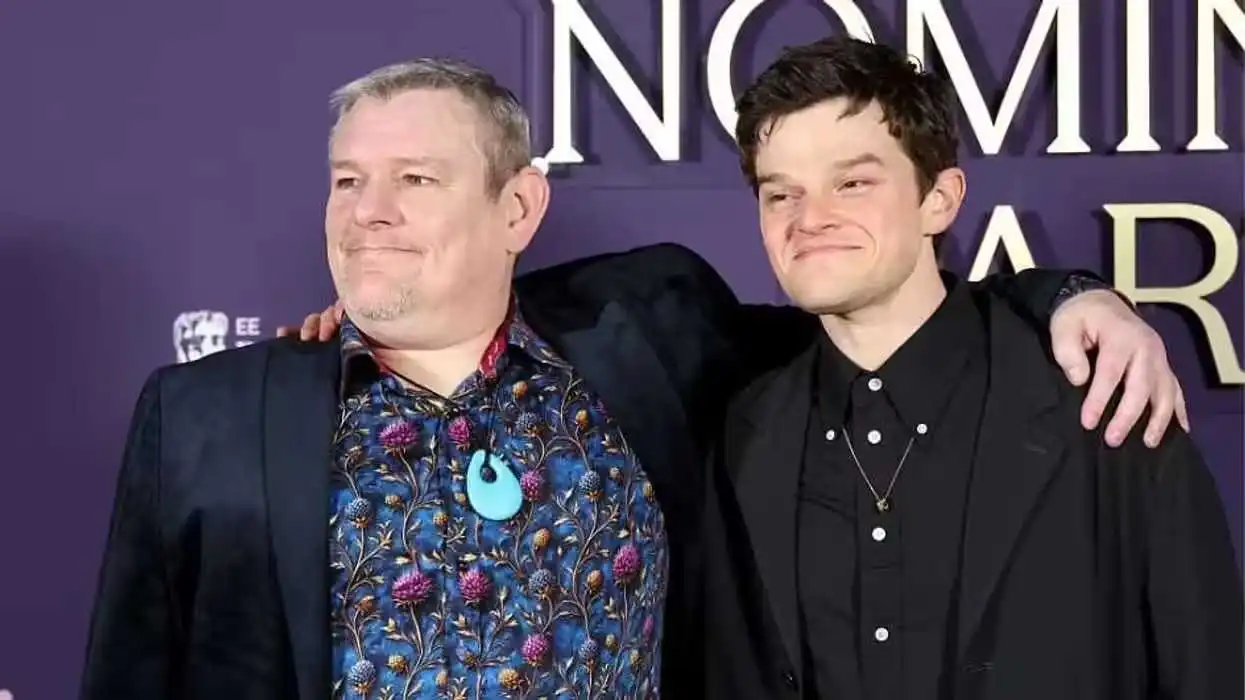 Aurore Marechal/Getty Images
Grandiose traits
The theory seems to be that black people have been so oppressed by pervasive "systemic racism" that it isn't possible to hold them morally accountable in the same way you would anyone else. We've spent the last decade hearing about the "white supremacy" at the heart of America. This isn't just an opinion — it's actual science!
But there is some other science that complicates this story of permanent psychic injury. Decades of research have found that black Americans report higher average levels of self-esteem than white Americans.
And some research even shows that this can tip into pathology. A 2011 study in the Journal of Personality Research titled “Racial Differences in Narcissistic Tendencies” found higher self-reported levels of certain grandiose narcissistic traits among black participants.
Tourette’s-induced slurs are, of course, are not a widespread occurrence. But it's worth noticing how the BAFTA incident strips the issue to its essentials. A mature society should be able to hold two ideas at once: that racial slurs are degrading and historically charged and that neurological conditions are real and mitigating.
If we can't, we have a deeper problem. The woke era's tendency to see racism everywhere means our current moral reflexes are less about serving truth than they are about protecting a narrative. The more we allow this collective delusion to take hold, the harder it will be to speak plainly to each other. A society that cannot speak honestly about motive and meaning will not remain merely confused; it will grow brittle. And brittle things tend to break under pressure.
What's Your Reaction?
 Like
0
Like
0
 Dislike
0
Dislike
0
 Love
0
Love
0
 Funny
0
Funny
0
 Wow
0
Wow
0
 Sad
0
Sad
0
 Angry
0
Angry
0

I am just an average American. My teen years were in the late 70s and I participated in all that that decade offered. Started working young, too young. Then I joined the Army before I graduated High School. I spent 25 years in, mostly in Infantry units. Since then I've worked in information technology positions all at small family owned companies. At this rate I'll never be a tech millionaire. When I was young I rode horses as much as I could. I do believe I should have been a cowboy. I'm getting in the saddle again by taking riding lessons and see where it goes.









Comments (0)