

Insane Ruling Just Cleared A Path For The Creepiest AI Use Yet
Premium domains for sale
Freedom Is Back In Style
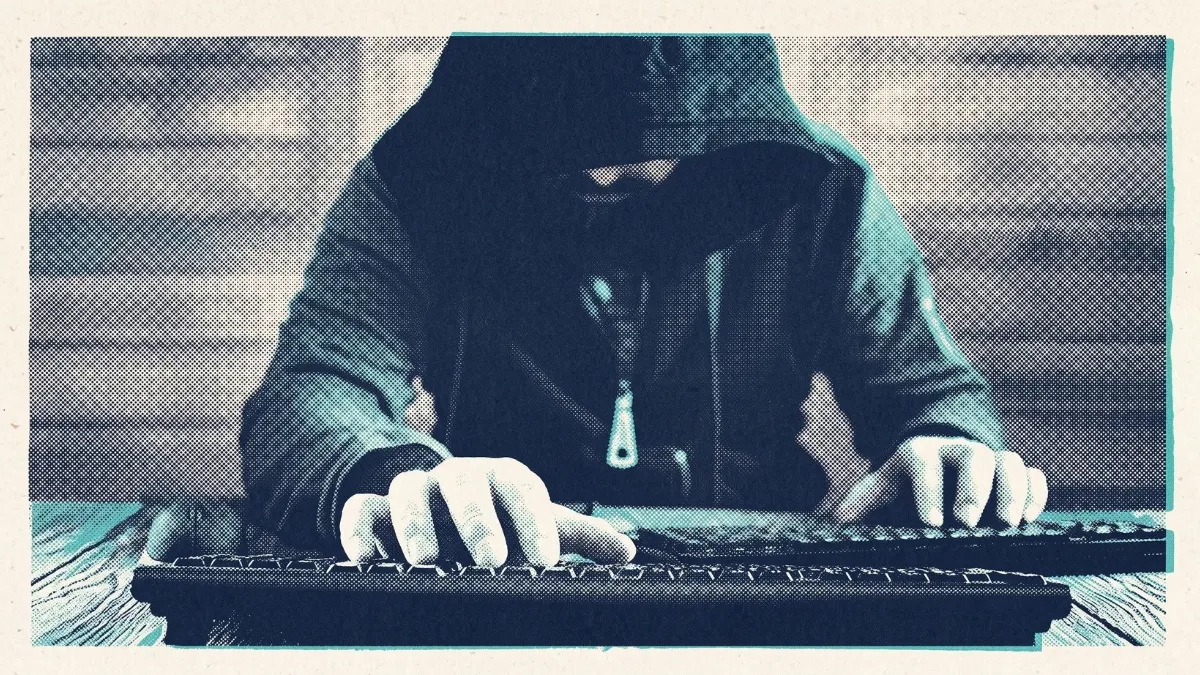
You might like to think your texts or DMs are at least somewhat private when you communicate with people on social media platforms like Instagram. But they’re actually monitored automatically for any signs of criminal activity — particularly criminal activity that might endanger children.
Freedom Is Back
In Style
Premium domains for sale
Meta, the parent company of Instagram and Facebook, has been in the news lately for allowing Instagram to become a haven for child predators, as you may have seen. So they’ve implemented all kinds of monitoring systems and algorithm changes, agreed to settlements, etc.
That’s why, in October 2023, Meta was able to alert the feds about a 42-year-old man in Wisconsin named Steven Anderegg. And in this case, they determined that Anderegg was transmitting apparent child pornography to another user.
Very quickly, the feds determined that Anderegg was a software engineer with a background in AI models. They obtained a search warrant and seized all of Anderegg’s devices, including multiple cellphones and a laptop.

At that point, the authorities discovered that Anderegg had been entering text prompts into an AI model called Stable Diffusion, and the model generated thousands of explicit images depicting minors. More specifically, Anderegg had installed some third-party software on top of Stable Diffusion, which allowed the model to create these kinds of images. So this was not something the model would have done on its own, off-the-shelf. Anderegg was then charged with producing, distributing, and possessing child sexual abuse material, or CSAM.
Watch:
That report was from two years ago. It seemed like a fairly straightforward case. Certainly, that’s how the DOJ presented it. But last week, somewhat unexpectedly, the Seventh Circuit Court of Appeals upheld the dismissal of the possession charge against Anderegg, saying the First Amendment of the Constitution protects his right to possess “obscene material” in his own home.
This ruling was based on two major Supreme Court precedents. The first precedent is that your home is a sacred space, where you can be as obscene as you want. Additionally, the ruling was based on another Supreme Court precedent from 2002, which basically gave the green light to the possession of child pornography, as long as it was “virtual child pornography” where no child was involved.
Of course, in 2002, computer graphics were nowhere near as advanced as they are today. They didn’t have AI-generated images at all. But that distinction doesn’t matter — at least, according to the precedent we have today. Several of the judges made it clear they don’t like the precedent — they want the Supreme Court to change its ruling on virtual child pornography. But they ruled that, as the law stands, you can possess AI-generated child pornography, as long as it’s contained within the home.
From the ruling:
“[T]he Constitution extends special safeguards to the privacy of the home.” … The Supreme Court has held that the State’s “power simply does not extend to mere possession by the individual in the privacy of his own home. … “If the First Amendment means anything,” the Court explained, “it means that a State has no business telling a man, sitting alone in his own house, what books he may read or what films he may watch.
So to be clear, Anderegg still faces charges of distributing and manufacturing the obscene material. So he’s on the hook for transmitting these materials and for using his computer to create them. But if this ruling stands, he won’t face a possession charge.
So basically, if you’re in your own home, then you can legally possess this horrific, immoral, and indecent material that no human being should ever have — you just can’t send it to someone else.
I need to point out here that, yes, this ruling is as incoherent as it sounds. If something is too horrible to give to someone else, then it’s too horrible to possess in your own home. Yes, you should be secure in your home from any kind of unlawful government search or seizure. The government shouldn’t be able to monitor what goes on inside your home. But at the same time, the government can absolutely make it a crime to possess certain things inside your property — and this should be one of them.
Nevertheless, depending on who you ask, this ruling is either a validation of our right to privacy — your home is your castle and so on — or it’s effectively the legalization of child pornography in the United States. After all, you can imagine the difficulty prosecutors might have in the future if they need to prove that a certain image is genuine as opposed to AI-generated.
This decision opens up many different avenues for pedophiles to fight their convictions, and it could lead to a mass release of these degenerates all over the country. This is going to be the number-one defense of every pedophile from this moment forward, at least in the Seventh Circuit: “Oh, that’s not real child pornography, it’s just AI.” How exactly are the prosecutors going to disprove that beyond a reasonable doubt? In some cases, it may not be as easy as it seems. And it’s only going to get more difficult, as the technology improves.
First, it’s important to understand that Anderegg is not alone. AI-generated child pornography is a booming industry. There are many, many more cases like his. Here’s an ongoing case out of New Mexico.
Watch:
Unlike Anderegg, Gallagher is accused of feeding genuine images of real-life children — which he found online — into an AI app to edit them to create CSAM. This is something you need to keep in mind when you upload family photos to websites like Facebook. When you share these kinds of images with the entire world, it’s very likely a pervert is going to see them. And right now, these perverts have a lot of AI tools they can use in order to do whatever they want with those images.
They can create pornography, or they can make deepfakes in an attempt to blackmail you. They can steal identities. It’s something everyone has to be aware of. In this case, as alleged by the authorities, Gallagher took innocuous photos from social media and had the AI transform them into pornography.
And that might seem like a pretty significant distinction from Anderegg, who (as far as we know) did not deliberately use any photos of real children when he created his AI-generated child pornography. But you have to keep in mind that AI models, by their nature, are trained on images of actual children. That’s how they work. They source an enormous amount of information, including pictures.
Anyone who uses an AI model to generate an obscene picture of a child is relying on the fact that the AI has a vast database of millions of images of children to draw from. And that’s true when it comes to Stable Diffusion, the model that Anderegg used. This was reported by Ars Technica back in 2023.
More than 1,000 known child sexual abuse materials (CSAM) were found in a large open dataset—known as LAION-5B—that was used to train popular text-to-image generators such as Stable Diffusion, Stanford Internet Observatory researcher David Thiel revealed. … “Our new investigation reveals that these models are trained directly on CSAM present in a public dataset of billions of images, known as LAION-5B,” Thiel’s report said. “The dataset included known CSAM scraped from a wide array of sources, including mainstream social media websites”—like Reddit, X, WordPress, and Blogspot—as well as “popular adult video sites”—like XHamster and XVideos. … Beyond verifying 1,008 instances of CSAM in the LAION-5B dataset, SIO found 3,226 instances of suspected CSAM in the LAION dataset. Thiel’s report warned that both figures are “inherently a significant undercount” due to researchers’ limited ability to detect and flag all the CSAM in the datasets. His report also predicted that “the repercussions of Stable Diffusion 1.5’s training process will be with us for some time to come.”
So in practice, it’s reasonable to say that every AI-generated image of a child, one way or another, involved an actual child at some point in the process. An AI simply cannot make a realistic image of a child if it’s never seen an actual child. But in many of these cases, judges are saying that their hands are tied in cases of AI-generated child pornography. Here’s one more case, from Indianapolis.
Watch:
These rulings have clear ramifications for our culture, our politics, and many other ongoing debates that we’re seeing. It’s become very common for someone to invoke the “right to privacy” and shut down debate across a range of issues. So we need to resolve some fundamental questions about what the Constitution says, and what it doesn’t say. We also need to identify the red lines that we simply won’t cross, as a society. This is extremely hard to do, because unless you were homeschooled, you’ve been through a school system that (in all likelihood) has been relentlessly lying to you.
One of the main lies you’ll hear is that, in reality, there are no difficult choices to be made when it comes to our legal rights. Barack Obama was fond of reading lines like, “We reject as false the choice between our safety and our ideals.” That was from his first inauguration speech, but he mentioned it many times. It was always a vapid statement, but people seemed to think it was profound.
The truth is, whether we like it or not, there are indeed choices to be made when it comes to balancing our safety and our ideals. These are choices that everyone makes, every single day. We see it everywhere. For instance, the presumption of innocence is an ideal. We don’t want to treat people as criminals without any evidence. But sometimes — say, when people want to board an airplane — we have to balance that ideal with security.
By the same token, we have to recognize that no right — including the right to freedom of speech and the right to privacy — is absolute in every single case. And before you jump down my throat — yes, I’m aware Orwell wrote a book called “1984.” I’m also aware Ben Franklin once said, “Those who would give up essential Liberty, to purchase a little temporary Safety, deserve neither Liberty nor Safety.” It’s a handy quote. But it’s also just a quote, totally devoid of any context.
And for that matter, Franklin was careful to mention “essential liberty” and “temporary safety” — which, pretty clearly, is a way of kicking the can down the road. What liberties are “essential” exactly? And what if we can obtain “permanent” safety? Ben Franklin didn’t say because he wanted us to figure it out.
But the Founders — including Franklin — did have a very clear preference for national security over some vaguely defined “right to privacy” at the individual level. This is important to understand because almost no one says it anymore: The constitutional “right to privacy” is an invention of the extremely left-wing Supreme Court in the 50s and 60s, which wanted to invent a constitutional right to birth control and abortion. It’s completely fake. There is no generalized “right to privacy” at all beyond the text of the Fourth Amendment. Until the 1960s, there wasn’t a single Supreme Court decision that recognized any “right to privacy” outside the Fourth Amendment because those words do not appear anywhere in the actual Constitution.
This explains why, when they were running the country, the Founders did not go to particularly great lengths to respect anyone’s “privacy,” at least once they were outside their home. Look up the Collection Act of 1789, passed by the first Congress in 1789. This law allowed the authorities to enter “any ship or vessel” to search for goods that might be concealed. They could search both American and foreign ships. The only requirement was that the authorities have “reason to suspect” that taxable goods were onboard somewhere. If they wanted to search a home or a business, the authorities needed a warrant. But under this law, the authorities could search a ship, top to bottom, based on a mere hunch.
The next year, an even broader law was passed, allowing for “all collectors, naval officers, surveyors, inspectors … to go on board of ships or vessels in any part of the United States, or within four leagues of the coast thereof, if bound to the United States … for the purposes of demanding the manifests, and of examining and searching the said ships or vessels; and the said officers respectively shall have free access to the cabin, and every other part of a ship or vessel.”
The point is that the right to privacy is not some sort of absolute legal principle. It can’t be. Just because you’re doing something in private doesn’t necessarily make it okay or legal. A great majority of the crimes people commit every day are committed by someone at least attempting to be, at some level, secretive or private about it. Enforcing laws and arresting criminals will always involve an “invasion of privacy.”
Privacy cannot be sacrosanct. It’s conditional. And the Constitution already recognized that and laid out some of the conditions. That’s why, under the Fourth Amendment, you don’t have a right to be free from search and seizure, but from unreasonable search and seizure. What counts as reasonable? Well, that’s a qualifier that’s been debated for about 230 years. And will be debated for another 230 years. There’s really no way around it. The only way around it is to dispense with the qualifiers and declare that you either have an absolute unquestioned right to privacy in all cases, or no right to privacy in any case at all. And neither of those extremes is workable or rational.
That takes us back to the case of Steven Anderegg, and other pedophiles who are using AI to create child pornography. Yes, Steven Anderegg was being charged for conduct inside his own home (which is very different from driving on a public street). The home is entitled to far more privacy protections than anywhere else. But once again, those protections cannot be absolute. There’s a reason you’re not allowed to possess a nuclear bomb in your home, or a dead body — even in your own home, the right to privacy is not absolute.
My position, which you’ve probably deduced by now, is that we should absolutely ban AI from making this stuff and arrest anyone who consumes it. Even if you can somehow prove that the AI model didn’t rely on any actual pictures of children, it doesn’t matter. Nor does it matter if some pedophile is merely “possessing” this material in his own home, where he supposedly wasn’t hurting anyone else. This logic — the idea that “if it doesn’t hurt anyone then it’s fine” — has infested our culture, and conservatism more generally, for decades. And in every single case, it’s made society worse for everyone without exception.
Gay marriage, marijuana, medically assisted suicide, sports betting, abortion, no-fault divorce — again and again, we’ve been told to relax, that it doesn’t actually affect anyone else. But it turns out that when you endorse deviant and immoral behavior in an individual context, you begin to see the consequences everywhere. You can’t go two blocks in New York without smelling pot. Women in Massachusetts are now rallying around a woman who executed her children. Teenagers with mental health problems are getting put down in Canada so that the state can harvest their organs. Gambling has ruined sports in about 20 different ways, to the point that we now have live betting odds displayed prominently on-screen. Women are more miserable — and more medicated — than ever.
All of these downstream consequences are felt by everyone in society, not just the people who get the abortions, gamble their money, and take the drugs. We’re heading towards Gomorrah because of this non-existent, failing moral framework.
Along the same lines, AI-generated sexually explicit images of children harm society more broadly and the nation as a whole. And this is precisely the kind of harm that the government must prevent. Any society where perverts can gorge themselves legally on hours of this kind of stuff a day is obviously a society no healthy person wants to live in. We’re all the victims of it. Not to mention all the research showing that indulging a compulsion only makes the compulsion stronger — which means real human children will be put at greater risk. Here’s just one study from researchers in Montreal:
This study analyzed the evolution over time of the activity of consumers of child sexual exploitation material. …To this end, images and metadata were extracted from the hard drives of 40 individuals convicted of possession of child pornography and analyzed. … The most prevalent pattern was a progressive decrease in the age of the person depicted and a progressive increase in the severity of the sexual acts.
In other words, over time, the children in the child porn collections became younger, and the content became more explicit. They get some exposure to this stuff, and then their compulsion becomes more severe, more depraved. Then there’s the Butner study from the Journal of Family Violence in 2009. They interviewed people who had been convicted of possessing child pornography, but hadn’t been charged with actually abusing a child in-person. What the researchers discovered is that many of these people had also abused children in real life — they simply hadn’t been caught by investigators:
Our findings show that the Internet offenders in our sample were significantly more likely than not to have sexually abused a child via a hands-on act. They also indicate that the offenders who abused children were likely to have offended against multiple victims, and that the incidence of “crossover” by gender and age is high.
So this is one of the dangers posed by all forms of child pornography, whether it’s AI-generated or not. Very often, it’s not simply an “online crime,” as evil as that crime already is. It’s a precursor to real-life sexual assault.
You’ll sometimes hear it argued — in defense of AI child porn, or other supposedly fictional depictions of child abuse — that this may be a way to actually prevent child abuse because it gives the pedophiles an allegedly safe outlet. Even if that were true, the stuff should still be banned. No such “outlets” should exist.
And anyone who needs that sort of outlet should simply be imprisoned, at a minimum. But it turns out that this whole “outlet” idea is a psychological misnomer. You don’t tamp down a compulsion, or keep it contained and under control, by indulging it. The more it’s indulged, the stronger it grows. That’s true of any compulsion. And it’s certainly true of this, which is the worst compulsion a person can have.
Put simply, there’s no compelling reason at all to allow people to use AI this way. Does anyone have a God-given right to generate horrific sexual images with AI? Obviously not. Does it help society or the country in any way? Obviously not. Is it grotesque, evil, and bad? Obviously it is. Therefore, it should be banned. It’s really that simple.
People will argue that, well, we have violent video games like Grand Theft Auto. And they allow you to do horrible things as well, like shoot police officers (Although I’ll note that they don’t allow you to murder children, much less sexually assault them). And yes, it’s clearly a net negative for society to have millions of children playing a game where they murder police officers. But there are two important distinctions to draw here.
First, Grand Theft Auto has a narrative, at least superficially. The games have a story that you’re working through. And even when you take a detour to commit an act of domestic terrorism, you’re still playing as one of the characters from that narrative.
Secondly, and more to the point: You have to draw lines somewhere. Obviously, we all agree there have to be lines. And if we can’t draw the line at molesting children, then where exactly do we draw them?
This is where I disagree with many commentators on the “common good conservatism” debate. It’s the question of whether the government should only protect individual liberty, or whether it has a role in protecting the general welfare of its people and, to some extent, promoting public virtue.
I would say the government does have an obligation to protect the general welfare. If you’re an “individual liberty” conservative, then you don’t have an argument (or a weak one at best) for banning AI-generated child pornography. If you believe the government should protect the general welfare of its people, then quite obviously this should be banned.
But the government, for the most part, has been totally powerless against this evil. The attitude seems to be that AI exists and will do whatever it wants, and there’s nothing we can do to stop any of it — so why even try?
Obviously there’s plenty of AI alarmism from the Left as we’ve discussed previously. Various factions want to shut down AI for political reasons, because it gets clicks, or because they’re paid by China or whatever. But the AI defeatism — the attitude that we can’t and shouldn’t even try to regulate AI at all — is just as extreme in the other direction, and kind of hysterical in its own way. So is the idea that we can’t possibly regulate anything that takes place in the home, or even on public streets.
These are positions that, on the surface, appear to be pro-liberty, anti-authoritarian, and even patriotic. But, in fact, they are the antithesis of what the founders and the Constitution stood for. They represent a breathtaking miscalculation about the severity of the threats we face and that our children face.
No, we shouldn’t give up any “essential liberty” in exchange for “temporary safety.” Franklin was right about that. But the right to possess AI child porn on our computers is not an “essential liberty.”
When we deny that a civilized society necessarily involves tradeoffs — when we buy into Obama’s tripe about “false choices” — then we invite collapse at the civilizational level.
Some lines need to be drawn. And if we can’t draw the line at this, then we can’t draw any line, anywhere, for any reason.
As the saying goes, our Constitution is not a suicide pact. Before our children are made to endure any more of these horrors, it’s incumbent on courts to stop pretending it is.
More from this network:
Domains for Sale · GOTPeople.org · TheDSAPlatform · The Truth About Socialism
What's Your Reaction?
 Like
0
Like
0
 Dislike
0
Dislike
0
 Love
0
Love
0
 Funny
0
Funny
0
 Wow
0
Wow
0
 Sad
0
Sad
0
 Angry
0
Angry
0

I am just an average American. My teen years were in the late 70s and I participated in all that that decade offered. Started working young, too young. Then I joined the Army before I graduated High School. I spent 25 years in, mostly in Infantry units. Since then I've worked in information technology positions all at small family owned companies. At this rate I'll never be a tech millionaire. When I was young I rode horses as much as I could. I do believe I should have been a cowboy. I'm getting in the saddle again by taking riding lessons and see where it goes.
Premium domains for sale

















Comments (0)