

Iran’s Dwindling Influence on Shipping
Premium domains for sale
Freedom Is Back In Style
For decades, Iran’s clout was based on far more than missiles, proxies, or a nuclear file. It was about its ability to control shipping traffic through the Strait of Hormuz. Geographic location has given the regime significant strategic leverage and an ability to hold global energy markets hostage on a whim.
Freedom Is Back
In Style
Premium domains for sale
What happens to oil if shipping stops? How high do prices go as millions of Iranian barrels vanish overnight? Those questions still matter, but a new reality is changing energy markets and fast eroding Tehran’s leverage.
The conflict in the Middle East has laid bare something Tehran would rather keep quiet: Iran’s hold on world energy markets is slipping. Its military might is greatly diminished, and so too is the centrality of the Strait of Hormuz as energy producers step up production and new pipelines are built.
Since the conflict began, much of the lost Iranian crude oil has been replaced by other nations increasing production and exports. In total, about 17 million barrels of crude per day were held up in the Persian Gulf. After the June Memorandum of Understanding, overall traffic increased to as high as 10.8 million barrels per day. A slow return of U.S.-protected shipping through the Strait, and new loadings and pipeline flows from Saudi Arabia and UAE took total flows back up over 13.5 million barrels per day. That has again fallen to approximately 7.6 million barrels a day according to the IEA.
Reuters recently published numbers that tried to include the “dark crossings,” they rightly note are increasing supplies, but are wildly variable. “In a September 2nd note, analysts at Goldman Sachs estimated that total Gulf oil exports, including ‘dark crossings,’ were roughly 15 million to 16 million barrels per day, about two-thirds of pre-war levels.”
Taken together with pipeline flows, the impact on crude oil shipments is narrowing; not so much for liquefied natural gas, which can only be shipped from fields in the Persian Gulf.
American military action and sanctions have put enormous pressure on Iran. They have halted its tankers and stalled its oil production and exports—as of Sept. 25, the Navy has redirected 122 commercial vessels and has destroyed at least eight Iranian tankers in response to attacks on U.S. warships. Even if Tehran had wanted to exert more pressure on shipping it couldn’t, given that the entire Iranian Navy was sunk early in the conflict with much of its missile and drone capacity threatening shipping greatly degraded.
Despite disruptions, the global economy has held up. Alternative producers have increased output, nations have tapped their strategic reserves, and some consumption has slowed. At the same time, new infrastructure and shipping patterns have sprung up, reducing the world’s dependence on a single chokepoint and giving buyers other options.
Rough videos of hundreds (or thousands) of Iraqi tanker trucks streaming across the desert toward Syria match with GPS maps showing tankers making “dark crossings” and ship-to-ship transfers, all to make the same point. As shadowy as that trade may be, it shows how hard it is to stifle energy demand. If the official channel is blocked, cargo finds another way to move toward the demand. And the longer this conflict runs, the more permanent this new energy network becomes, to Iran’s lasting detriment.
Customers are making this choice every day. When European refiners lost Russian barrels a few years back, they looked to the U.S., the Middle East, Africa, or Brazil. As the supply of Middle Eastern barrels become increasingly uncertain, North American suppliers look far more trustworthy. Every tanker filled with crude from a reliable producer means reduced leverage for a nation that traffics in fear and terror as much as it does oil.
The U.S. stands to gain the most from the ongoing shift. American producers have put large volumes of oil, natural gas, and refined products on the water while the Middle East has been in turmoil. International Energy Agency reports provided some context, noting that “Total crude and petroleum product exports from the United States surged to a record high of 13.1 million barrels in May.”
For buyers hunting reliability, U.S. exports are an option that can safely fill a portion of that demand. That ability to fill demand will grow as Venezuelan crude begins to flow once again as well.
Washington regulators spent years arguing over whether American energy should be treated mainly as an environmental problem or as a strategic asset. Recent global events have unequivocally settled the argument. It’s no longer realistic to ignore the fact that American energy security and national security are inextricably linked.
That truth is why increasing both domestic production and refining benefits the entire planet. Resilient U.S. volumes keep domestic prices low and give our allies a secure means of avoiding risky suppliers whose interests run against ours.
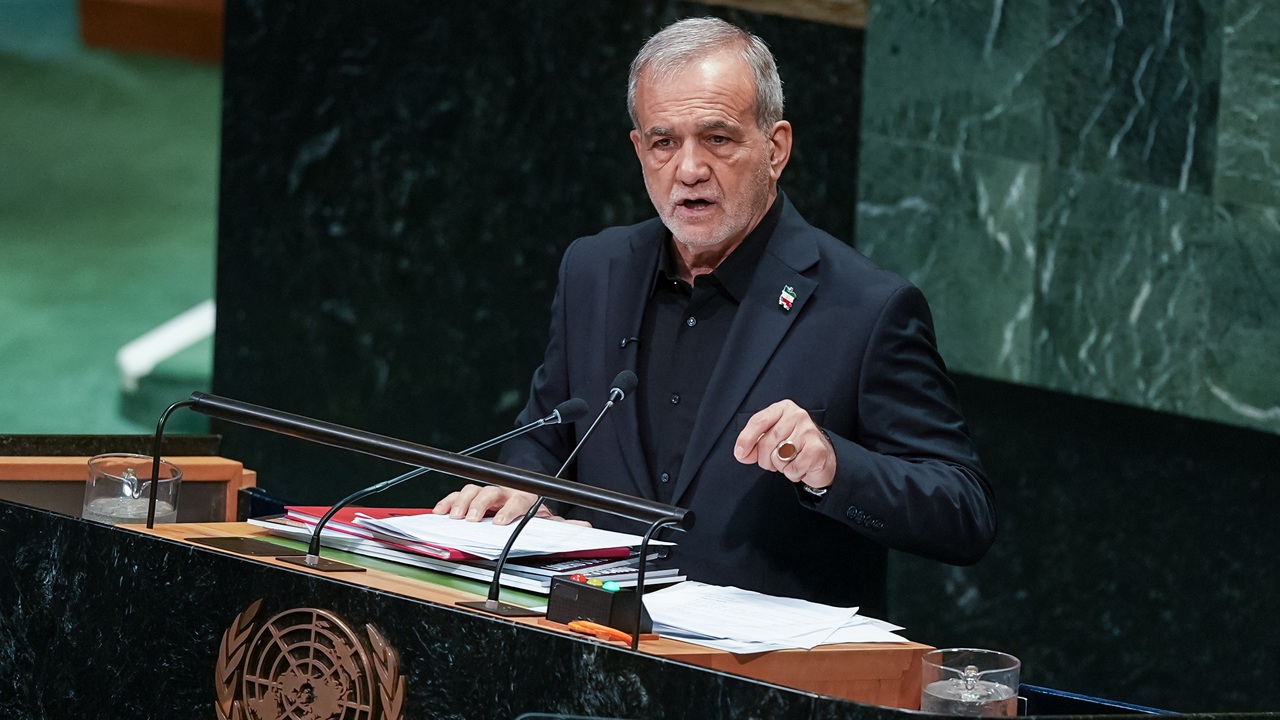
That backdrop also helps drive the pressure on Tehran. At the United Nations last week, President Donald Trump urged other nations to keep Iran economically isolated. Soon after speaking, he also rejected an Iranian proposal to reopen the Strait of Hormuz. “I’m rejecting the deal,” he explained. “They want to make a deal where they open the strait immediately because they’re losing so badly.”
The president knows the U.S. has time on its side. The naval blockade and proactive military strikes to deter any threat to shipping can be sustained for many months to come, even after the midterm elections, which the Iranians incorrectly believe will constrain President Trump.
While gas and diesel prices have certainly risen, our economy is proving very resilient, with the Atlanta Fed reporting real GDP growth in the third quarter of 5.0%. And to put today’s gas prices in context, the nation weathered a longer period of higher gas prices from 2011 to 2013 (adjusted for inflation, $5.28 per gallon of gas then to today’s $4.48).
Again, none of these changes renders Iran harmless. The regime and its proxies can (and do) still represent a serious threat. The most recent example of that threat was a missile attack on a ship carrying U.S. Marines, injuring eight.
But the world has now seen it can survive without Iranian oil and meet energy needs even with limited shipping through the Strait of Hormuz, meaning Iran’s leverage over global energy markets is fading fast.
More from this network:
Domains for Sale · GOTPeople.org · TheDSAPlatform · The Truth About Socialism
What's Your Reaction?
 Like
0
Like
0
 Dislike
0
Dislike
0
 Love
0
Love
0
 Funny
0
Funny
0
 Wow
0
Wow
0
 Sad
0
Sad
0
 Angry
0
Angry
0

I am just an average American. My teen years were in the late 70s and I participated in all that that decade offered. Started working young, too young. Then I joined the Army before I graduated High School. I spent 25 years in, mostly in Infantry units. Since then I've worked in information technology positions all at small family owned companies. At this rate I'll never be a tech millionaire. When I was young I rode horses as much as I could. I do believe I should have been a cowboy. I'm getting in the saddle again by taking riding lessons and see where it goes.
Premium domains for sale





















Comments (0)