

Jim DeMint: The Wall Street Journal’s Outbreak Of ‘Vance Derangement’
Premium domains for sale
Freedom Is Back In Style
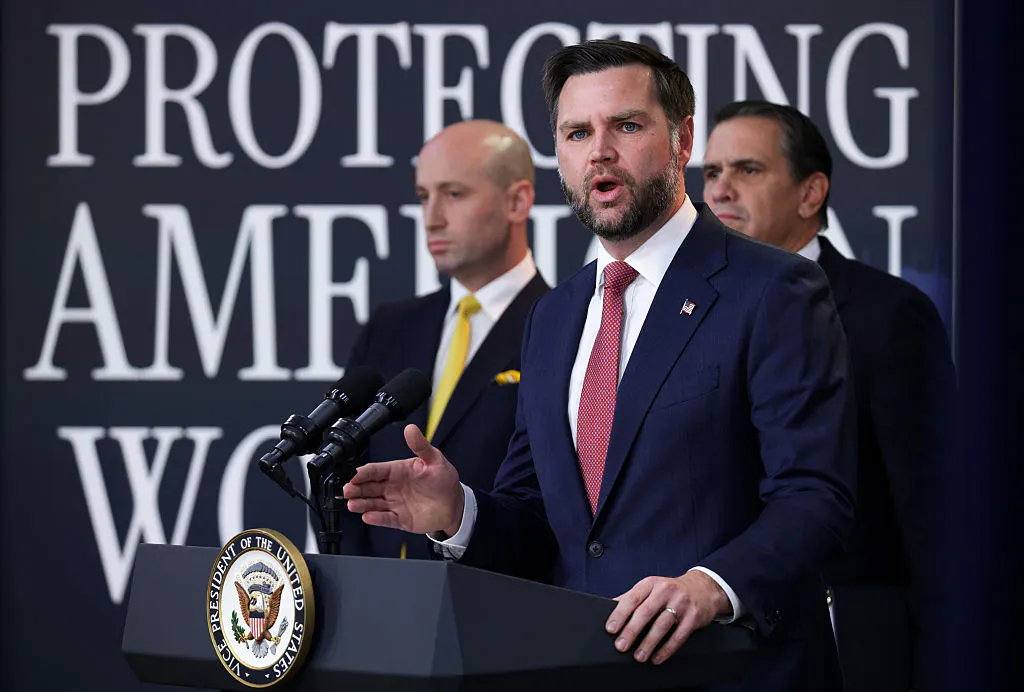
Many conservatives have regarded Kim Strassel of the Wall Street Journal as one of the sharper and more reliable columnists on the right. In recent months, however, she appears to have contracted a sudden and acute case of Vance Derangement – VD, for short. It is a condition that looks remarkably similar to the Trump Derangement Syndrome that afflicted so many in 2016 and the years that followed. The difference is that some of those people now find it safer and more convenient to aim their fire at the vice president rather than at the president whose agenda he is working diligently to advance.
Freedom Is Back
In Style
Premium domains for sale
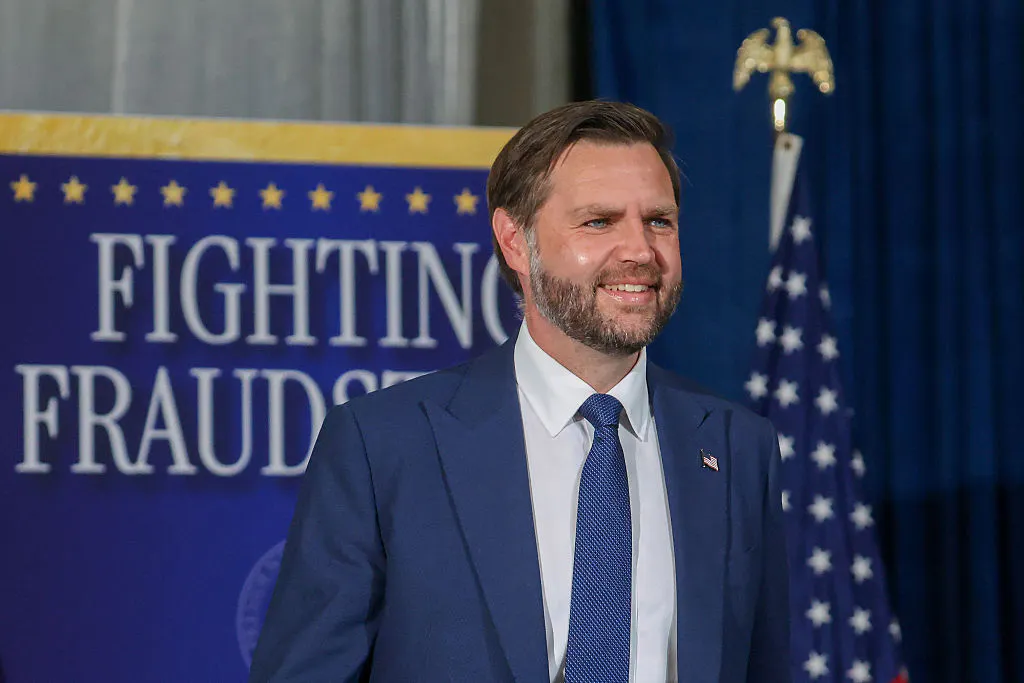
The latest episode began with a simple factual error. Strassel criticized Vice President Vance for missing a meeting on Capitol Hill shortly before his wife, Usha, gave birth to their fourth child. The criticism was misplaced on its face. Yet instead of course correcting, she redoubled the attacks — and in a recent column, unveiled an imaginative new smear: that Vance is an “anticapitalist.”
Readers looking for evidence to support so serious a charge will search in vain. Strassel offers none. The label appears entirely pretextual. One is left with the impression that she may simply have taken offense at the vice president’s recent, laudatory remarks of America’s first Treasury Secretary, Alexander Hamilton, the central architect of the nation’s commercial system. Whatever the motive, the accusation is empty.
More importantly, the charge is refuted by Vance’s actual record. Outside of President Trump himself, no one was more instrumental in the passage and public promotion of the landmark One Big Beautiful Bill. For the better part of a year, the vice president has been on the road and in the media making the case for the tax relief the OBBB delivers to working families, and for the sweeping reductions it imposes on federal red tape and bureaucracy. It is curious that Strassel — who has repeatedly praised elements of the law, including its reforms to the federal estate tax — would overlook this central fact.
Strassel also ignores evidence of Vance’s years in the United States Senate. As a useful point of contrast, last year the Club for Growth — hardly a Leninist front organization — presented then-Senator Vance with its Defender of Economic Freedom Award. The recognition went to only eight of his colleagues. The award is based on the Club’s scorecard, which grades members according to their votes for tax cuts, reductions in the size of the federal government, and regulatory reform, among other criteria. (Spoiler alert: then-Senator Vance received a perfect 100 percent rating in 2024.)
There was, to be sure, genuine philosophical differences between Vance and some of the editorial writers at the Wall Street Journal during the Biden years, particularly regarding federal spending. Unlike most of his Republican colleagues, then-Senator Vance repeatedly voted against the large federal spending bills that came to the floor. He was accurately described at the time as a “skeptic of government spending overall” who shunned earmarks and other pork. He also consistently opposed the massively expensive foreign aid supplemental packages, including the Biden administration’s $95 billion measure — a package the Journal’s editorial page enthusiastically supported throughout the winter of 2023-2024.
That record is not the mark of an anticapitalist. It is the mark of a conservative who takes wasteful spending and limited government seriously.
In fairness, the Wall Street Journal editorial page has a long history of ridiculing conservatives who refuse to read from corporate America’s approved script. It did so with the Tea Party movement a decade and a half ago, and it has done so with the MAGA movement more recently. Historically, the editorial page has elevated business convenience above the interests of American families — whether on the question of open borders that supply cheap labor or on runaway spending justified under the banner of defense needs. It should therefore come as no surprise that some on the page blanche at the Trump administration’s insistence on placing American workers at the center of economic policy.
The same pattern appears on trade. The Journal has made abundantly clear its view that tariffs reduce economic efficiency and violate the sanctity of the free market. That is a charge President Trump and Vice President Vance would both rightly dismiss. Free markets do not require a nation to surrender its industrial base or its working families to the lowest global bidder. Sound economic policy has always balanced openness with the preservation of national strength and the economic security of American families — a foundational principle shared by everyone from Alexander Hamilton to Abraham Lincoln.
Strassel’s attempt to attach the “anticapitalist” label to Vance will not stick. It is a classic case of the lady protesting too much. The more the Wall Street Journal editorial board resorts to these strained and unsupported attacks, the more it risks exhausting the patience of the remaining readers who look to it for serious conservative analysis. Conservatives can disagree on tactics and emphasis. What we cannot afford is the substitution of empty smears for honest engagement with the actual record and the principles at stake.
***
Jim DeMint is chairman of the Conservative Partnership Institute, author of Saving America From Socialism, and served on President Trump’s Economic Recovery Taskforce. He is a former U.S. senator from South Carolina.
More from this network:
Domains for Sale · GOTPeople.org · TheDSAPlatform · The Truth About Socialism
What's Your Reaction?
 Like
0
Like
0
 Dislike
0
Dislike
0
 Love
0
Love
0
 Funny
0
Funny
0
 Wow
0
Wow
0
 Sad
0
Sad
0
 Angry
0
Angry
0

I am just an average American. My teen years were in the late 70s and I participated in all that that decade offered. Started working young, too young. Then I joined the Army before I graduated High School. I spent 25 years in, mostly in Infantry units. Since then I've worked in information technology positions all at small family owned companies. At this rate I'll never be a tech millionaire. When I was young I rode horses as much as I could. I do believe I should have been a cowboy. I'm getting in the saddle again by taking riding lessons and see where it goes.
Premium domains for sale


















Comments (0)