

Jonathan Mayhew and the Biblical Source of the American Revolution
Premium domains for sale
Freedom Is Back In Style
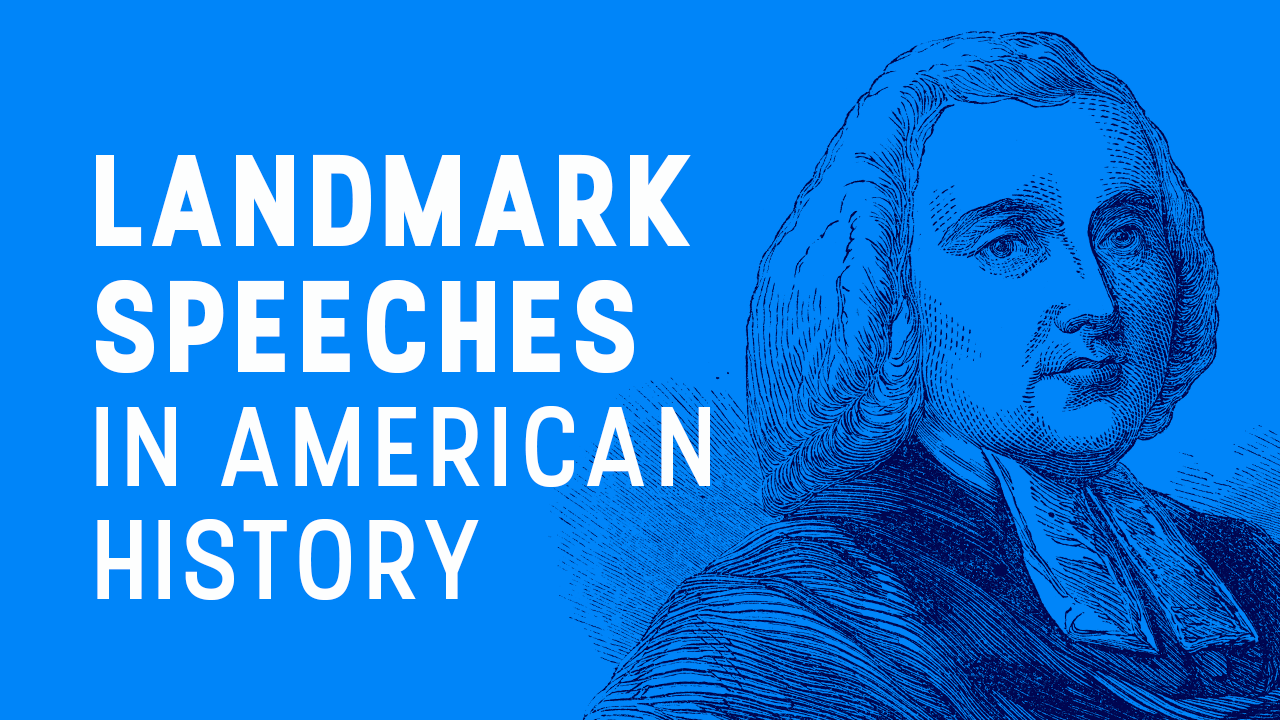
John Adams once said the American Revolution began not on a battlefield but “in the minds and hearts of the people.” Among those who lit the fuse was the influential Boston preacher, Rev. Jonathan Mayhew. His 1750 sermon on the limits of obedience to government became, in Adams’ view, one of the founding texts of American liberty.
Freedom Is Back
In Style
Premium domains for sale
Preaching on the centennial of King Charles I’s execution, Mayhew argues in his “Discourse Concerning Unlimited Submission” that political resistance can be a righteous defense of a people’s natural and legal rights. He develops the case in light of Romans 13, where St. Paul writes, “Let every soul be subject unto the higher powers. For there is no power but of God: the powers that be are ordained of God. … Therefore he who resists the authorities resists what God has appointed, and those who resist will incur condemnation.”
At first, the passage seems to forbid rebellion against any government. Many loyalists read it that way. However, Mayhew argues that St. Paul was describing just rulers who, as the apostle writes, “are not a terror to good works, but to the evil.”
Thus, “Common tyrants, and public oppressors, are not entitled to obedience from their subjects, by virtue of anything here laid down by the inspired apostle,” writes Mayhew.
A key purpose of government is to “punish evil doers,” as Mayhew says, and defend the innocent. But if rulers are “partial in their administration of justice,” and the innocent fear punishment as much as the guilty, then “the main end of civil government will be frustrated.” So, Mayhew asks, “what reason is there for submitting to that government, which does by no means answer the design of government?”
Christians cannot, in good faith, obey a government if its commands are at odds with God’s higher law. This point has been widely accepted throughout the history of Christian teaching.
Mayhew takes this logic a step further. It’s not only that we are under no obligation to obey an unjust government—we also have a duty to resist it. “[I]n such cases, a regard to the public welfare, ought to make us withhold from our rulers, that obedience and subjection which it would, otherwise, be our duty to render to them.”
Consider the context in which Romans 13 was written. At the time, Mayhew notes, St. Paul was concerned with those who believed they were exempt from civil authority altogether—namely, Jewish converts to Christianity who believed they were exempt from Gentile rule, and Gentile converts who believed Christ had freed them from temporal powers.
Given those circumstances, the apostle’s strong call to obey civil authority needn’t imply “the doctrine of unlimited submission and passive obedience, in all cases whatever.”
Had St. Paul been addressing those who believed they should obey civil authority except in cases where it violates God’s law, then the non-resistance interpretation might have been more credible.
Mayhew draws an analogy to children’s duty to obey their parents. In rare cases, children may rightly resist parents (e.g., parents ordering a child to kill his siblings). Likewise, citizens have a duty to obey civil authority. And yet they can, and should, resist a ruler if his commands are unjust and destructive of the general welfare. “It would be stupid tameness, and unaccountable folly, for whole nations to suffer one unreasonable, ambitious and cruel man, to wanton and riot in their misery.”
While Mayhew may have been theologically unorthodox for his day, his views on political resistance reflected a pre-existing Christian tradition that emerged around the 16th century. Spanish Jesuits like Francisco Suarez developed arguments for resisting tyranny that built upon earlier teachings of just law and just war. And similar ideas emerged in the Calvinist tradition. The influential “Vindiciae Contra Tyrannos,” published in 1579 under the pseudonym Junius Brutus, made the theological case for resistance.
A key question is how far Mayhew’s revolutionary logic extends. Revolution is, after all, a grave matter. As the Declaration of Independence notes, “governments long established should not be changed for light and transient causes.”
Resistance to tyranny—like just war—requires proper authority, just cause, and right intention, and it must be undertaken only as last resort, with reasonable probability of success, and proportionate outcome. These are matters of prudence. And some of the founders, like John Dickinson, opposed revolution against Britain on prudential grounds. Other founders believed these conditions were exhausted by the time they declared independence.
We may dispute some particulars of Mayhew’s assessment. For instance, was King Charles I’s execution so clearly justified as Mayhew suggests? Still, his sermon clarified a principle of lasting influence: submission is owed to just authority, not to tyranny.
Mayhew helped form the moral imagination of the colonists and laid the groundwork later used, if more cautiously, by figures like Thomas Jefferson and John Adams in declaring independence.
As Adams later remarked, Mayhew was a “transcendent genius” who “threw all the weight of his great fame into the scale of his country.”
More from this network:
Domains for Sale · GOTPeople.org · TheDSAPlatform · The Truth About Socialism
What's Your Reaction?
 Like
0
Like
0
 Dislike
0
Dislike
0
 Love
0
Love
0
 Funny
0
Funny
0
 Wow
0
Wow
0
 Sad
0
Sad
0
 Angry
0
Angry
0

I am just an average American. My teen years were in the late 70s and I participated in all that that decade offered. Started working young, too young. Then I joined the Army before I graduated High School. I spent 25 years in, mostly in Infantry units. Since then I've worked in information technology positions all at small family owned companies. At this rate I'll never be a tech millionaire. When I was young I rode horses as much as I could. I do believe I should have been a cowboy. I'm getting in the saddle again by taking riding lessons and see where it goes.
Premium domains for sale

























Comments (0)