

Lindsey Graham: A Hamilton, Not A Burr
Premium domains for sale
Freedom Is Back In Style
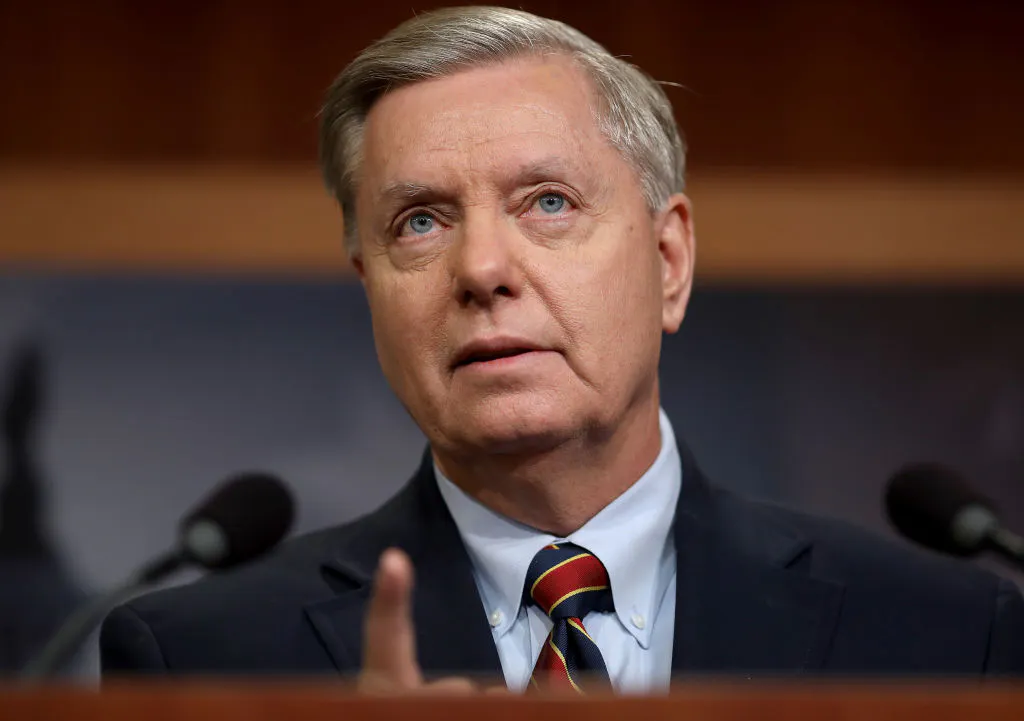
Senator Lindsey Graham died Sunday morning, hours after landing back in Washington from his tenth wartime trip to Kyiv, where he’d spent the week pushing a new Russia sanctions package and meeting twice with Volodymyr Zelenskyy. In our era of social media-driven cognitive impairment, the hot takes came quickly and focused on how Graham had changed from a searing critic of Donald Trump in the 2016 cycle to one of Trump’s closest Senate allies. But there was little mystery to Graham’s evolution: he did us the favor of both saying explicitly what he was doing and – rarer for politicians – actually following through. In plain sight, Graham changed his means but not his ends; that combination is rare enough that pundits’ confusion is understandable. But accuracy is important, even online. Graham’s legacy is as one of the most inconsistent men in Washington in his approach towards Donald Trump – no small feat when J.D. Vance is Trump’s own vice president – but as one of the most consistent men in his principles. That combination confuses more people than it should.
Freedom Is Back
In Style
Premium domains for sale
Chris Cillizza and the quote that confuses those who do not wish to see
Chris Cillizza’s post on the morning of Graham’s death reaches for Mark Leibovich’s 2019 profile of Graham to argue that he was a mere weathervane, pursuing relevance by any means necessary. Asked what had happened to him, Graham told Leibovich: “ ‘This,’ ” Graham said, “is to try to be relevant.” Politics, he explained, was the art of what works and what brings desired outcomes. “‘I’ve got an opportunity up here working with the president to get some really good outcomes for the country,’ he told me.”
Cillizza focuses on the first part of the quote: “This is to try to be relevant,” and stops there. But Cillizza not only ignores the second part of the quote about “working with the president to get some really good outcomes for the country,” but he also ignores Graham’s actual record, which belies Cillizza’s accusation of Graham as a man who “held policy positions lightly and a desire to matter tightly.” Graham did throw in wholly with Trump, but it was always in the service of his long-standing policy preferences for American leadership and an interventionist foreign policy. You can oppose those goals – plenty of people do, not all of whom are Democrats, liberals, or media members (I repeat myself) – but Graham always advocated for them, regardless of how cringe-inducing his public devotion to Trump could get. Even Will Saletan of the Bulwark, in his interminable 2023 series excoriating Graham for his surrender to Trump, noted that when Graham was defending Trump most fiercely, “he was simultaneously lobbying Trump to adopt, or at least not to abandon, hawkish foreign policies.”
Anne Applebaum and the case of the missing Ukraine support
Anne Applebaum acknowledged Graham’s death by resurfacing her 2020 Atlantic cover story, “The Collaborators,” in which she cited Graham as the marquee American example of a Republican who’d abandoned his convictions to accommodate a leader he privately despised — the domestic analog, in her telling, to the Eastern European and Vichy French officials who made their peace with regimes they knew were rotten.
Aside from the indecency of re-publicizing those accusations the day of Graham’s death and the questionable arguments made in the piece itself, what made Applebaum’s choice even more bizarre was her own body of work since Russia invaded Ukraine in 2022. Few writers in America have made a more forceful, sustained case that Ukraine is, in her words, the front line of the entire contest between democracy and autocracy — that what happens there determines whether the free world holds. With that record, one would think she would have noticed Graham’s robust record of support for Ukraine. He visited Kyiv 10 times since the invasion. He co-sponsored the toughest sanctions package on Russia’s oil trade to move through Congress. He spent his final week alive lobbying the Trump administration for Tomahawks and locking down a bipartisan sanctions deal with the White House’s sign-off — the deal he announced, with evident pride, half a day before he died. Volodymyr Zelenskyy, NATO’s Secretary General Mark Rutte, and Ukraine’s own prime minister all said as much in their tributes Sunday. In other words, Graham’s record on Ukraine was the opposite of collaboration with authoritarianism: Applebaum’s silence on that record, even in a post marking his death, only shows her own inability to recognize reality.
Graham understood “The Room Where It Happens.” His critics don’t
Cillizza isn’t alone in reaching for the Broadway musical Hamilton song “The Room Where It Happens” as shorthand for what happened to Graham, and to Washington, D.C. more broadly. It’s an understandable reflex. Aaron Burr, as Lin-Manuel Miranda writes him, is the purest portrait we have in American pop culture of a politician who wants access for its own sake — envious of a compromise he had no hand in, chasing a seat at the table with no fixed idea of what he’d do once he got there. When Hamilton needles him about what he actually stands for, Burr not only has no answer but embraces, at the song’s close, the path of doing whatever he has to do to get into that room.
Miranda’s Burr accurately describes far too many Washington politicians, before and after the age of Trump. In fact, it is a better description of many of Graham’s most searing critics: the conservatives who spent many years advocating the same foreign policy goals as Graham and then renounced those beliefs, and all others that were connected to conservatism or the Republican Party, once Trump won in 2016. But it never accurately described Graham: he was closer to Hamilton, who fervently pursues his ambition and relevance but in the service of his long-standing goals to “build something that’s gonna outlive me,” like the national bank and the nation’s financial system. Graham has, to pick just one example, advocated for military action to end Iran’s nuclear ambitions and capabilities for many years, and died having seen his advocacy play at least some role in bringing President Trump around to making that happen.
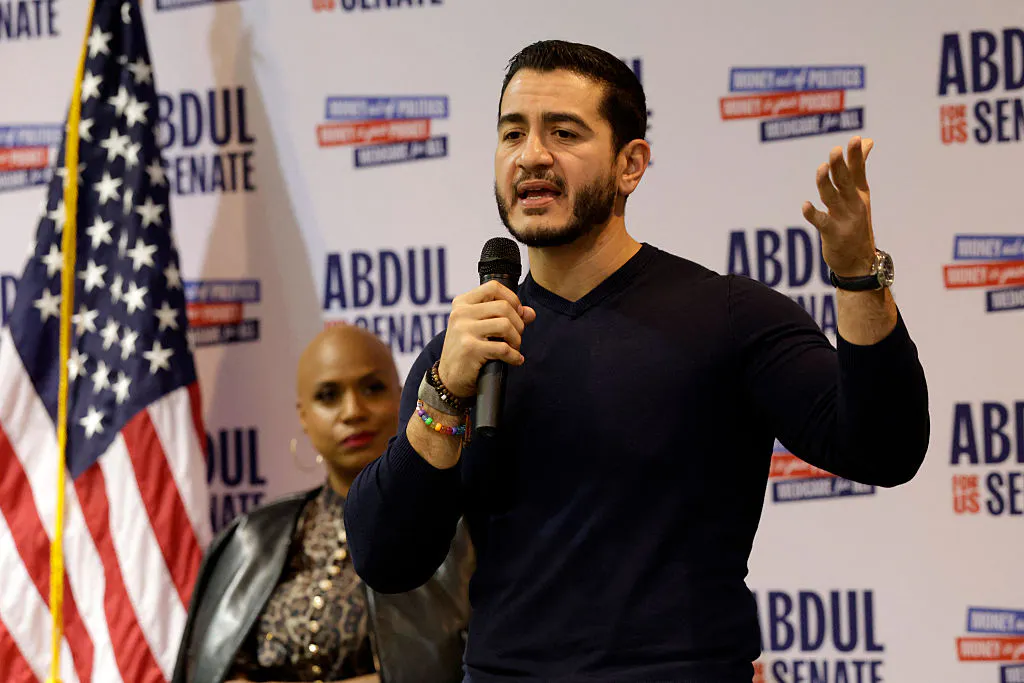
The weekend of Graham’s death, we saw a different example of Miranda’s Aaron Burr reincarnated: Congressman Ro Khanna went to Israel to provoke an international incident in an effort to revive his fledgling 2028 presidential campaign and distract from his fervent support for a Nazi tattooed-Senate candidate in Maine who was forced to withdraw after a World Cup capacity crowd’s number of scandals. This culminated in a period of drastic principle reversals by this formerly respected Congressman, who has combined a newfound distaste for Israel worthy of Tucker Carlson and other formerly conservative podcasters with advocacy of a wealth tax, which would destroy the economy of Silicon Valley – a region that is not only the greatest wealth generator of the world but also based in his own district. As cringeworthy as Lindsey Graham’s devotion to Donald Trump could get, it’s worth contrasting him with Khanna to see what true surrender to illiberalism looks like. Graham may as well have been Alexander Hamilton by comparison.
Graham was a typical politician, and there are worse things to be
Graham was a politician and never pretended otherwise. In the Leibovitch profile from 2019, Graham responds to Leibovich’s “what happened to you?” question with “Well, O.K., from my point of view, if you know anything about me, it’d be odd not to do this,” continuing with his quest to be relevant to help bring about his preferred policy outcomes. Many more conventional Republican politicians could not accommodate themselves to Trump’s way of doing business and left office; some chose the path of more consistent “#Resistance” and, mostly, failed. The best thing that can be said about Graham’s legacy is that he accepted the trade of making himself look ridiculous (as he often did) to help advance his long-standing principles – and the country was (I strongly believe) better off for that trade. Graham was emblematic of the politician who said, “A man never stands taller than when he is on his knees kissing someone’s ass,” only he never lost sight of why he was compromising his approach. Most politicians – before or after the age of Trump – pursue relevance for its own sake, and make themselves look just as ridiculous in doing so. If Lindsey Graham is to be remembered for his approach to Trump, those memories should accurately reflect what he did. And that is enough to make him stand out as a Hamilton in a town of Burrs.
***
Jeremy Senderowicz is a lawyer in New York City.
More from this network:
Domains for Sale · GOTPeople.org · TheDSAPlatform · The Truth About Socialism
What's Your Reaction?
 Like
0
Like
0
 Dislike
0
Dislike
0
 Love
0
Love
0
 Funny
0
Funny
0
 Wow
0
Wow
0
 Sad
0
Sad
0
 Angry
0
Angry
0

I am just an average American. My teen years were in the late 70s and I participated in all that that decade offered. Started working young, too young. Then I joined the Army before I graduated High School. I spent 25 years in, mostly in Infantry units. Since then I've worked in information technology positions all at small family owned companies. At this rate I'll never be a tech millionaire. When I was young I rode horses as much as I could. I do believe I should have been a cowboy. I'm getting in the saddle again by taking riding lessons and see where it goes.
Premium domains for sale












Comments (0)