

Meet the UK’s Terrible Next Prime Minister: Andy Burnham
Premium domains for sale
Freedom Is Back In Style
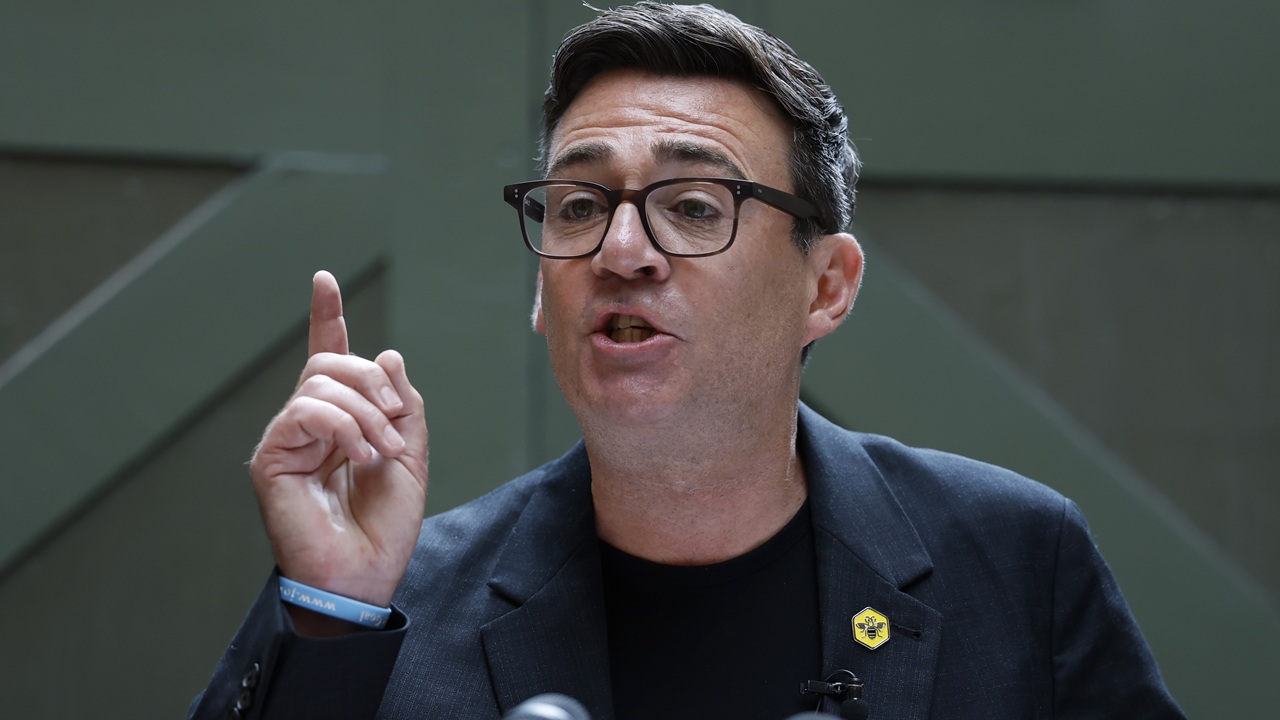
As Americans try to make sense of the latest mess in British politics, one name keeps coming up as the likely next occupant of 10 Downing Street: Andy Burnham.
Freedom Is Back
In Style
Premium domains for sale
The former mayor of Greater Manchester, always camera-ready and quick with a soundbite, looks set to replace Keir Starmer as Labour leader and prime minister. If you’re not familiar with him, Burnham is a career politician—smooth, detached from reality, and firmly aligned with the progressive wing of his party.
Look at his voting record, and it’s hard to miss where he stands. As an MP, he consistently opposed limits on abortion and showed little patience for pro-life arguments. On LGBTQ+ issues, he’s been all in: supporting same-sex marriage, adoption by same-sex couples, and nearly every other “reform” that came along.
These positions have endeared him to urban progressives, but left many traditional Labour voters feeling increasingly alienated from their own party.
His approaches to security and Islam also raise red flags for many. As shadow home secretary, Burnham attacked the Prevent counterterrorism strategy, calling it “toxic” and likening it to internment. He often framed Muslims as victims of suspicion and labeled criticism of radical Islam as “Islamophobia.”
Britain faces real integration problems—grooming gangs in northern towns, parallel societies, and rising extremism—but Burnham’s approach has prioritized optics over enforcement, critics say, making honest discussion harder and discouraging authorities from confronting uncomfortable issues.
His handling of grooming gangs in Greater Manchester has drawn particularly sharp criticism from whistleblower and former Greater Manchester Police detective Maggie Oliver. While Burnham initially earned praise for commissioning independent reviews of historic cases such as Operation Augusta, Oliver accuses him of failing to follow through.
Oliver has said Burnham “ducked out” at the crucial assurance review stage, looking after his own political position and protecting Greater Manchester Police rather than fully exposing whether similar abuses were continuing. She described the process as a “paper exercise” and said Burnham “did not grasp the nettle,” ultimately “fell short,” and “turned away” from victims. Survivors and campaigners argue this left many without proper justice or meaningful systemic reform.
His take on English identity tells you a lot, too. He once ranked his own sense of self as British first, north-westerner second, Liverpudlian third—and English a distant fourth. Pride in traditional English heritage? Not really his thing.
Instead, he’s championed multicultural Manchester, directing resources toward diversity initiatives while English working-class communities in places like Oldham and Rochdale have voiced frustration over rapid Islamic immigration and strained public services. His worldview sees national identity as something to be diluted rather than celebrated.
Then there’s the faith question, which has a whiff of hypocrisy. Raised Catholic—he says he was even an altar boy—Burnham says he drifted away because the Church obsesses too much over sexuality. He’s “not particularly religious” these days. Yet he still sends his kids to Catholic schools for the “moral grounding.” It’s the classic “faith for thee but not for me” approach, one that lets him benefit from institutions he publicly undermines.
Economically, homeowners should pay attention. Burnham has long floated scrapping council tax (which is paid to local authorities to help fund essential community services) and stamp duty in favor of an annual property or land value tax based on current market values. We’re talking something like half a percent of your home’s full value every year. That turns the old idea of “an Englishman’s home is his castle” into an ongoing wealth tax that hits retirees and middle-class families hardest.
As mayor of Greater Manchester, he leaned hard into more state control over big-spending projects and issues such as public ownership of transport. He positions himself as the “King of the North” while constantly asking Westminster for more cash.
His tenure saw mixed results: some improvements in public transport but persistent crime, housing shortages, and dependency on central government funding.
With Starmer stepping down, nominations opening July 9, and big names like Wes Streeting already lining up behind him, Burnham could be installed as leader and prime minister by July 17. That would place the party firmly in the hands of its metropolitan, progressive wing.
For observers across the Atlantic, this doesn’t look like change—it’s more of the same, with a sharper cultural edge and bigger tax ambitions. Britain would be trading one left-wing leader for another, but with more intensity on identity, security, and ownership.
Burnham becoming prime minister would be leaping from the frying pan into the fire: a politician uneasy with his own Christian background, lukewarm on Englishness, soft on radical Islam, and eager to tax family homes like never before. His goals are clear: higher taxes, weaker cultural borders, and continued erosion of what once made the country distinct and Great.
We publish a variety of perspectives. Nothing written here is to be construed as representing the views of the Daily Signal.
More from this network:
Domains for Sale · GOTPeople.org · TheDSAPlatform · The Truth About Socialism
What's Your Reaction?
 Like
0
Like
0
 Dislike
0
Dislike
0
 Love
0
Love
0
 Funny
0
Funny
0
 Wow
0
Wow
0
 Sad
0
Sad
0
 Angry
0
Angry
0

I am just an average American. My teen years were in the late 70s and I participated in all that that decade offered. Started working young, too young. Then I joined the Army before I graduated High School. I spent 25 years in, mostly in Infantry units. Since then I've worked in information technology positions all at small family owned companies. At this rate I'll never be a tech millionaire. When I was young I rode horses as much as I could. I do believe I should have been a cowboy. I'm getting in the saddle again by taking riding lessons and see where it goes.
Premium domains for sale


Comments (0)