

New Day, New Tax: Blue Cities Punish Residents To Fund Progressive Policies
Premium domains for sale
Freedom Is Back In Style
This piece is part of MI x DW, a collaboration that brings Daily Wire readers exclusive commentary and research from the Manhattan Institute’s world-class team of scholars.
Freedom Is Back
In Style
Premium domains for sale
***
The Washington, D.C., city council is preparing to drop yet another tax on the modern checkout line.
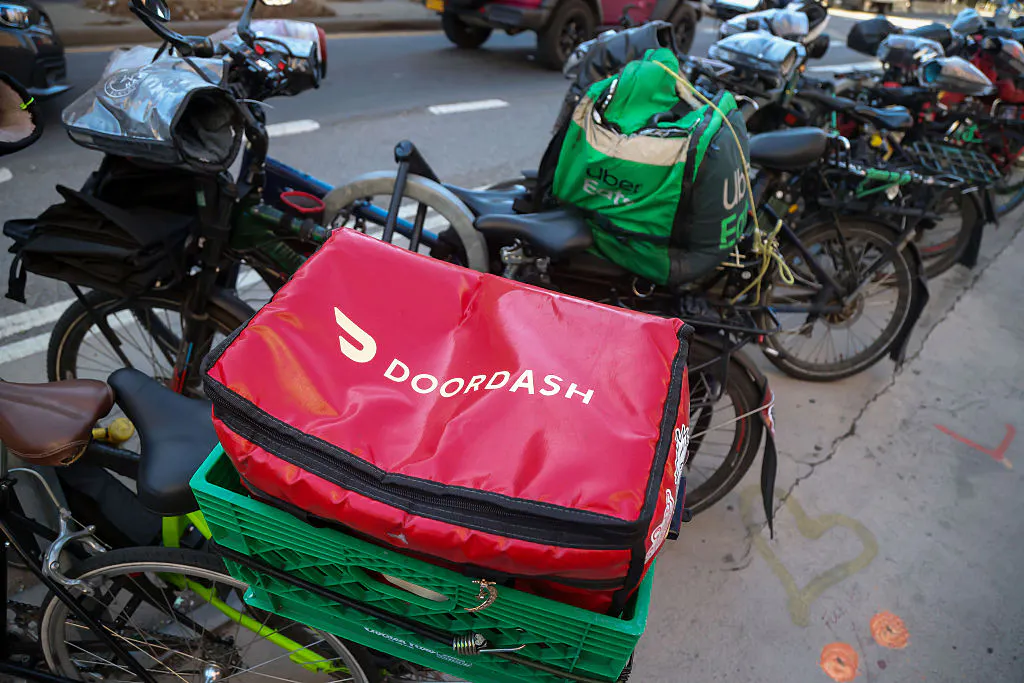
Under its upcoming budget, many deliveries made through third-party platforms would face a surcharge of at least 20 cents every time an order ends in the District. This measure would affect not just restaurant takeout but also deliveries of groceries, beverages, parcels, and other everyday goods.
That pattern fits into the story of progressive “affordability” measures writ large. Politicians want to reduce the cost of living, but they keep trying to do so by making the basic conveniences of urban life more expensive.
The council is pitching the tax as a way to fund food access and other local programs. In reality, it’s designed to fill the District’s roughly $1.1 billion budget gap — and to subsidize a handful of special interests along the way.
Click here for more Manhattan Institute content.
The surcharge is expected to raise roughly $9 million a year, according to Brianne Nadeau, the councilmember behind the tax. Of the first $7 million collected, the vast majority will go into the General Fund. Any revenue above $7 million would be split, with 10% going to the District’s Department of For-Hire Vehicles and 90% to the General Fund.
Surcharges like these are attractive to city governments because they are small enough to avoid immediate public outrage and easy to raise later. But for residents, they quickly add up. D.C. residents already pay high housing costs, service costs, sales taxes, restaurant taxes, parking costs, utility charges, and a long list of local fees. This accumulation of government-imposed fees is how high-cost cities become still more expensive.
The tax is aimed at a politically convenient target — it’s part of the progressive war on the gig economy. The law’s definitions mean that the tax will target third-party delivery platforms while excluding some direct-delivery arrangements, such as businesses that deliver their own goods through employees or direct contractors.
Nevertheless, the law will hit small businesses especially hard. Off-premise dining now accounts for up to 75% of restaurant orders. For many restaurants and local merchants, delivery is a key part of their operating model.
A per-order surcharge may sound harmless, but small costs change consumer behavior. One study, for example, showed that making taxes visible reduces demand by 8%. Fewer orders mean less revenue for restaurants and fewer earning opportunities for delivery workers — both operating on slim margins as it is.
The new tax is also regressive. The flat 20-cent fee applies whether the customer is a lawyer in Logan Circle or a working mother east of the Anacostia River. It does not adjust for income, family size, disability, age, or order value. Yet for seniors, disabled residents, parents, workers without cars, and families juggling multiple jobs, delivery isn’t a luxury; it can be a convenient and practical way to obtain daily necessities like groceries and medicine.
Colorado shows where surcharges like D.C.’s end up. Its statewide delivery fee began as a small charge but now stands at 31 cents and adjusts with inflation each July. Once the tax is in place, it ratchets up automatically, making the state less and less affordable.
Leaders in D.C. and other progressive localities cannot tax their way to affordability. Washington residents should expect the city to become unaffordable in yet another way — and perhaps begin looking to the suburbs instead.
***
This is republished with permission from the Manhattan Institute’s City Journal. The original can be found here.
Santiago Vidal Calvo is a Cities policy analyst at the Manhattan Institute.
More from this network:
Domains for Sale · GOTPeople.org · TheDSAPlatform · The Truth About Socialism
What's Your Reaction?
 Like
0
Like
0
 Dislike
0
Dislike
0
 Love
0
Love
0
 Funny
0
Funny
0
 Wow
0
Wow
0
 Sad
0
Sad
0
 Angry
0
Angry
0

I am just an average American. My teen years were in the late 70s and I participated in all that that decade offered. Started working young, too young. Then I joined the Army before I graduated High School. I spent 25 years in, mostly in Infantry units. Since then I've worked in information technology positions all at small family owned companies. At this rate I'll never be a tech millionaire. When I was young I rode horses as much as I could. I do believe I should have been a cowboy. I'm getting in the saddle again by taking riding lessons and see where it goes.
Premium domains for sale





















Comments (0)