

The H-1B Visa System Has a Repeat Offender Problem
Premium domains for sale
Freedom Is Back In Style
One scandal proves nothing. Two may be a coincidence. But after years of violations and investigations, let’s admit the H-1B visa system is rife with fraud and abuse of American workers.
Freedom Is Back
In Style
Premium domains for sale
We are not talking trivial numbers here. The site Layoffhedge has compiled records of H-1B Labor Condition Application filings from 2015 to 2026. There are 6,835,185—equivalent to the population of Los Angeles and Chicago combined—not including all their dependents.
America’s recent graduates and laid-off or unemployed tech workers are angry. American companies are using cheaper foreign labor to replace, not just supplement, American workers.
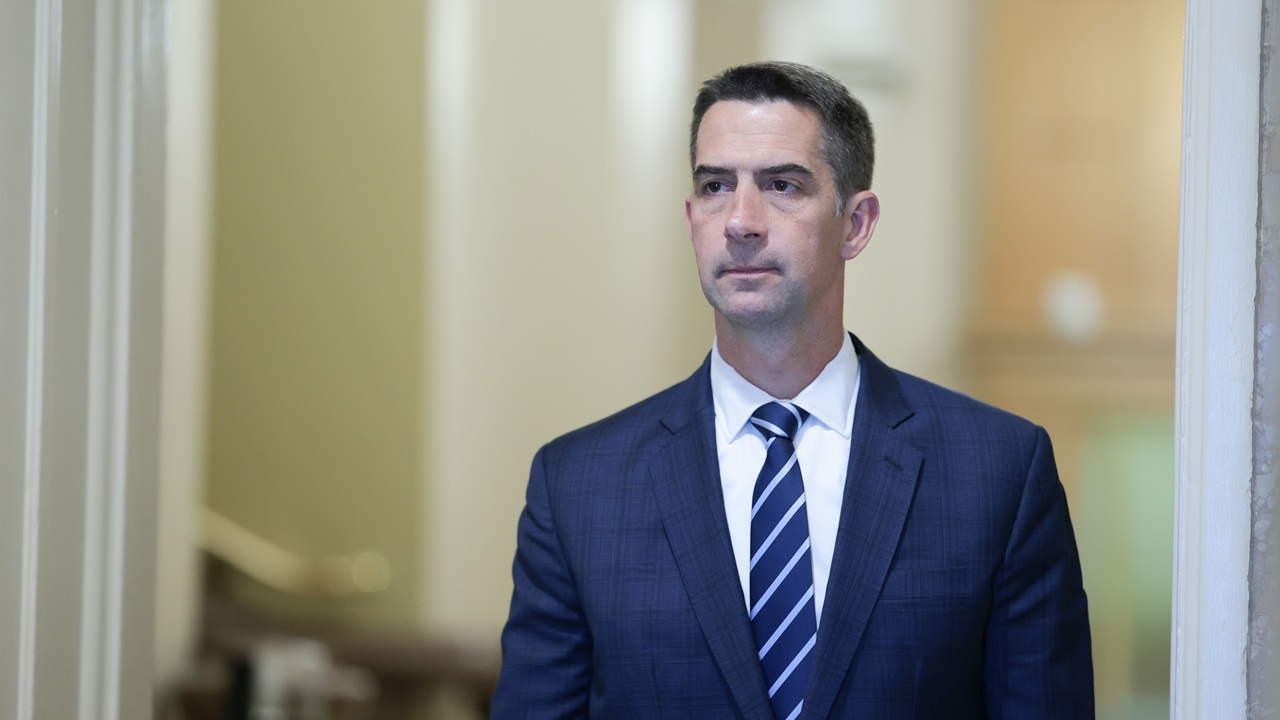
Universities from Pennsylvania to California are exploiting their uncapped ability to hire foreigners using H-1Bs, despite graduating thousands of students each year who need jobs. Sen. Tom Cotton, R-Ark., has introduced the Colleges for the American People Act to remove the H-1B visa cap exemption for higher education and end this anti-American discrimination.
The Department of Labor announced last Wednesday that it would open an investigation into the H-1B and PERM (Program Electronic Review Management) systems to combat fraud. H-1B is a visa that supposedly allows foreign skilled workers to come here. PERM is the process that allows them to permanently immigrate here.
Anthony D’Esposito, inspector general for the Department of Labor, said Wednesday that Cognizant was among the dozens of firms that were issued subpoenas in the investigation.
Cognizant, founded in 1994 as an Indian subsidiary of a U.S. company and now based in New Jersey, is the biggest player in a lucrative business model that effectively crowds out American workers.
Companies known as “body-shops” don’t hire workers for their own operations; they sell labor to other firms, staffing American corporations with cheaper foreign programmers, consultants, engineers, and others.
Cognizant has 340,000 total employees, 70% of whom are in India. Most of Cognizant’s U.S. workers are on visas, primarily H-1B. Since 2009, Cognizant has successfully petitioned for over 52,000 new H-1B workers, the highest of any petitioning company.
A 2024 Bloomberg report describes decades of malfeasance by Cognizant.
Three American workers sued the company in 2017 alleging that Cognizant fired American workers so they could be replaced by lower-paid Indian workers. According to the lawsuit, a black female employee, Latreecia Folkes, was told to train her Indian replacement on a project.
Another female employee, Christy Palmer, was, according to the lawsuit, “one of only two non-Indian workers and the only woman on her 15-person team.” She resigned in 2016 after what she said was routine exclusion from work and social events and no satisfactory action from the company in response to her complaints.
In October 2024, a jury found Cognizant liable for intentionally discriminating against more than 2,000 non-Indian employees between 2013 and 2022. Bloomberg found that American workers at Cognizant were twice as likely to be fired or resign than workers on visas were. Further, black employees were let go at a rate 23 times that of Asian workers.
A former Cognizant executive testified at the trial that he was asked to sign hundreds of fraudulent letters attesting to federal officials that Cognizant’s Indian employees needed visas to work on assignments under him, though few actually did. After complaining internally, he was fired.
The H-1B is premised on the idea of a labor shortage and thus an urgent need for foreign workers. Petitioners are supposed to have specific jobs in mind and cannot speculatively petition for H-1Bs. Despite this, Cognizant petitioned for H-1B workers for whom it did not have jobs. Documents revealed at the trial “showed that 40% of the company’s H-1B visa holders remained in India for six months after being approved.” This is known as “benching” and is illegal.
In 2026, a court found Cognizant liable for $8.4 million in damages to New York University professor Jean-Claude Franchitti, who was fired by Cognizant in 2016 after making complaints about the firm’s use of the H-1B visa to discriminate against American workers.
Despite being designated an “H-1B dependent” employer, Cognizant is not required to attest to the U.S. government that it is not displacing American workers—which they are.
Bloomberg reported that “outsourcing companies, including Cognizant, have used the visas mostly to fill lower-level positions.” Cognizant sponsored 6,400 H-1Bs between 2020 and 2024, of which more than 80% had bachelor’s degrees only. Meanwhile, at Amazon, Apple, and Meta, about 60% of H-1B holders have master’s degrees or higher.
The “body shop” business model creates perverse incentives for employers seeking a quick buck. Firms have little stake in long-term employee development. The goal is lower overhead and rapid replacement when visa holders or American workers become too expensive or speak out against unfair practices.
Cognizant is not alone. According to Bloomberg, “each of the five largest outsourcing companies has either settled, lost or is currently fighting a discrimination lawsuit” within the past four years. Yet, incredibly, they are all still permitted to petition for thousands of H-1B workers. Ironically, Bloomberg itself has “successfully sponsored 3,082 new H-1B visa petitions.”
The outsourcing industry has perfected the art of gaming H-1B lotteries and PERM labor certifications. Meanwhile, American STEM graduates and mid-career professionals watch wages stagnate and opportunities shrink. Studies demonstrate wage suppression in occupations most exposed to H-1B inflows. Harvard economist George J. Borjas found that “on average, H-1B workers earn 15% less than comparable natives.”
Congress should stop treating each new investigation as an isolated scandal. Stronger audits and tougher penalties for fraudulent labor certifications are vital, but without serious reduction of the H-1B program, investigations are a circus act in an all-too familiar show: abuse, exposure, slap-on-the-wrist penalties, and a shift of the regulatory goalposts that employers quickly overcome.
Subpoenas, headlines, and $100,000 one-time application fees aren’t enough. American workers deserve a labor market that puts them first. Congress and the administration should hear them, take the initiative, and prune the H-1B back down to size.
More from this network:
Domains for Sale · GOTPeople.org · TheDSAPlatform · The Truth About Socialism
What's Your Reaction?
 Like
0
Like
0
 Dislike
0
Dislike
0
 Love
0
Love
0
 Funny
0
Funny
0
 Wow
0
Wow
0
 Sad
0
Sad
0
 Angry
0
Angry
0

I am just an average American. My teen years were in the late 70s and I participated in all that that decade offered. Started working young, too young. Then I joined the Army before I graduated High School. I spent 25 years in, mostly in Infantry units. Since then I've worked in information technology positions all at small family owned companies. At this rate I'll never be a tech millionaire. When I was young I rode horses as much as I could. I do believe I should have been a cowboy. I'm getting in the saddle again by taking riding lessons and see where it goes.
Premium domains for sale














Comments (0)