

Newsom’s 911 Debacle
Premium domains for sale
Freedom Is Back In Style
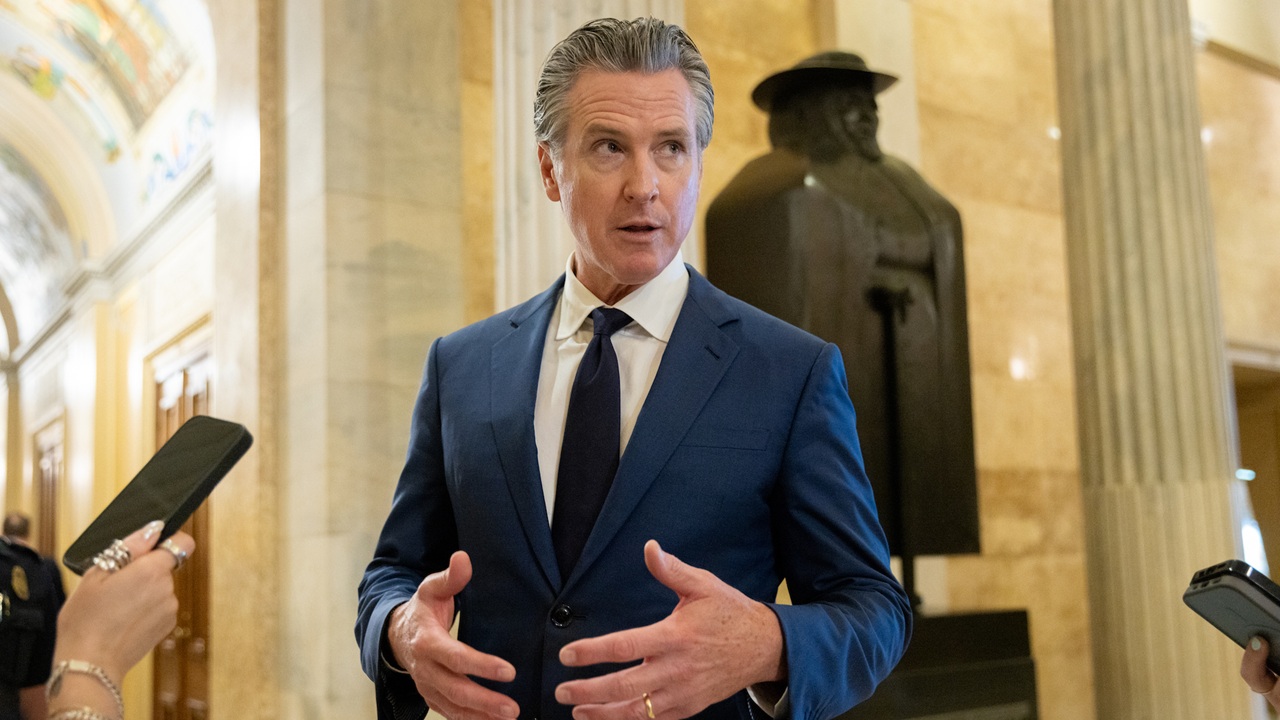
While some problems caused by California’s one-party government get significant press, there’s one major issue that’s virtually ignored: The state’s 911 system is dangerously outdated, and the attempt to update it has already cost taxpayers $502 million with little to show for it.
Freedom Is Back
In Style
Premium domains for sale
California has an analog emergency warning system from the 1970s. There is broad agreement that the current system puts Californians at risk. Gov. Gavin Newsom proudly announced in 2019 that California would update its system.
In a 2019 press release, Newsom’s office explained some of the failures of the current system. At the time, there were 13 system outages a month on average. Newsom’s office said federal regulators estimated that speeding up average emergency response times by a single minute could save 10,000 lives each year.
The project is clearly necessary, but its cost has been astronomical, and progress has been sluggish. In 2019, Newsom asserted that the project would be completed by 2022 and cost approximately $132 million. He also explained that the project would be managed by a little-known governmental entity called the Governor’s Office of Emergency Services (Cal OES). With a name like that, Newsom cannot duck responsibility for the failure that has followed.
The contractors initially decided to implement regional systems, with the first place to enjoy the new service being Tuolumne County. This county has a relatively small population, around 53,000 at the time. Thus, minor kinks in the system could be worked out on a small scale.
However, the system had far more than just some minor kinks. It fell flat on its face, being unable to process many incoming calls, and it could not reliably identify locations or even callers’ phone numbers.
The failure in Tuolumne caused Cal OES to abandon the regional approach. But by then, Newsom was too busy trying to jump-start a run for president to respond effectively. It took years to pull the plug on the regional system. Of course, Newsom and his team blamed the contractors, but failures like this always start at the top.
Today, the statewide 911 system teeters on the brink of disaster. The state’s taxpayers have now spent $502 million and still don’t have a solution.
Cal OES put in place a bridge contract until the new system is up and running. The current backup provider will be paid $80 million a year for 30 months to operate the decrepit old system.
A representative of Cal OES told me, “Transitioning to a statewide NG [Next Generation] 911 system is a complex, multi-year effort. The bridge contract ensures Californians continue to receive reliable 911 service and allows for additional deployment of NG 911, particularly in high-priority areas like Los Angeles ahead of the 2028 Olympics.”
You can now sleep comfortably knowing they have matters under control.
The reason the public is largely unaware of this disaster is because its funding comes from designated fees on California residents’ telephone bills. The money collected goes directly to a secluded fund, and the state legislature has no control over the expenditure.
“California’s 911 system is funded through the State Emergency Telephone Number Account (SETNA) fee, and any costs do not impact the state’s general fund,” a member of the Cal OES team told me. “SETNA is a surcharge on telephone lines in California and is among the lowest in the nation.”
We finally found a low tax in California. The problem is it is being largely wasted.
A representative of Cal OES also told me that the office spent $138 million in 2025 from this secluded fund on NG 911. And the governor increased the amount for 2026 to $141.9 million “as a one-time increase in SETNA funds for 2026-27 to accelerate the statewide transition to NG 911.”
Cal OES is now hoping for full implementation of the system by 2030. Time will tell if that occurs.
The project—which was scheduled for completion in three years—will now be completed after 12 years. The project—which we were told would cost $132 million—will cost about $1.4 billion.
Based on the failure of the original regional plan, we can only pray this one will work.
A state’s 911 system has real consequences. People’s lives often hang in the balance. Given how blatant the failure to modernize the system has become, I’m not sure why people keep voting to keep the same clowns in charge of our state.
We publish a variety of perspectives. Nothing written here is to be construed as representing the views of the Daily Signal.
More from this network:
Domains for Sale · GOTPeople.org · TheDSAPlatform · The Truth About Socialism
What's Your Reaction?
 Like
0
Like
0
 Dislike
0
Dislike
0
 Love
0
Love
0
 Funny
0
Funny
0
 Wow
0
Wow
0
 Sad
0
Sad
0
 Angry
0
Angry
0

I am just an average American. My teen years were in the late 70s and I participated in all that that decade offered. Started working young, too young. Then I joined the Army before I graduated High School. I spent 25 years in, mostly in Infantry units. Since then I've worked in information technology positions all at small family owned companies. At this rate I'll never be a tech millionaire. When I was young I rode horses as much as I could. I do believe I should have been a cowboy. I'm getting in the saddle again by taking riding lessons and see where it goes.
Premium domains for sale















Comments (0)