

Next Gen Missile Defense Can Enforce Trump’s Iran Redlines
Premium domains for sale
Freedom Is Back In Style
Critics of President Donald Trump’s recently signed memorandum with Iran worry about future Iranian cheating, particularly after Trump leaves office.
Freedom Is Back
In Style
Premium domains for sale
As a hedge against cheating, the president has kept a formidable array of naval and air power nearby—a force clearly capable of retaliating against Iranian missile launches or other violations of current or future agreements. But there’s another, more preventative enforcement mechanism he might consider.
As part of his Golden Dome initiative, President Trump should commission the rapid fielding of an innovative missile defense system—one using new technology that can prevent ballistic missiles from ever exiting Iranian airspace.
To appreciate the significance of this capability, it’s important to understand the limits of current U.S. and allied missile defenses.
U.S. and Israeli missile defenses rely exclusively on ground- or sea-launched interceptors. Consequently, they must rise to meet descending missiles when those missiles are moving extremely fast and are most difficult to hit.
Although these surface-based systems have been effective against Iran’s relatively unsophisticated ballistic missiles—destroying roughly 90% of incoming missiles since February 28—some have slipped through even the multilayered Israeli ground-based missile shield.
Moreover, the missiles that have evaded interception in attacks on Gulf states and Israel have typically been equipped with more advanced maneuverable re-entry vehicles. These missiles are programmed to make evasive and targeted maneuvers in the descending phases of flight. Consequently, they are much more difficult to intercept.
For example, in March a maneuverable Iranian missile avoided interception by a Patriot battery in Qatar, causing extensive damage to its Ras Laffan gas complex.
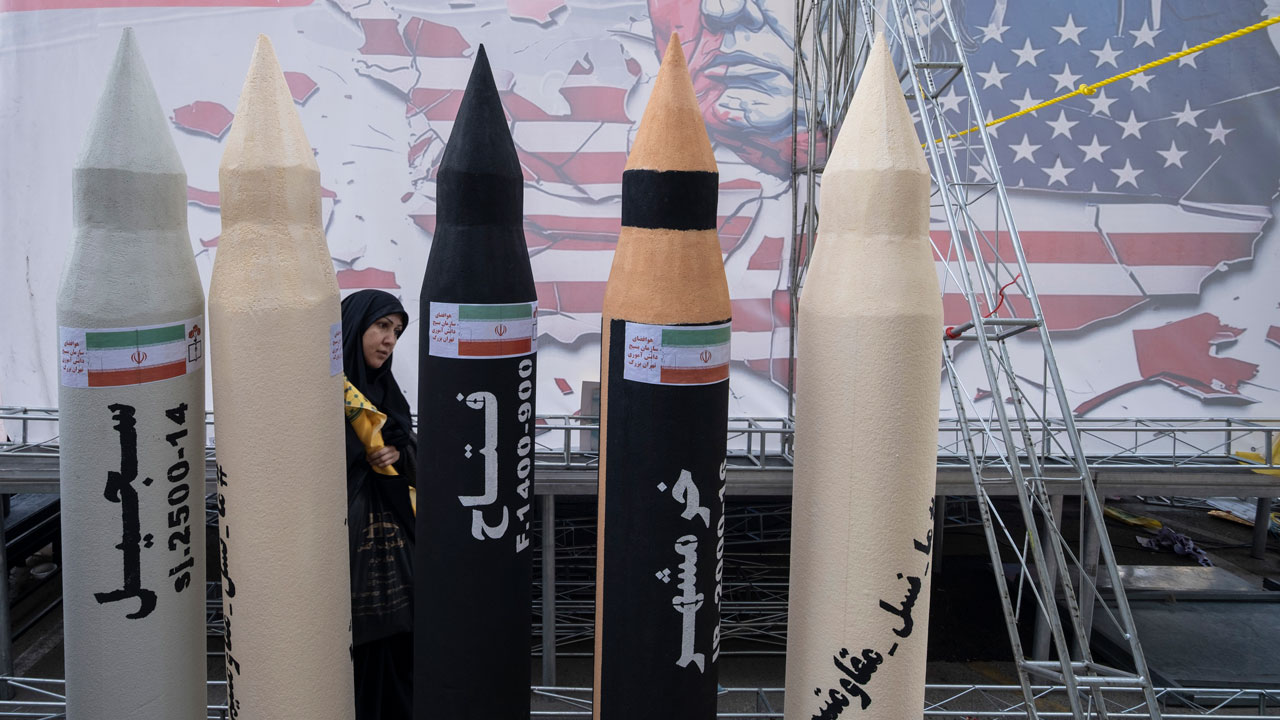
While estimates vary about how much of Iran’s pre-war stockpile remains, all agree that Iran has hundreds of missiles still stored in underground “missile cities.” These stockpiles likely include a disproportionate number of Iran’s most advanced maneuverable Qiam and Fattah missiles.
This suggests that reliance on surface-based missile defenses—or retaliation after the fact—will not suffice to protect U.S. bases and allies.
Fortunately, the U.S. can now add another layer of missile defense to neutralize the Iranian missile threat. This concept of operation, known as “airborne” missile defense, was conceived by Dean Wilkening, Leonard Caveny, and Gregory Canavan, three leading Ph.D. missile scientists who worked on President Ronald Reagan’s original Strategic Defense Initiative.
As a step toward developing a comprehensive space-based missile shield, they envisioned placing anti-missile interceptors on large high-flying drones or fighter aircraft.
They realized that firing interceptors from such airborne “platforms” could have many advantages. Unlike interceptors fired from surface-based systems that must destroy enemy missiles as they are descending, intercepts launched from airborne platforms could in theory catch ballistic missiles as they are rising—when they are slowest, easiest to detect, and incapable of maneuvering.
Recent advances in technology making possible much faster, longer-range anti-missile interceptors can now make this vision a reality.
Indeed, the hypersonic velocities now possible in next generation interceptors would enable them to reach missiles rising from many locations before those missiles can escape to the upper atmosphere—ensuring that debris from a “kill” will land on the territory of the perpetrator.
Consider what such a defensive layer could do to contain future Iranian missile launches.
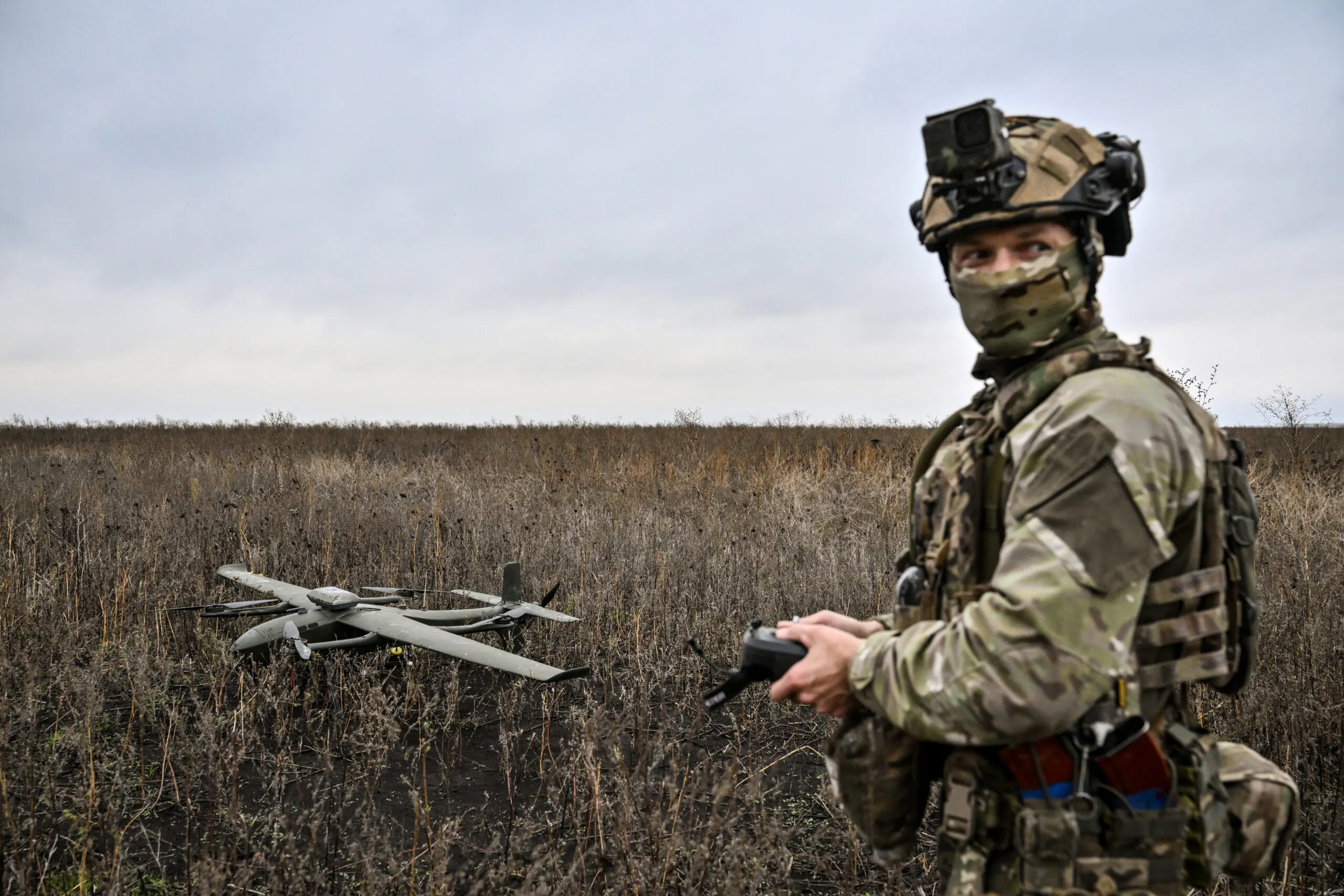
During the current conflict, the U.S. and Israel have flown over Iran with near impunity. Yet even without exercising overflight, hypersonic interceptors fired from U.S. drones loitering along the margin of Iranian airspace could reach any missile rising from a wide corridor of western and southern Iran.
Fighter aircraft using the same interceptors could—upon detection of a first missile launch—fly deep enough into Iranian territory to destroy any subsequent missiles launched from anywhere else in the country.
A forward-deployed, airborne missile defense system would not only complement Israeli and U.S. surface-based defenses, it could also help enforce any future agreements limiting Iran’s use of ballistic missiles or nuclear weapons.
Indeed, airborne missile defense can enforce the crucial objective of the current negotiations, namely, preventing missiles—whether nuclear-tipped or otherwise—from leaving Iran. And it can do so without relying on either trust or verification.
Airborne boost phase missile defense can also provide protection against North Korea’s growing arsenal of nuclear ICBMs, and a coastal shield against Russian submarine-launched cruise missiles.
Since drones for hosting interceptors are already used for surveillance and reconnaissance, engineers familiar with the necessary technology estimate that an airborne system could be built for about $250 million and within 18 months—well before Trump leaves office and likely before Iran could reconstitute a robust nuclear enrichment program. As Dr. Caveny has recently emphasized, “the system is affordable, adaptable, and readily available.”
President Trump has staked much of his legacy on a conflict with Iran that he initiated militarily but intends to end diplomatically. For this to work, he must maintain leverage over the Iranian regime to ensure compliance with any future agreements.
An additional layer of missile defense will ensure that the president can maintain that leverage whether Iran decides to cheat or not.
We publish a variety of perspectives. Nothing written here is to be construed as representing the views of the Daily Signal.
More from this network:
Domains for Sale · GOTPeople.org · TheDSAPlatform · The Truth About Socialism
What's Your Reaction?
 Like
0
Like
0
 Dislike
0
Dislike
0
 Love
0
Love
0
 Funny
0
Funny
0
 Wow
0
Wow
0
 Sad
0
Sad
0
 Angry
0
Angry
0

I am just an average American. My teen years were in the late 70s and I participated in all that that decade offered. Started working young, too young. Then I joined the Army before I graduated High School. I spent 25 years in, mostly in Infantry units. Since then I've worked in information technology positions all at small family owned companies. At this rate I'll never be a tech millionaire. When I was young I rode horses as much as I could. I do believe I should have been a cowboy. I'm getting in the saddle again by taking riding lessons and see where it goes.
Premium domains for sale























Comments (0)