

Virginia’s Trash Mounts While Closed Landfill Festers
Premium domains for sale
Freedom Is Back In Style
Virginia’s economy thrives on imports and exports. In June, imports touched $5.4 billion, up $2.5 billion year over year.
Freedom Is Back
In Style
Premium domains for sale
The commonwealth recently wrapped up the $1.4 billion Gateway Investment Program to deliver better port services. As a result, Norfolk Harbor offers channels on the U.S. East Coast that are among the deepest and widest, allowing safe, two-way traffic for fully loaded ultra-large container vessels.
In addition, the Virginia Port Authority operates an inland port near Front Royal, which is connected by rail to the harbor and provides swift access to importers and exporters. The facility is such a success that state lawmakers are considering a second such facility in Washington County.
However, not all imports are high value. While plenty of iPhones and automobiles flowed into Virginia last year, so did tons of trash.
According to the state Department of Environmental Quality, solid waste management facilities received 22,961,793 tons of solid waste in 2024.
“Of this total, 17,413,532.06 tons originated in the Commonwealth and 5,548,261.26 tons originated from other jurisdictions. The total amount of solid waste received increased by 1.46%, or 331,139.09 tons, compared to 2023,” the department stated in its most recent solid waste report.
Municipal solid waste made up more than 15 million tons of the total garbage disposed of in 2024. Of that amount, 10.8 million tons originated in Virginia and 4.2 million tons originated from other states. Of trash imported from elsewhere, Maryland accounted for 44.83%, New York originated 18.38%, Washington, D.C. contributed 12.52%, and New Jersey and North Carolina accounted for 12.22% and 6.76%, respectively.
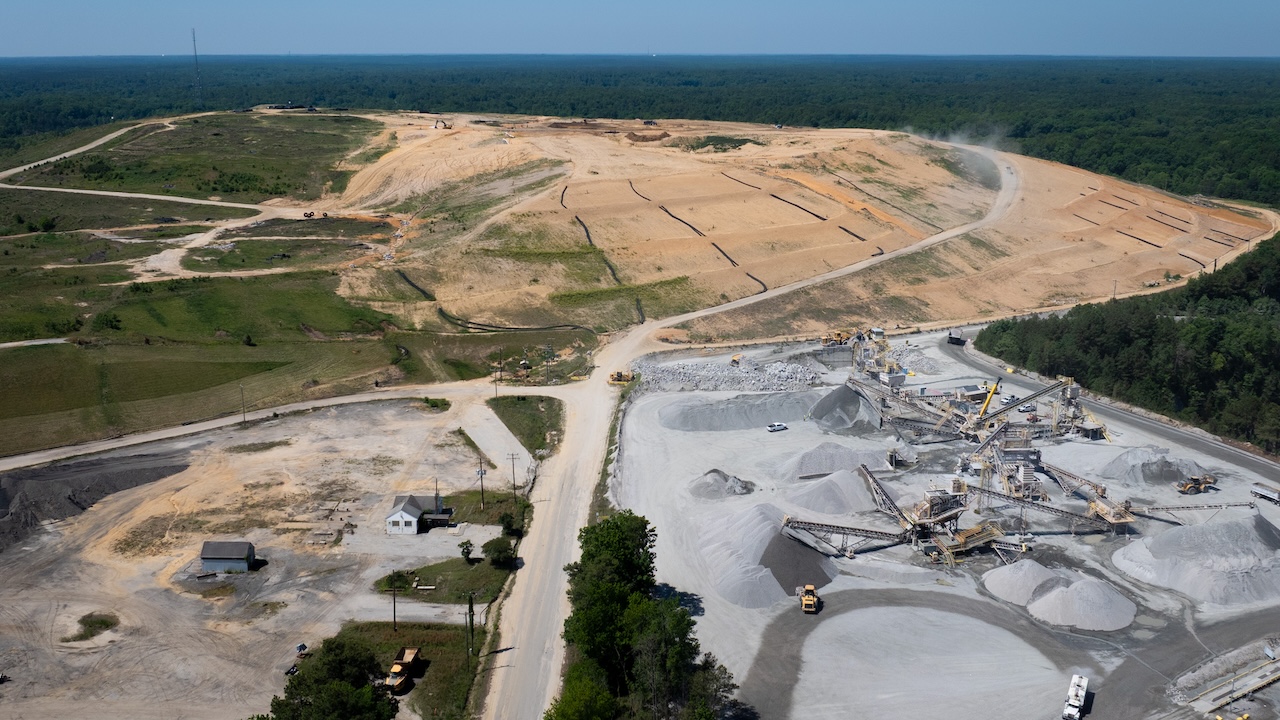
None of the trash disposed of in 2024 went to the Shoosmith landfill in Chesterfield. That facility closed in 2022 but remains a major source of pollution. Last year, the state’s Department of Environmental Quality warned that the shuttered landfill was pouring out almost 400,000 gallons per week of leachate, the polluted liquid that occurs when rainwater flows through a landfill. The Chesterfield Department of Utilities found that the landfill had been discharging its leachate, untreated, directly into the county wastewater system from 2019 until 2023.
“In 2024, Chesterfield revoked a permit for Shoosmith landfill, and the operators subsequently stopped pumping any leachate into the county wastewater system,” the county’s Natalie Spillman told the Board of Supervisors in May. “Instead, they began hauling leachate by truck to an off-site location for disposal.”
In June, state lawmakers budgeted $10.6 million toward cleaning up the landfill. That is enough “to prevent it from becoming a catastrophe,” Republican state Sen. Glen Sturtevant told the Virginia Mercury, but not nearly enough to fix the problems. A full cleanup could cost $173 million. As a stopgap solution, the James River Association estimated it could cost $50 million to locate an on-site leachate treatment facility that would slow the flow of the liquid into area waterways, including the James River.
Meanwhile, the attorney general’s office is investigating whether the landfill’s owners violated state law by failing to financially provide for the landfill’s decommissioning. The owners “pocketed millions of dollars,” lawyers for the state said in court papers filed last month, “rather than investing in the necessary infrastructure and remediation efforts that were required to comply with applicable law.”
The state’s next trash report, covering the year 2025, is due to the governor and General Assembly on Oct. 1.
More from this network:
Domains for Sale · GOTPeople.org · TheDSAPlatform · The Truth About Socialism
What's Your Reaction?
 Like
0
Like
0
 Dislike
0
Dislike
0
 Love
0
Love
0
 Funny
0
Funny
0
 Wow
0
Wow
0
 Sad
0
Sad
0
 Angry
0
Angry
0

I am just an average American. My teen years were in the late 70s and I participated in all that that decade offered. Started working young, too young. Then I joined the Army before I graduated High School. I spent 25 years in, mostly in Infantry units. Since then I've worked in information technology positions all at small family owned companies. At this rate I'll never be a tech millionaire. When I was young I rode horses as much as I could. I do believe I should have been a cowboy. I'm getting in the saddle again by taking riding lessons and see where it goes.
Premium domains for sale
























Comments (0)