

One of America’s Largest Industries Is in Danger, New Documentary Warns
Premium domains for sale
Freedom Is Back In Style
America’s seafood industry employs around a million people, according to a 2023 U.S. Marine Fisheries Service report, but Daily Signal contributor Steve Cortes says that in places like Maine, government regulation is leading to the sector’s collapse.
Freedom Is Back
In Style
Premium domains for sale
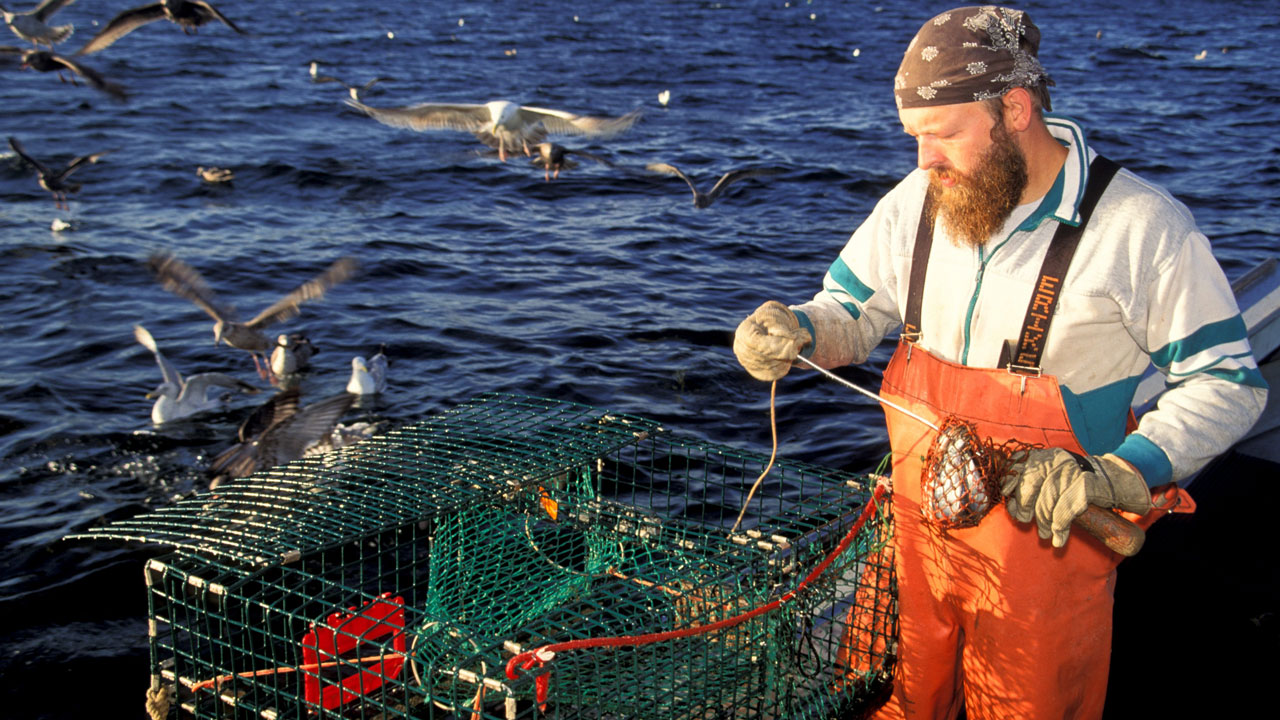
In his new YouTube documentary, “American Seafood: For Our Health and Economy,” Cortes visits the docks of Maine’s shoreline to explore the lobster trade, how federal government oversight drives fishermen out of business, and why the U.S. should catch and consume more seafood.
The Lobster Man
Chef Andrew Gruel, a former lobsterman, explained the life of a Maine fisherman and the difficulties they face.
Fishermen, he said, begin their days at 4 or 5 a.m., setting traps and hauling their catches from the cold waters.
“Lobsterman, it’s a family business. Your grandfather did it, his grandfather did it, but now, these guys they’re at the end of the rope,” Gruel said. “They’re shutting down because they can’t make money anymore.”
Even as lobster has become more expensive over the last 20 years, Gruel said, the fishermen who catch them are seeing less and less of that profit.
Regulations
One of the seafood industry’s largest obstacles is government regulation, according to Cortes.
Because politicians and environmentalists blame lobstermen for the declining population of the right whale, fishermen must now use specialized lines and traps that would not entangle a whale—even though no whale deaths have ever been attributed to lobster equipment.
Other initiatives also aim at sustaining the fishing population, but Gruel said Maine lobstermen didn’t need government intervention to preserve populations.
“The fishermen, the ranchers, the farmers, the producers, we are the best stewards of our own environment,” Gruel said. “They [old Maine fishermen] knew that if they overfished their product, then their grandkids wouldn’t have an industry by which to get their living.”
Predatory Trade
According to the U.S. Department of Agriculture, America imported $20.3 billion more seafood than it exported in 2023—around 80% of U.S. consumed seafood comes from countries such as Canada, Indonesia, and Vietnam—countries that have cheap labor costs and dubious standards, according to Gruel.
“They’re using slave labor,” Gruel claimed. “We don’t know what chemicals they use on that—you’ve got traces of chlorine, malachite green, all these antibiotics, cocaine residue, you name it.”
Sixty percent of these imports are farmed, “junk seafood,” according to Cortes, and is often mislabeled, misleading, and bad for Americans compared to wild-caught or sustainably fished seafood from places like Maine and Louisiana.
Solutions
While Gruel said fishermen have allies on Capitol Hill such as Sen. Susan Collins, R-Maine, he also advocated for broader deregulation of and more investment in the domestic fishing industry.
“We need to catch more fish,” Gruel said. “It’s that simple.”
“The ocean is the most resilient organism in the world, the most resilient resource,” he added. “We do rehabilitate over time and stocks do rebuild themselves.”
Deregulation would also lead to greater private investment as businessmen see the longevity of America’s own fisheries.
“America is blessed with oceans,” Cortes concluded his documentary, “Let’s harness the full potential of that resource, and by doing so, get healthier and wealthier.”
More from this network:
Domains for Sale · GOTPeople.org · TheDSAPlatform · The Truth About Socialism
What's Your Reaction?
 Like
0
Like
0
 Dislike
0
Dislike
0
 Love
0
Love
0
 Funny
0
Funny
0
 Wow
0
Wow
0
 Sad
0
Sad
0
 Angry
0
Angry
0

I am just an average American. My teen years were in the late 70s and I participated in all that that decade offered. Started working young, too young. Then I joined the Army before I graduated High School. I spent 25 years in, mostly in Infantry units. Since then I've worked in information technology positions all at small family owned companies. At this rate I'll never be a tech millionaire. When I was young I rode horses as much as I could. I do believe I should have been a cowboy. I'm getting in the saddle again by taking riding lessons and see where it goes.
Premium domains for sale












Comments (0)