

Private equity is billing patients to the bone
Premium domains for sale
Freedom Is Back In Style
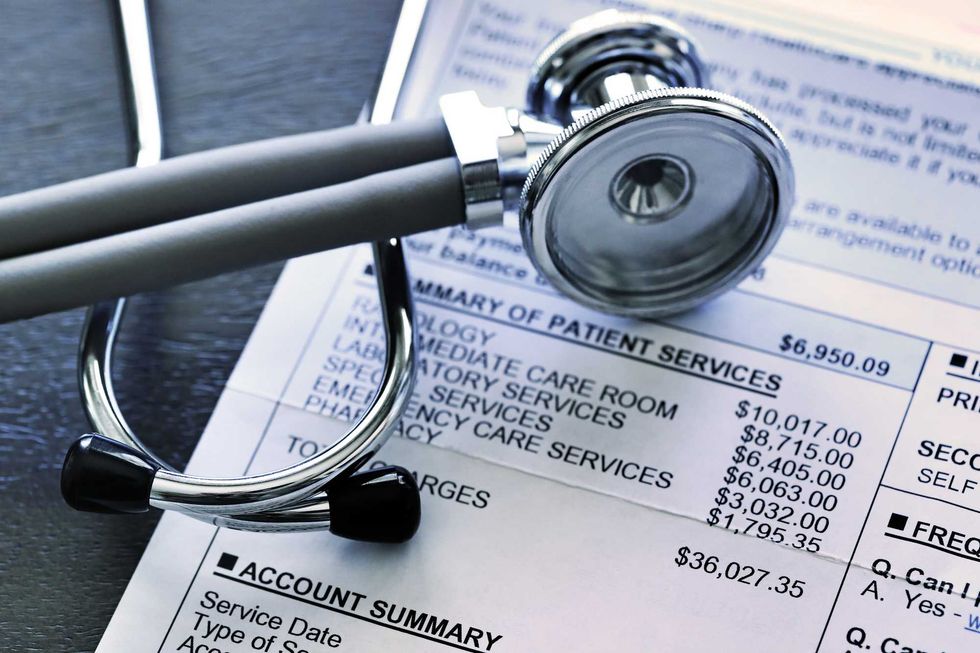
Nearly half of American adults say health care is difficult to afford, and about one-third have skipped or postponed care because of the cost, according to KFF polling. Even insured Americans are feeling the strain: The average monthly price of health insurance rose nearly 26% in a single year, the Urban Institute recently found.
Freedom Is Back
In Style
Premium domains for sale
Many forces drive those costs. One has operated largely outside public view: private equity.
Private equity-owned hospitals charged more, spent no less on patient care, and kept the difference.
Last month, my organization, Campaign for Accountability, released “Overbilled and Overtreated,” a report combining hospital financial data from the National Academy for State Health Policy with the Private Equity Stakeholder Project’s ownership tracker. We compared 71 hospitals acquired by private equity firms with 71 closely matched peers.
After acquisition, private equity-owned hospitals collected $669 more in operating profit per patient. Their operating margins were 6.5 percentage points higher — roughly a 31% increase. Among privately insured and self-insured patients, where hospitals have more freedom to set prices, the gap widened to 10.4 percentage points.
Those profits did not appear to come from running hospitals more efficiently. Private equity ownership produced no statistically significant reduction in operating costs per patient. Costs did not fall. Charges rose.
Court records show what pressure for higher revenue can look like inside medical facilities.
At Steward Health, created after Cerberus Capital Management converted a nonprofit hospital chain into a for-profit company, a former nurse billing auditor alleged that a Massachusetts team systematically reclassified patient charts into more expensive billing categories. A moderate emergency room visit could be elevated to the most severe level; the team, he said, could “only upcharge.”
Three Steward physicians filed a separate lawsuit alleging that hospital staff recorded patients’ blood pressure readings as normal to avoid diagnoses that would require costly treatment.
At Select Rehabilitation, then capitalized by Caltius Capital Management, a whistleblower alleged that therapists were pushed to inflate billable minutes to meet quotas. In one example, the company allegedly billed for 50 minutes of therapy after providing five. The whistleblower also claimed that severely ill patients underwent needless therapy and that discharges were delayed to maximize revenue.
RELATED: Hospital consolidations and ‘nonprofit’ tax breaks are driving up medical costs
 Onuma Inthapong/Getty Images
At Surgery Partners, owned by H.I.G. Capital Group, a physician alleged that patients were required to undergo unnecessary urine drug tests at a company-owned laboratory. The tests were billed at $3,200 to $4,600, while physicians were barred from using a $20 alternative. The company later agreed to a $41 million settlement with the Justice Department and received a $45 million federal pandemic bailout days later.
The most disturbing example involved children. USA Today reported that dentists at North American Dental Group, a private equity-backed chain, drilled healthy teeth under pressure to generate revenue. One 3-year-old received seven root canals without first receiving an X-ray. He later required surgery to repair the damage. A reviewing dentist called the treatment a form of child abuse.
Private equity firms are not shy about the strategy. Ardent Health, owned by Equity Group Investments, told investors in 2025 that roughly half its revenue growth would come from higher rates rather than greater patient volume. Surgery Partners boasted of rising “revenue per case.”
Translated from investor language, the promise is simple: Charge more for each patient and call the difference growth.
Private equity is not solely responsible for America’s health care crisis. Hospitals, insurers, drug companies, government payment systems, and professional cartels all contribute to high prices and limited competition. But private equity adds a distinctive pressure: Investors expect rapid returns, while the patients absorbing the costs often cannot shop around, delay treatment, or meaningfully challenge a bill.
RELATED: Caregivers should not have to lie to prove compassion
 Benjavisa/Getty Images
Policymakers should account for that pressure. Proposals include barring private equity-owned hospitals and skilled nursing facilities from participating in Medicare and requiring providers to disclose mergers, acquisitions, and changes in ownership or control. At minimum, patients and regulators should know who owns the facility sending the bill.
Stronger disclosure alone will not solve the problem. Regulators and prosecutors must also scrutinize upcoding, unnecessary treatment, discharge delays, and other practices that turn patients into revenue targets.
The evidence in our report is difficult to dismiss: Private equity-owned hospitals charged more, spent no less on patient care, and kept the difference.
That may be an attractive growth strategy for investors. For patients already postponing care because they cannot afford it, it is another bill they should never have had to pay.
More from this network:
Domains for Sale · GOTPeople.org · TheDSAPlatform · The Truth About Socialism
What's Your Reaction?
 Like
0
Like
0
 Dislike
0
Dislike
0
 Love
0
Love
0
 Funny
0
Funny
0
 Wow
0
Wow
0
 Sad
0
Sad
0
 Angry
0
Angry
0

I am just an average American. My teen years were in the late 70s and I participated in all that that decade offered. Started working young, too young. Then I joined the Army before I graduated High School. I spent 25 years in, mostly in Infantry units. Since then I've worked in information technology positions all at small family owned companies. At this rate I'll never be a tech millionaire. When I was young I rode horses as much as I could. I do believe I should have been a cowboy. I'm getting in the saddle again by taking riding lessons and see where it goes.
Premium domains for sale























Comments (0)