

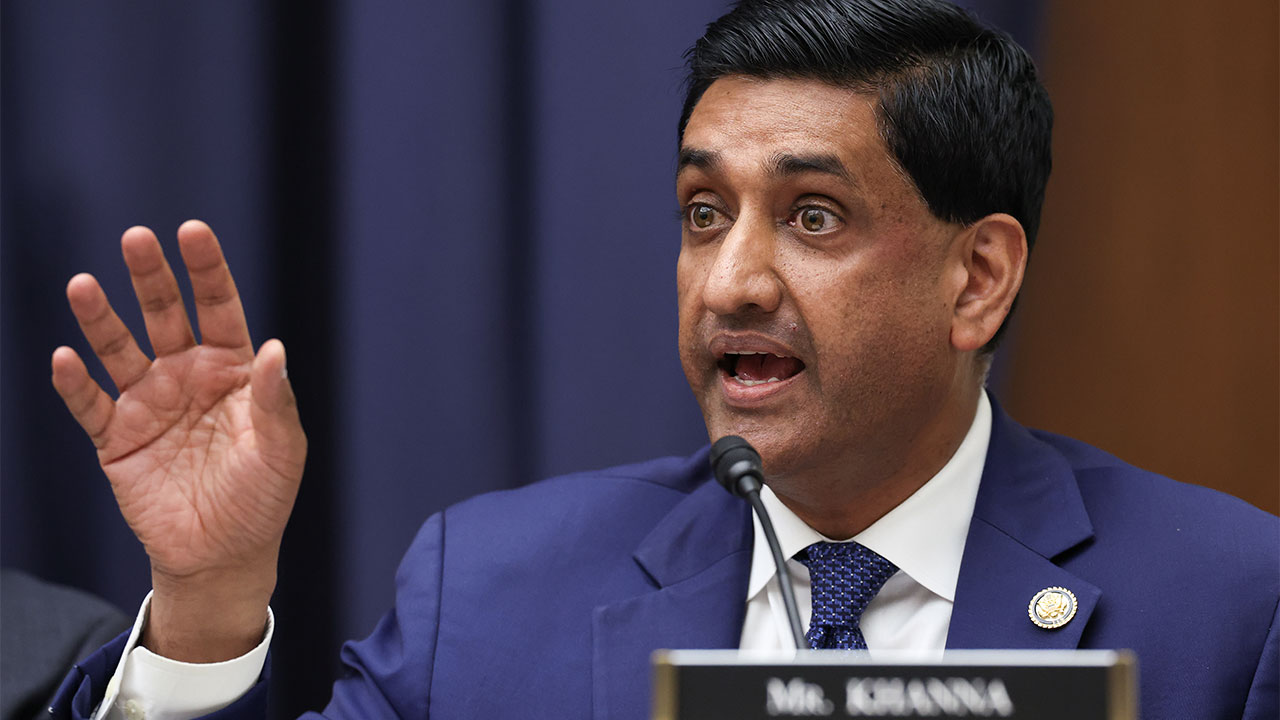
Ro Khanna Plays An Awkward Game Of Race-Based Footsie
Premium domains for sale
Freedom Is Back In Style
This piece is part of MI x DW, a collaboration that brings Daily Wire readers exclusive commentary and research from the Manhattan Institute’s world-class team of scholars.
Freedom Is Back
In Style
Premium domains for sale
***
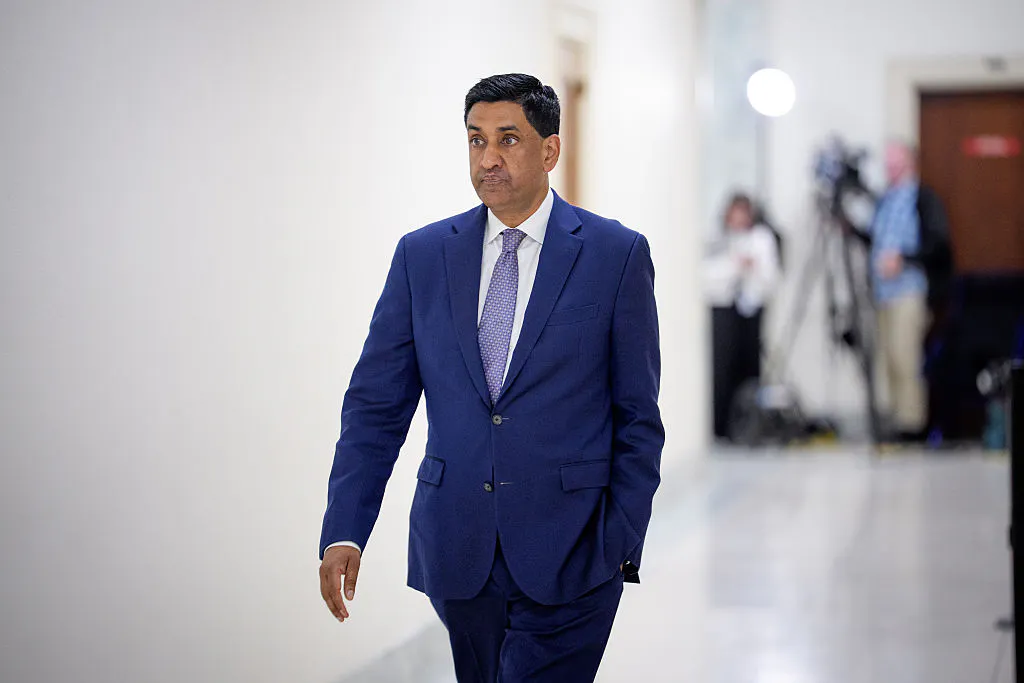
I first learned of Ro Khanna in 2017. I was in college, and Khanna had just been elected to Congress. I initially took note of him due to the eerie resemblance between his life and mine. In addition to sharing a cultural background and first name, a rarity on its own, we both grew up outside Philadelphia, graduated as high school valedictorians, studied economics, and, as it would later turn out, attended the same law school. I never subscribed to narratives about “seeing people who look like you,” but I’d be lying if I said I felt no excitement at seeing someone whose story tracked mine reach such heights.
Since then, Khanna has become a leading voice in the Democratic Party and arguably the most visible Indian American elected official. But his ascent has depended, in part, on his embrace of an ideology that cannot make sense of his own life. Examining that embrace reveals not only a politician’s contradictions but also the fraught position of Indian Americans who align themselves with the contemporary Left.
Click here for more Manhattan Institute content.
Reflecting on his life, Khanna has consistently sounded notes of optimism about the promise of America. “I remember Little League coaches who believed in me,” he has said. “I remember the local paper, the Bucks County Courier Times, that published my letters to the editor in a community that was 95 percent white. I grew up believing I could do anything in this country.” He has fondly recalled his family celebrating Christmas and his street celebrating Diwali “because the neighbors were curious.”
He has recounted lessons from his parents that would warm a conservative’s heart: “My parents rarely talked about my rights. They talked a lot about my responsibilities,” he said in 2024. “They said, ‘You were born in America. You won the lottery. Go make good grades.’” And perhaps most strikingly, when asked about his experience growing up Indian American, he replied, “It was remarkably easy. . . . I’m not saying race isn’t an issue for other people. For me, it really was not a big issue.” Listening to Khanna’s recollections, one can hear the outlines of a story about America as a country where people can transcend differences of race and religion and flourish through hard work and personal responsibility.
Yet Khanna’s politics often seem strangely detached from his biography. If his life tells a story of integration, his rhetoric traffics in the language of permanent racial consciousness. For example, Khanna frequently expresses alarm about the white-black racial wealth gap, which he claims is “ten-to-one” and “increasing.” After the Supreme Court’s 2023 decision in Students for Fair Admissions v. Harvard, he rushed to defend affirmative action, explaining, “The reality is race matters. Race is consequential to people’s lives.” And more recently, Khanna criticized the Supreme Court’s decision in Louisiana v. Callais, which raised the legal threshold for race-conscious redistricting, saying that those who deny that racism still exists “have blinders on.”
Khanna’s statements are striking, not simply because they are misguided but because they are incoherent and vacuous in ways that his own life lays bare. Khanna oscillates between two extremes, seemingly feeling no need to reconcile them. When he reminisces on his past, America is a colorblind society, teeming with opportunity for people of all backgrounds. When he turns to the issues of the day, America is a racist prison, forever holding racial minorities down.
To avoid stumbling on the tension between these positions, Khanna deals in generalities capacious enough to accommodate both. For example, when he says “race matters” in defense of affirmative action, he appears to make a banal claim that Supreme Court’s decision in Louisiana v. Callais, which raised the legal threshold for race-conscious redistricting most voters in both parties would accept while smuggling in a more controversial view: that race constitutes a significant barrier to opportunity in America.
My own views on race lie between Khanna’s narratives. Given the way race shapes social ties, the notion that “race matters” seems indisputable. I myself have experienced feelings of isolation and alienation due to my race, and I believe race can meaningfully shape a person’s experiences and perspective. But it does not follow that race remains a pervasive barrier to opportunity, beyond what it may signal about one’s socioeconomic background. On the contrary, it is precisely in the spheres of opportunity that race should matter the least, insofar as they are governed by meritocratic norms that supersede personal affinities.
If I could speak with Khanna, I’d ask what he makes of Raj Chetty’s findings that “the black-white income gap is due almost entirely to differences in rates of intergenerational mobility rather than transitory or historical factors” and that “neighborhood differences explain relatively little of the black-white intergenerational gap.” I’d ask what he makes of the research showing that “once social security wealth is accounted for, the racial wealth gap has narrowed over the last 30 years” and, as of 2019, stood below two-to-one. I’d ask why, if he believes “race is consequential to people’s lives” but opposes quotas, he disagrees with the decision in Students for Fair Admissions v. Harvard, which allows universities to consider “an applicant’s discussion of how race affected his or her life.” And I’d ask why, given evidence that South Asian Americans face an even steeper penalty in college admissions than other Asian Americans, he doesn’t devote even a fraction of the time that he spends advocating preferences for other racial groups to highlighting discrimination against his own.
Khanna is the most salient example of the way Indian Americans must strain themselves to fit in with the Left today.
Indian Americans occupy a peculiar position in America’s racial landscape. They possess nearly every quality that progressives associate with racial disadvantage: brown skin, immigrant origins, ethnic names, a foreign religion, and they constitute a minuscule share of the population. Yet, by virtually every measure—whether family stability, household income, or upward mobility—they enjoy extraordinary success. They confound left-wing narratives about race but, due to their small numbers, are poorly positioned to challenge them. Falling outside the white majority, excluded from the coalition of diversity, and lacking a larger constituency, Indian Americans often face a choice: they can pursue a life of assimilation and advancement within establishment institutions by accommodating themselves to the sensibilities of liberal elites, or they can preserve their own sensibilities at the expense of their success and sense of belonging.
Given the price of the second option, many Indian Americans feel compelled to choose the first, accepting the self-abnegation it demands. They learn to mute those aspects of their identity that sit uneasily with progressive orthodoxy: their accounts of upward mobility, the values their parents instilled in them, the discrimination they suffer at the hands of affirmative action. They nod along dutifully during discussions of systemic racism that their own success undermines. They internalize the shibboleths of their milieu, making clinical assertions about “black and brown people” without betraying any hesitation at the way the phrase describes them chromatically yet excludes them politically. Over time, they become estranged from themselves, conversant in a language that can articulate everyone’s stories but their own.
The notion that aligning with progressivism requires self-abnegation from Indian Americans is not merely my interpretation. Khanna himself has counseled this approach. Recounting conversations with Asian American constituents opposed to affirmative action, Khanna has explained, “What I say to people in my district is, many people in the Asian American community wouldn’t have been in America if it weren’t for the Civil Rights Movement . . . so we owe an enormous debt to the Civil Rights Movement.”
In other words, Khanna knows that progressive racial ideology imposes costs on Indian Americans and that no defense can be offered for this phenomenon. But rather than challenge it, he resorts to a non sequitur: Indian Americans, he implies, should feel such gratitude toward the Civil Rights Movement that they accept the violation of their own civil rights. They should regard themselves not as full and equal members of the political community, entitled to the same rights as everyone else, but as outsiders living here on sufferance, expected to keep their heads down and subordinate their rights to the interests of others.
As Khanna eyes a 2028 presidential bid, his party appears united around a two-pronged strategy of foregrounding material concerns and elevating anti-incumbent sentiment. That approach may well succeed in the short term. But if Democrats want to build a durable working-class coalition, they will likely have to moderate their posture on race. (A recent paper finds that Democratic presidential candidates could gain more support by moderating on affirmative action than on any other issue.)
The last Democrat to attempt this maneuver was Barack Obama, whose biography afforded him the latitude to voice conservative-sounding views on race (notwithstanding his post-presidency shift). Khanna’s biography gives him the perspective to craft an Obama-esque message but not the latitude to do so. Unlike Obama, Khanna doesn’t enjoy a reservoir of credibility with any sizable constituency that he can draw on to stray from left-wing dogma; instead, he must establish his credibility by parroting that dogma. In the end, the compromises that allow Indian Americans to find a home in the Democratic Party leave them ill-equipped to reform it.
***
This is republished with permission from the Manhattan Institute’s City Journal. The original can be found here.
Rohit Goyal is a Law School Associate at the Manhattan Institute and a student at Yale Law School.
More from this network:
Domains for Sale · GOTPeople.org · TheDSAPlatform · The Truth About Socialism
What's Your Reaction?
 Like
0
Like
0
 Dislike
0
Dislike
0
 Love
0
Love
0
 Funny
0
Funny
0
 Wow
0
Wow
0
 Sad
0
Sad
0
 Angry
0
Angry
0

I am just an average American. My teen years were in the late 70s and I participated in all that that decade offered. Started working young, too young. Then I joined the Army before I graduated High School. I spent 25 years in, mostly in Infantry units. Since then I've worked in information technology positions all at small family owned companies. At this rate I'll never be a tech millionaire. When I was young I rode horses as much as I could. I do believe I should have been a cowboy. I'm getting in the saddle again by taking riding lessons and see where it goes.
Premium domains for sale












Comments (0)