

SCOTUS: Prison Officials Who Violated Prisoner’s Free Exercise Rights Not Liable for Money Damages
Premium domains for sale
Freedom Is Back In Style
Few Americans would read the facts in Landor v. Louisiana Department of Corrections and Public Safety without being disturbed. According to Damon Landor and the state of Louisiana, prison officials shaved his dreadlocks against his will and in violation of his religious beliefs as a devout Rastafarian. Even more appalling is the fact that Landor told the officers his dreadlocks were protected by his First Amendment “free exercise” rights, and he handed the officers a written opinion by the U.S. Fifth Circuit Court of Appeals directly on point. The officers ignored the court’s opinion.
Freedom Is Back
In Style
Premium domains for sale
The issue in the case that made its way to the Supreme Court wasn’t whether the officers’ conduct was outrageous—it was. The narrow legal question presented to the Supreme Court was whether “appropriate relief” under the Religious Land Use and Institutionalized Persons Act (RLUIPA) may include money damages in suits against government officials in their individual capacities.
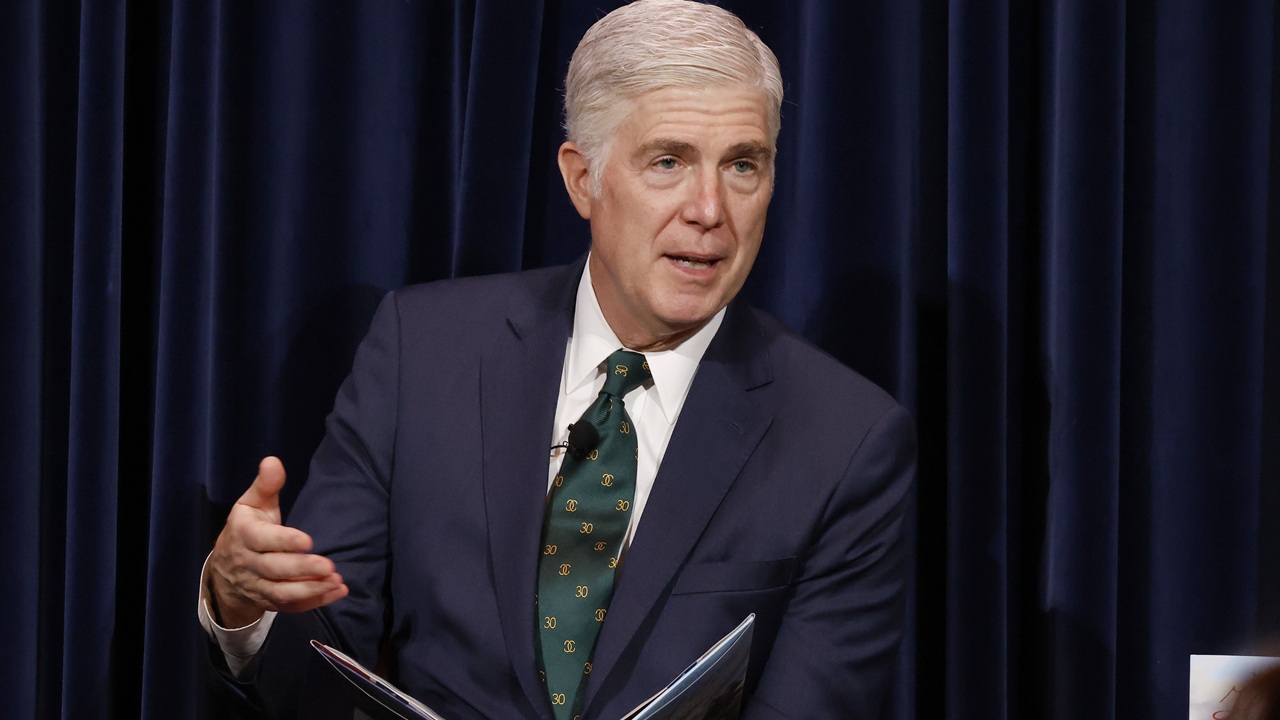
In a 6–3 decision written by Justice Neil Gorsuch, the Supreme Court held that RLUIPA does not authorize money damages against state corrections officials in their individual capacities. The Court reasoned that Congress enacted RLUIPA under its Spending Clause authority, which binds only those who voluntarily and knowingly accept federal funding conditions. Because the individual prison officers were not part of any agreement with the federal government and did not personally consent to liability under RLUIPA, Landor could not pursue damages against them. The Court therefore affirmed the judgment of the Fifth Circuit.
Landor argued that RLUIPA permits money damages against government officials in their individual capacities because the statute authorizes claimants to obtain “appropriate relief against a government.” The United States, supporting Landor, submitted an amicus brief where it argued that the Supreme Court’s decision in Tanzin v. Tanvir interpreted identical language in the Religious Freedom Restoration Act (RFRA) to allow damages against individual government officials.
Because RLUIPA and RFRA are often described as “sister statutes,” the government argued that they should be interpreted consistently. The United States further contended that damages are sometimes the only meaningful way to remedy violations of religious liberty. Once Landor’s dreadlocks were cut, there was no way to undo the harm. Allowing damages, supporters argued, provides accountability for officials who violate clearly established religious rights and ensures that victims receive a meaningful remedy.
The Louisiana Department of Corrections and the National Sheriffs’ Association had a different view. They argued that RLUIPA was designed to prevent ongoing burdens on religious exercise through injunctions and policy changes rather than to create personal liability for individual officers. They maintained that the Court’s decision in Sossamon v. Texas treated RLUIPA’s authorization of “appropriate relief” as too ambiguous to clearly authorize damages.
They also argued that because RLUIPA was enacted under Congress’s Spending Clause authority, liability should extend only to entities that receive federal funds, not individual officers who are not direct recipients. Expanding RLUIPA to allow personal capacity damages, they warned, would expose sheriffs, jail officials, and correctional officers to personal lawsuits that go beyond what Congress intended.
Justice Gorsuch explained that the Constitution’s Spending Clause may confer on Congress the power to spend money on the “general welfare,” but it does not “endow Congress with any power to regulate conduct.” And while Congress can attach strings to the funds it distributes, if a recipient violates those conditions, Congress can move to terminate the funding.
In this case, the Louisiana’s Department of Corrections (LDOC) accepted federal funding and agreed to comply with RLUIPA’s requirements, but the individual correctional officers employed by LDOC did not “voluntarily and knowingly” consent to the terms of the agreement between the federal government and the Louisiana Department of Public Safety & Corrections.
Because Congress lacks a general power to regulate individuals through the Spending Clause, the Court concluded that personal liability may be imposed only on parties who knowingly and voluntarily consent to the conditions attached to federal funds. The majority also rejected arguments based on agency law, indirect receipt of federal funds, and the Necessary and Proper Clause, reasoning that allowing damages suits against nonconsenting individuals would improperly expand federal power beyond its constitutional limits.
Justice Jackson authored the dissent, joined by Sotomayor and Kagan. The dissent argued that RLUIPA requires local and state prisons that accept federal funding to accommodate a prisoner’s religious exercise, and that the statute specifically authorizes damages suits against government employees in their individual capacity. The majority “magically transforms a federal statute into an invitation to be accepted or declined, deemed binding only if each particular defendant has explicitly agreed to be penalized.” As a result, prison officials will have little incentive to accommodate the free exercise rights of prisoners, knowing full well that if they violate the law, they won’t be held personally liable.
More from this network:
Domains for Sale · GOTPeople.org · TheDSAPlatform · The Truth About Socialism
What's Your Reaction?
 Like
0
Like
0
 Dislike
0
Dislike
0
 Love
0
Love
0
 Funny
0
Funny
0
 Wow
0
Wow
0
 Sad
0
Sad
0
 Angry
0
Angry
0

I am just an average American. My teen years were in the late 70s and I participated in all that that decade offered. Started working young, too young. Then I joined the Army before I graduated High School. I spent 25 years in, mostly in Infantry units. Since then I've worked in information technology positions all at small family owned companies. At this rate I'll never be a tech millionaire. When I was young I rode horses as much as I could. I do believe I should have been a cowboy. I'm getting in the saddle again by taking riding lessons and see where it goes.
Premium domains for sale










Comments (0)