

Stop Blaming Sysco – The Real Reason Every Restaurant Tastes the Same
Premium domains for sale
Freedom Is Back In Style
There’s a narrative making the rounds on social media that tries to explain why so many restaurants taste the same. The villain, we’re told, is Sysco. According to the internet, one giant food distributor supplies every restaurant in America with the same frozen food, which is why every mozzarella stick, onion ring, chicken tender, and burger tastes identical. It’s certainly a satisfying story, but unfortunately it’s not that simple.
Freedom Is Back
In Style
Premium domains for sale
I don’t have any particular interest in defending Sysco. In fact, I have plenty of criticisms of large food distributors in general, from their unwillingness to support local producers to their lack of general customer service, but blaming Sysco for what has happened to the American restaurant industry is like blaming UPS because every package looks the same. Sysco isn’t creating the demand for generic pre-processed junk; it’s responding to the (government-manipulated) market.
If you really want to understand why restaurant food has become so homogenized, you have to stop looking at the distributor and start looking at the incentives that created the demand in the first place. As economist Thomas Sowell has often argued, people respond to incentives. You don’t change outcomes by pretending human nature is different than it is; you change the incentive structure, and behavior follows.
Over the past 15 years, the economics of running a restaurant have changed dramatically. Labor costs have blown up, food costs have nearly doubled — rent, insurance, utilities, workers’ compensation, credit card fees, compliance costs, and government regulations have all increased. Restaurant margins, which were never especially generous to begin with, have been squeezed thinner and thinner. Sometimes it feels like we are running a non-profit, and I don’t mean a 501(c)(3).
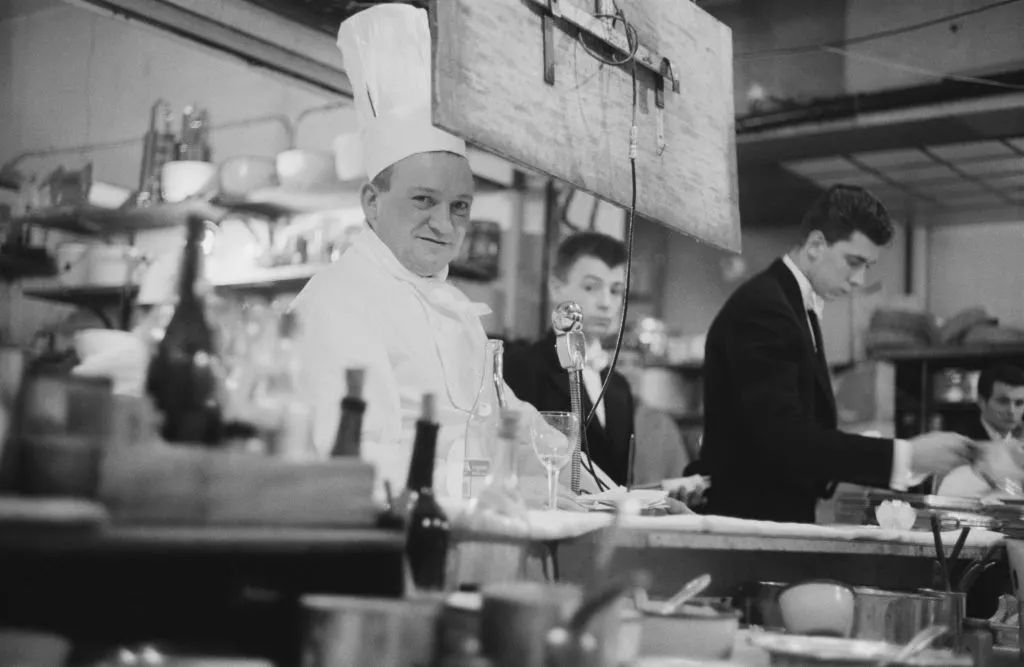
For decades, restaurants could survive by preparing food from scratch every day. They employed prep cooks who chopped onions, breaded chicken, cut fries, made sauces, rolled meatballs, and prepared desserts using the owners’ recipes. That labor was never “cheap,” but it was manageable.
Today, that same labor has become one of the hardest expenses to justify. When labor and food already consume well over half of every dollar that comes through the register (typically 60-70 cents on every dollar), owners begin to question those foundational operations: “Can someone else do this cheaper? Can someone do this absent the excess workers’ compensation costs or the risk of changing labor violations?”
That’s where the food manufacturers find their opening. Restaurant owners decided they could buy labor along with their products, especially if they are mass-produced. The onion rings arrive already breaded, the chicken already par-fried, the fish already dusted in cornmeal, and the mozzarella sticks already assembled (complete with TikTok-ready cheese pull). Sauces are made in massive facilities, packaged, labeled under different brands, and shipped through distributors across the country. Whether the box arrives from Sysco, US Foods, Performance Food Group, Shamrock Foods, or a regional distributor is almost beside the point; in many cases, those products originated from the very same manufacturers, just with different labels.
Distributors didn’t invent this model; the market demanded it because the economics forced them to. This had become a more prevalent industry trend, but COVID nitro-boosted it. During the pandemic, labor became even scarcer (as people were paid not to work), while supply chains became entirely unpredictable. Restaurants outsourced everything they possibly could just to survive. Sauces moved to co-packers — products that once required skilled kitchen labor became commodities. The government loved this because now they had only a few companies to control, as opposed to thousands of smaller ones. This is why I suggest the COVID economy was a corporatists’ dream: It killed the “artisanal” nature of the restaurant industry.
It also perpetuated a movement that made Americans sicker (sadly, during a pandemic that targeted those with chronic disease). Factory-produced food has to survive transportation, freezing, warehousing, and distribution. That means they must use an abundance of stabilizers, preservatives, gums, emulsifiers, fillers, and countless ingredients that never existed in traditional scratch kitchens. These questionable ingredients are often approved through the Generally Recognized as Safe (GRAS) loophole, becoming necessary parts of the manufacturing process and, subsequently, the food supply chain. I’m not suggesting every processed ingredient is inherently dangerous, but anyone who’s worked inside both scratch kitchens and large-scale food manufacturing understands they’re fundamentally different products. One requires a chef, and one requires a chemist. The further food moves from the kitchen toward the factory, the more processing it generally requires.
So, when people ask why restaurant food feels heavier than it used to or why everything tastes similar, or why eating out leaves them feeling sluggish, this is exactly why. And these are the right questions to ask; I am glad Americans still have the palate to taste it, but we might just be blaming the wrong company.
There’s another restaurant “pipeline” that deserves an honest discussion — the workforce. We’ve hollowed out the labor pipeline upon which restaurants once depended. For decades, restaurants trained people from the ground up. To start, you washed dishes, then learned prep, worked the line, and eventually became a sous chef. A select few may have become executive chefs or opened their own places.
That pipeline is broken. Too many young people have been told that success only comes from earning a $200K four-year degree and pursuing a white-collar profession, or getting five more degrees in comparative literature. Meanwhile, vocational education has steadily lost ground as fewer students are encouraged to master skilled trades, including culinary trades, that require discipline, craftsmanship, and years of experience. We traded woodshop, auto shop, and home economics for the fantasy that every kid needed a college degree — a cultural shift “Mr. Birchum” skewered because it has left America desperately short of hands-on workers.
When culinary graduates do enter the workforce, most demand management or executive roles much earlier than previous generations did, regardless of their experience. Restaurants, meanwhile, still need experienced line cooks, prep cooks, and kitchen staff who can execute consistently under pressure. The shortage isn’t simply about wages; it’s about the shrinking number of people entering the profession and staying long enough to master it. It’s another incentive problem.
Then there’s consolidation. Over the past decade, private equity and large investment groups have acquired significant numbers of restaurant brands. Don’t get me wrong: not every investment firm is bad; many have turned around struggling businesses and preserved jobs, but ownership incentives also matter.
If financial performance is measured quarter by quarter through the lens of a board, every kitchen becomes a spreadsheet. Anyone who has worked in a large hotel kitchen or a private equity-backed concept knows this. It’s a joke amongst chefs: every labor hour becomes a cost center, which means every semi-complicated recipe becomes an opportunity to cut (and round out some Chief Operating Officer’s bonus).
If replacing six hours of kitchen prep with a frozen product adds another point to earnings before interest, taxes, depreciation, and amortization, the pressure to make that change becomes enormous. Again, this isn’t about evil people making evil decisions; it’s more so about rational Chief Financial Officers who know nothing about food responding to the incentives in front of them. Independent owner-operators think differently because they live with the consequences differently.
When your name is on the building (something I can never do with a name like Gruel), when your kids grow up in the dining room, when your customers know you personally, quality becomes more than shareholder value — ultimately, your reputation is your retirement plan.
That’s why I (and many other great chefs) choose to make as much as possible from scratch. Does it cost us margin? Absolutely. Making food in-house costs significantly more money, requires more labor, and can create more waste. On paper, it’s the less profitable decision. But I believe customers recognize the difference between food cooked in a kitchen and food assembled in a lab. I’d rather sacrifice several points of margin today if it means earning one loyal customer who doesn’t get sick down the road.
If we want America’s restaurants to taste as they used to, we should ask why independent restaurants no longer have the economic freedom to cook the way they once did. Who is driving these decisions?
Getting back to real restaurant food means reducing unnecessary regulatory burdens that disproportionately hurt small operators. It means expanding vocational education and restoring respect for skilled trades. It means creating an economic environment in which independent restaurants can compete without being forced into industrial food production just to survive. In essence, bring back Main Street.
America doesn’t need another thousand identical restaurant locations serving identical food prepared in identical factories, arguably making us sicker. We need more entrepreneurs who own one restaurant instead of one hundred. Heck, we need more families building businesses in their communities (that’s why I keep having so many kids — for the free labor). And more cooks (note I don’t say chefs) creating menus instead of selecting products from a culinary Sears catalog.
If we change those incentives, I predict restaurants won’t need to buy so much factory-made food and distributors like Sysco won’t sell as much of it. They will get back to being a pipeline for thousands of small producers who don’t have trucking and storage capability. Heck, maybe we can bring back the Jersey diner!
Stop blaming the distributor; blame the overregulation and fix the incentives.
***
Andrew Gruel is a chef, restaurateur, and Huntington Beach City Councilmember.
More from this network:
Domains for Sale · GOTPeople.org · TheDSAPlatform · The Truth About Socialism
What's Your Reaction?
 Like
0
Like
0
 Dislike
0
Dislike
0
 Love
0
Love
0
 Funny
0
Funny
0
 Wow
0
Wow
0
 Sad
0
Sad
0
 Angry
0
Angry
0

I am just an average American. My teen years were in the late 70s and I participated in all that that decade offered. Started working young, too young. Then I joined the Army before I graduated High School. I spent 25 years in, mostly in Infantry units. Since then I've worked in information technology positions all at small family owned companies. At this rate I'll never be a tech millionaire. When I was young I rode horses as much as I could. I do believe I should have been a cowboy. I'm getting in the saddle again by taking riding lessons and see where it goes.
Premium domains for sale














Comments (0)