

Spanberger’s Problem Isn’t Affordability. It’s Believability
Premium domains for sale
Freedom Is Back In Style
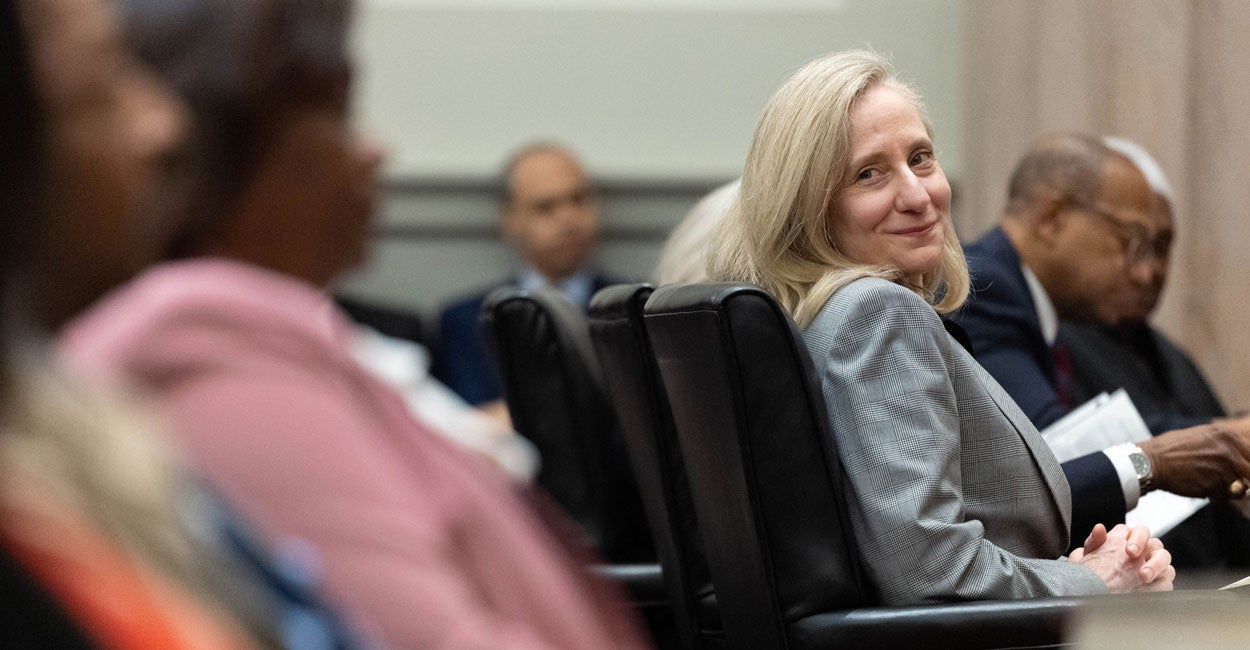
Virginia Gov. Abigail Spanberger is struggling to explain how her popularity has collapsed just months into her administration.
Freedom Is Back
In Style
Premium domains for sale
At a press briefing designed to look like a happenstance meeting with reporters on the sidewalk outside of the governor’s mansion in Richmond, Spanberger addressed a Washington Post/Schar poll that showed her losing 11% of her approval since November’s election, when her approval rating was 57.4% to 46%.
Her answer was more cringe than an impromptu chat with Kamala Harris: “If everybody hated me, why is everybody putting my face on their mailers for the referendum?” Spanberger said.
Excuse us, madame governor, but that wasn’t the question.
Two folks I have recently spoken to could shed some light on the issue for the governor if she were to reach out to them. Rather than waiting for her Cheshire grin to vanish, let’s lay it out.
First, I spoke with former state Sen. Chap Petersen, a Democrat from Fairfax County, and asked him if diving headfirst into the redistricting vote contributed to the decline in her support.
“I think it was a mistake—I felt like it was really a bad mistake for her to start her administration that way on such an openly partisan issue.” Petersen said.
“You know, I think when she got started, she ran successfully as a moderate Democrat, someone that was going to work with both sides, work across the aisle,” he added. “She got elected with a very large majority, which I think reflected that, and she got dragged into this redistricting issue, which she had not run on. [Redistricting] had not been part of her platform, and I think that was a mistake.”
Other partisan issues Spanberger downplayed on the campaign seem to be the crux of Spanberger’s flailing popularity. Twenty gun ownership-restricting bills have already passed the Virginia General Assembly during SPanberger’s term. Democrats also proposed a massive expansion of items open to sales tax, which didn’t make it through, but it’s the thought that seems to count with Virginia’s voters. And while Democrats propose new taxes, little progress has been made on the affordability issue.
Even more problematic for Democrats, in Richmond and in Washington, is polling that suggests “no” will carry the day for Virginia’s April 21 redistricting referendum.
Redistricting failure would be yet another sign that Virginia’s Democrats seemed to have awakened the sleeping elephant that sat out the 2025 gubernatorial election. Coupled with the tattered coattails of the governor, it does not bode well for Virginia playing a major role in flipping the U.S. House of Representatives for Democrats.
And things seem poised to get worse for the governor’s affordability agenda.
Stephen Haner is a policy analyst for the Thomas Jefferson Institute, and after a lifetime spent on both sides of the lobby, he correctly predicted that if Spanberger rejoined the Regional Greenhouse Gas Initiative (RGGI), Virginians would be paying more for their electricity.
“It’s going to be a big number” he said, “And it’s going to be far more than it was when we were paying it three years ago—on a typical bill it was $3 or $4. So, we were paying about $15 or $16 a ton at the end three years ago. It is now $25 or $26 a ton, and it’s going to keep going up because in 2027 they’re reshuffling all the rules. They’re eliminating a lot of the allowances.”
The proposed budget creates a new category for “large consumers” of energy (namely, data centers). Nevertheless, the rates on consumers are going up anyway.
I asked Haner if data centers are really making the average Virginian pay more for their electricity. “Nobody really sort of put RGGI and the data centers together either, but again, their raw material is electricity,” he replied. “So RGGI raises the price of their electricity and their raw materials as well. That [means] they’re going to be paying a huge amount of this money when the time comes.”
Just like all of us.
On April 6, the Virginia Mercury reported that state officials “expect the commonwealth to participate in the program’s September (RGGI) auction once regulations to reestablish the CO2 budget trading program are finalized. Dominion Energy plans to petition the State Corporation Commission in June to add the cost of those credit auctions back onto ratepayer’s bills.”
Later that day, the Virginia Public Access Project exposed that the governor, who said on the campaign trail she does not take donations from corporate entities, accepted a $100,000 contribution from Dominion Energy for her inaugural fund.
Perhaps the party that ran on affordability has forgotten that believability may be their bigger problem.
The post Spanberger’s Problem Isn’t Affordability. It’s Believability appeared first on The Daily Signal.
More from this network:
Domains for Sale · GOTPeople.org · TheDSAPlatform · The Truth About Socialism
What's Your Reaction?
 Like
0
Like
0
 Dislike
0
Dislike
0
 Love
0
Love
0
 Funny
0
Funny
0
 Wow
0
Wow
0
 Sad
0
Sad
0
 Angry
0
Angry
0

I am just an average American. My teen years were in the late 70s and I participated in all that that decade offered. Started working young, too young. Then I joined the Army before I graduated High School. I spent 25 years in, mostly in Infantry units. Since then I've worked in information technology positions all at small family owned companies. At this rate I'll never be a tech millionaire. When I was young I rode horses as much as I could. I do believe I should have been a cowboy. I'm getting in the saddle again by taking riding lessons and see where it goes.
Premium domains for sale
















Comments (0)