

The American Ethos And The Ghosts Of The West
Premium domains for sale
Freedom Is Back In Style
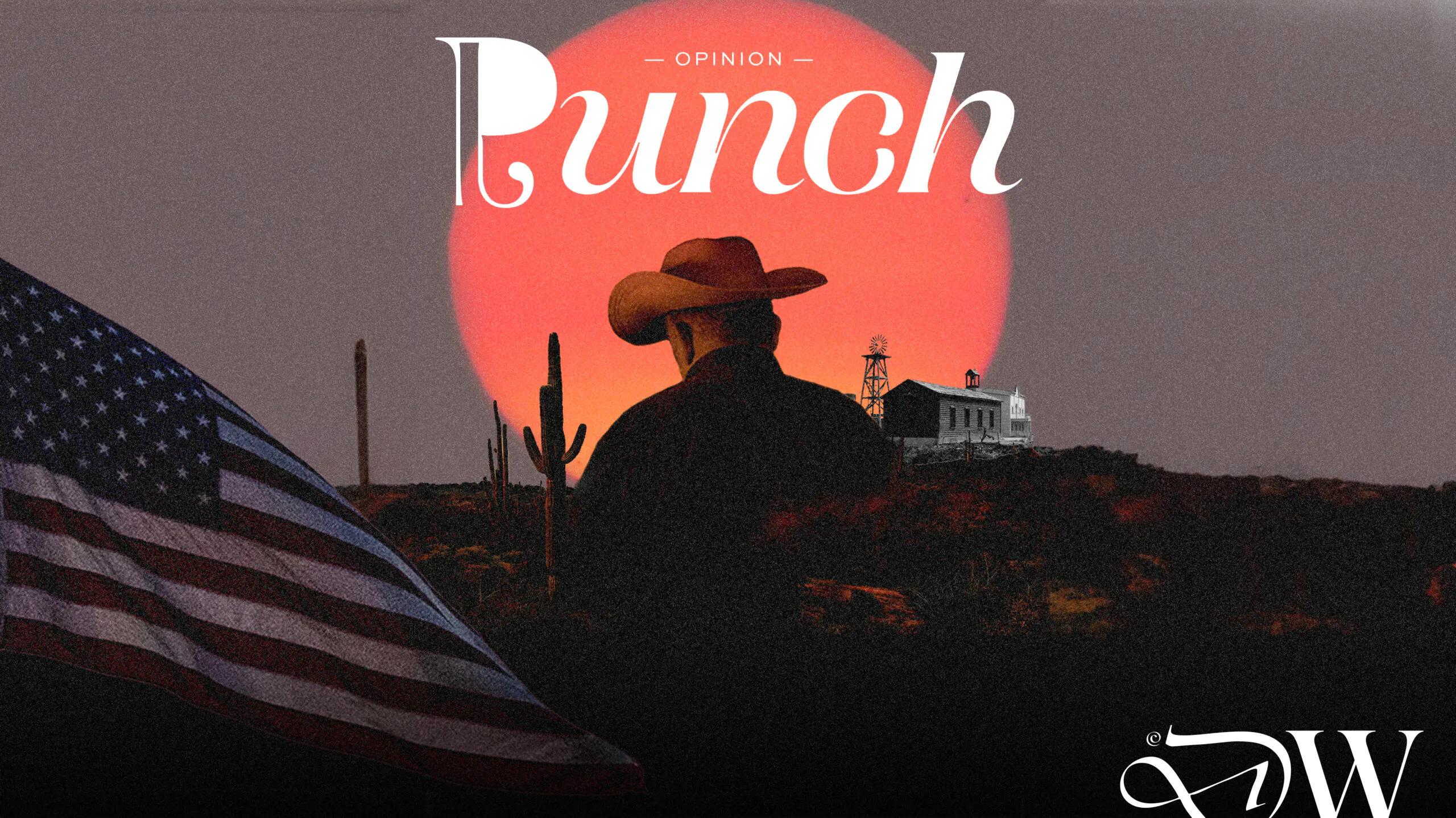
Traveling southwest on the Catalina Highway toward the heart of Tucson, twisting and descending through Coronado National Forest, where the rock-hewn vistas meet the high, bright blue of sky that swallows any fear that God does not exist. It is such a place where one would expect to be surrounded by the radiating waves of heat on a baking blacktop, as a spectator to some aged, weathered vaquero of the lost ages of the Wild West.
Freedom Is Back
In Style
Premium domains for sale
You can see it as you fall out of the prehistoric heat-swell of the canyons and mountains, each pitched against the other as if they were remnants of a war between Greek gods, scars and fissures, and the heaving of the earth: Tucson. The oldest city in the Arizona Territory that maintains its ties to the dusty wiles of its past through old, glorified museums, sun-faded rodeos, and capital-A Americana. The gunslinger and wagon-bound settler and the Indian and the law. They converge on a place that can still barely maintain its proper sense of being, balanced with tourist thirst traps. Along that highway through God’s country back to the terra firma of the U-S-of-A and one can pass the Trail Dust Town with its mock gunfights and chintzy steak house (complete with cowbell-ringing waitresses outfitted with hip-slung blue jeans and soft drawls welcoming you, “Darlin’”), and gift shops with sterling silver baubles outlined in turquoise and fool’s gold, and Kachina dolls, and paperweights of smooth glass encasing tarantulas, scorpions, and the various genus of poisonous vermin and arachnid that scuttles about the desert floor. And the tourists ramble into the shops crammed together, peering at the oddities and treasures on equally crammed shelves with wide grins and sweaty necks and bellies full of steakhouse T-bones and smelling of baked beans and Western dressing.
Ask any of the shopkeepers who run the little enclave of strung-together gift stores, hot sauce and salsa shops, jewelers, novelty stands and Western wear haberdasheries — strike up a conversation that starts with a statement, but is really a question: “I bet you’ve seen a lot of changes here,” and let a Roy Murrow or Abe Walker or Sherri Lantis ramble about the Walmart on Speedway Boulevard or the In-N-Out Burger off South Kolb Road, or the damn university kids, and one gets a sense, just by the tired, crow’s feet-lined frowns and deep, distant eyes on wizened faces that there’s something that’s lost. What once was the destination of the kid who dreamed of Roy Rogers and John Wayne’s “Stagecoach” and the Earps, whose soundtrack was the slow, rap-rap-rap tempo of boot heels on raised-plank boardwalks accompanied by the ominous jingle of well-used spurs, had been buried with the myth that brought it fame, notoriety — and crowds.
Speeding south into Tucson where Catalina terminates, joining Tanque Verde — a mainline road banking east to west with a slow curve south over the Pantano Wash, past the Trail Dust Town, past the pop-up cannabis shop, Golf ‘N Stuff, a series of squat, adobe-style apartments — the two-level kind with Spanish tile roofs and centered around a courtyard overrun with thorny catclaw acacia, prickly pear, and Larrea tridentata with its tiny yellow-tinged, waxy flowers giving that decidedly rain smell after a rolling storm.
Then, take a straight shot south on Pantano until you run up to the airfield. The airfield. Stretches of planes, comatose and covered, baking in the unrelenting sun, swirls of heat rising between wings and shadowed bellies of hulking P-3 Orions and E-3C AWACS. All around the gray metal beasts sit silently in formation: here, C-130s, there, A-10 Warthogs, farther down field, one can make out the sleek, streamlined lethality of a grouping of F-16s with each seam and gap meticulously wrapped and sealed as if the very desert would cause the second death of these retired warriors. Where once they hunted and evaded the enemy as rulers of the sky, now the planes were at its mercy in the arid, unceasing desert heat.
This isn’t any airfield. This is Davis-Monthan Air Force Base, where 3,500 retired or stored aircraft sit, month after month, waiting for their fate either to be cannibalized or revived into former air superiority glory.
The story of these planes isn’t contained between Alvernon Way and South Houghton Road. It bleeds out into the desert. It creeps out like ghosts in the night, haunting the dreams of young men — those who used to dream of gunfights and horse trails and warm whisky in dark saloons and the jingle of spurs on hollow boardwalks. Now, they dream of going Mach 5.29, burning jet fuel, puking their insides out on test flights, and pushing the boundaries of the impossible because they refuse the idea of the impossible.
Before the movie Top Gun was made, it was a story in a magazine. The May 1983 issue of California magazine was sitting in a dentist’s office when film producer Don Simpson picked it up, read a few pages, and immediately, in his guts, knew: this was a film that had to be made. This was a story of speed, adventure, danger, excellence, masculinity, death-defying, gravity-breaking, pulse-pounding adventure that had to be told. And he was right. And only a man who refused to be bound by the constraints of the physically possible and psychologically normal could see and recognize the American essence in this story. Never mind that Simpson was notoriously fueled by cocaine and booze — a man who took his filmmaking and partying with equal passion and determination. He tapped into the veins of what made America’s blood pump. After all, he was altogether unfazed by the death of his drug rehab coach in his pool house, naked. The temptation to bring this story to the big screen was too strong. The article’s author, Ehud Yonay, writes in “Top Guns”:
Once over the Mexican border they pick up speed, and Yogi starts jinking. He whips the stick — the steering mechanism between his legs — from side to side and the plane rolls this way and that, letting him and Possum spot anybody making for their tail. From where they sit, however, it’s not their silver rocket that’s rocking but the entire vast blue dome of sea and sky. There are no ups or downs up here, no rights or lefts, just a barely perceptible line separating one blue from another, and that line is spinning and racing like mad in the distance. Yogi was still in junior high school when he realized that flying straight and level might be okay for some people, but if you like yanking and banking — the feeling of riding inside one of those storm-in-a-bottle souvenirs — then there’s just one place for you, and that’s the cockpit of a fighter plane.
Now we have willow-fingered suss-gussets picking through the bones of our Americana like vultures on a highway roadkill, stinking and bubbling in the sun, the last soul that dared venture out under the cover of night to be barreled over by a rust-colored Buick Skylark.
Capital-A Americana has been worn smooth over the decades by a culture that bristles at hard things. What once was the stuff that made legends has turned into cautionary tales. “Go West” was the slogan of the intrepid and the bold; now merely a bumper sticker catch phrase for glamping outlets and secret sauce limited-time burgers at Arby’s.
We’ve had the essence of Americana squeezed out of us by intellectuals and ivory-tower academics and wannabe sophisticates wholesale by industrial-grade juicers, strained through a dozen gauzy layers of cheesecloth by the strangling hands of PC-mindedness, and sent through the clinking and clamoring bureaucracy like miles of twisting, nonsensical pipes, sloshing along until our Americanness has been sterilized and ostracized and thinned out to be wholly unrecognizable.
There is no toughness, no fortitude into the unknown, no unforged paths, no aspirations toward the conquest: it’s been conditioned out of us. Then those same mawing shrieks who scold the veritable past squeeze harder.
Is the Americana ethos extinct?
There are many who want it to be. Those who take the “boy” out of Boy Scout, who allow Top Gun its theatrical moment but snub it at awards shows. Who see Sidney Sweeney in blue jeans and believe it’s a racist dog whistle. Who hear Lana Del Rey and dismiss her as a conservative avatar. And it’s politicians who “support our troops” but trash masculinity — the very trait that makes an effective warrior who he is. They are the inevitable heirs of condescending culture gatekeepers who castigated “ticky-tacky” mid-20th-century homes that housed the heroes of WWII, right along with the values and mores that enabled them to fight and win.
Even at the Olympics, we went from wearing cowboy hats to Ralph Lauren beanies. Even our astronauts talk in soothing half-tones and repeat unremarkable Urban Dictionary pop-culture catchphrases of a Girl Scout Troop dad, rather than the successors to the first-generation astronauts forged by WWII, the frozen hell of Korea, and death-defying flights piloting experimental aircraft.
Walk through the boneyard and feel the men who stood there. Men at war. Men who smoked Lucky Strikes, chewed Beeman’s gum, and pushed the limits of physical and spiritual stamina. They blasted off through the bleak desert rock toward heaven itself. Young men mocking the sky gods with a smirk and boldness and squaring up to Death as if to say, “Go ahead, old man, give it your best. I dare you.” It was the embodiment of single combat: man battling his fears and self-doubt.
The American Empire is an ethos. It is a conquering force against our own trepidation and despondency as much as against the foolish, pretentious legions who repeatedly count us out. When men aspire to greatness, America achieves it.
People are quick to dismiss the current rise in nostalgia for an era before social media, the firehose of stimulation of the information age, and siloed experiences. But they are mistaking nostalgia for a gnawing awareness that something is missing. And it’s correct to feel this way because something is — that thing squeezed and crushed and mashed and forced through an extruder until all that remains is a shredded pulp: The American spirit. The American, in his set-jaw determination toward freedom, who holds the map to forgotten places, who hears “Go West” as a challenge, not a joke; the dreamer, the drifter, the risk-taker. He is the protector, the warrior, and the builder.
These are men who understand that when they climb on that horse or sit in that jet or board a spaceship, they might not come home. They understand that death is the price for living. That hard things done by hard men are necessary for the continuation and building of a society that only knows the frictionless world of modernity.
“Man is not made for defeat. A man can be destroyed but not defeated,” wrote Ernest Hemingway, in his gruff confidence, the writer who spared no kindness for self-inflicted weakness; no mercies for guilt-ridden lamentations of the relentlessly torpid. In a man’s life, resilience defines his unyielding core — the victory of single combat — man versus his own fear.
Reclaim the essence of the American spirit; it’s still out there in the midst of the boneyards and tumbleweeds, inhospitable except to the man who dares forge his path on his own terms — not for nostalgia, or wide-smiling gawkers, or to keep the bone-picking vultures away, but because his spirit demands it.
***
More from this network:
Domains for Sale · GOTPeople.org · TheDSAPlatform · The Truth About Socialism
What's Your Reaction?
 Like
0
Like
0
 Dislike
0
Dislike
0
 Love
0
Love
0
 Funny
0
Funny
0
 Wow
0
Wow
0
 Sad
0
Sad
0
 Angry
0
Angry
0

I am just an average American. My teen years were in the late 70s and I participated in all that that decade offered. Started working young, too young. Then I joined the Army before I graduated High School. I spent 25 years in, mostly in Infantry units. Since then I've worked in information technology positions all at small family owned companies. At this rate I'll never be a tech millionaire. When I was young I rode horses as much as I could. I do believe I should have been a cowboy. I'm getting in the saddle again by taking riding lessons and see where it goes.
Premium domains for sale














Comments (0)