

Supreme Court Ends Colorado’s War On Reality
Premium domains for sale
Freedom Is Back In Style
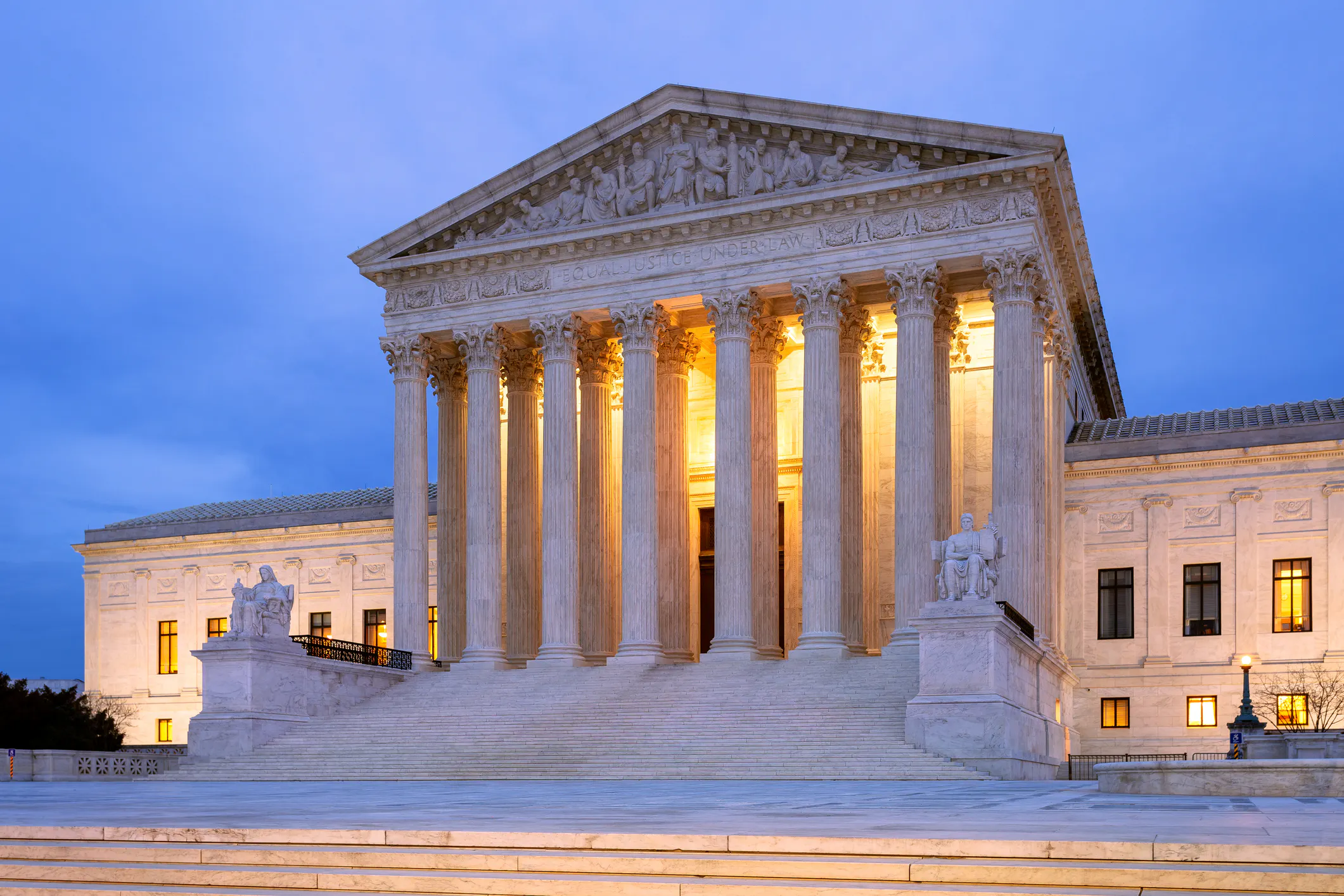
On Tuesday, the Supreme Court ruled in Chiles v. Salazar. The basic concept of the Supreme Court ruling was that the state of Colorado was wrong to ban what is called conversion therapy.
Freedom Is Back
In Style
Premium domains for sale
The 2019 Colorado law prohibited licensed mental health professionals from engaging in conversion therapy with patients under 18 years of age. They defined conversion therapy to include any practice or treatment that attempts to change an individual’s sexual orientation or gender identity, as well as any effort to change behaviors or gender expressions, or to eliminate or reduce sexual or romantic attractions toward individuals of the same sex.
That same law allowed counselors to provide “acceptance, support, and understanding for identity exploration and development,” and to assist persons “undergoing gender transition.”
In other words, the Colorado law said that if a kid comes to you with gender confusion, you are not allowed to say, “Boys are boys and girls are girls. Let’s help you be more comfortable in your body.”
If a boy says, “I’m a girl, “you have to affirm him. And if you don’t affirm him, you’re engaged in conversion therapy, and you can be prosecuted under the law in the state of Colorado.
If a kid comes to you and says, “Listen, I’m confused about my feelings of sexual attraction,” you’re not allowed to talk that through and say, “You know what? You’re 14 years old. A lot of people are confused about sexual attraction at 14 years old. You’re being hit by hormones that you’ve never experienced before, and you really don’t have any sort of clear line as to how to live your life, so let’s talk this thing through.”

That might be conversion therapy, because that could be construed as an attempt to change behavior, or eliminate or reduce sexual or romantic attraction toward individuals of the same sex.
Instead, you’re supposed to just give that kid a Pride flag and tell them to get out there and march.
The plaintiff in this case, Kelly Chiles, holds a master’s degree in clinical mental health and a state counseling license in Colorado.
According to the Supreme Court, Chiles doesn’t start counseling with any predetermined goals. Instead, she sits down with clients, discusses their goals, and then formulates methods of counseling that will most benefit them, seeking throughout to respect their client’s fundamental right of self-determination, matters of sexuality and gender. The clients sometimes have different agendas, according to the Supreme Court; some are perfectly happy being gay or lesbian or transgender identifying, and others want to reduce or eliminate unwanted sexual attractions, or change sexual behaviors, or grow in the experience of harmony with their bodies.
Under Colorado law, those last people are just plumb out of luck. There’s nothing they can do. Because if you, for example, are a person who has a fetish and you don’t want to have that fetish anymore, according to Colorado law, you are not allowed as a therapist to try to change an individual’s behaviors regarding sexual or romantic attraction.
Supreme Court Justice Neil Gorsuch, who is not a strict textualist when it comes to these matters, wrote the opinion, and his basic opinion is pretty simple: The First Amendment allows therapists to say what they want to say during therapy.
The only person who voted in dissent was, of course — wait for it — Ketanji Brown Jackson, the dumbest person on the Supreme Court.
This is saying a lot because Sonia Sotomayor is also on the Supreme Court.
Gorsuch wrote:
Consistent with the First Amendment’s jealous protections for the individual’s right to think and speak freely, this Court has long held that laws regulating speech based on its subject matter or “communicative content” are “presumptively unconstitutional.” … We have recognized, as well, the even greater dangers associated with regulations that discriminate based on the speaker’s point of view.
In other words, the big problem here is that it’s not just that Colorado is putting regulations on speech; those regulations on speech are content-dependent. Colorado says you can say these things that we agree with, but you cannot say these things with which we disagree.
Gorsuch continued:
While the First Amendment protects many and varied forms of expression, the spoken word is perhaps the quintessential form of protected speech. And that is exactly the kind of expression in which Ms. Chiles seeks to engage. As a talk therapist, all Ms. Chiles does is speak with clients; she does not prescribe medication, use medical devices, or employ any physical methods. …
Consider, too, where the State and dissent’s logic leads. Not long ago, many medical experts and organizations, including the American Psychiatric Association, considered homosexuality a mental disorder. On the view Colorado and the dissent advance, a law adopted during that era prohibiting counselors from engaging in the “substandard care” of affirming their clients’ homosexuality would have been subject to only rational-basis or intermediate-scrutiny review—and likely upheld. Today, tomorrow, and forever, too, any professional speech that deviates from “current beliefs about the safety and efficacy of various medical treatments” could be silenced with relative ease.
In other words, the court is saying, “If Colorado is suggesting that a state can determine what is the best course of care with regard to opinions on open matters of gender and sexuality, and then mandate that sort of stuff on subject matter basis, that is violation of free speech.”
The court goes out of its way to really slap Jackson. That last statement — “Today, tomorrow, and forever, too, any professional speech that deviates from ‘current beliefs about the safety and efficacy of various medical treatments’ could be silenced with relative ease,” is followed by this: “It is a consequence Colorado freely acknowledges. And one the dissent embraces.”
The opinion then cites Buck v. Bell. That is a scathing rebuttal to Jackson, because Buck v. Bell was the case that suggested that you had the ability under the law to sexually sterilize inmates of institutions, because that was the prevailing science of the time. Jackson has said that she liked that law.
Jackson said in the Chiles case that Colorado was simply “restricting a dangerous therapy modality,” adding that the court’s opinion was “unprincipled and unworkable.” She followed with a long statement about how wonderful the gender orientation of left-wing philosophy is.
Ketanji Brown Jackson’s dissent is a reminder that if the Left had complete control over the mechanisms of government, it would simply regulate into law all of the most specious and idiotic views about science.
Without President Trump as president, we were super-close to that world, because President Trump is responsible for several selections on the Supreme Court. In this case, Elena Kagan and Sonia Sotomayor ruled with the majority.
But if there were a bunch of Democratic appointees on the court, is that how this would have gone?
More from this network:
Domains for Sale · GOTPeople.org · TheDSAPlatform · The Truth About Socialism
What's Your Reaction?
 Like
0
Like
0
 Dislike
0
Dislike
0
 Love
0
Love
0
 Funny
0
Funny
0
 Wow
0
Wow
0
 Sad
0
Sad
0
 Angry
0
Angry
0

I am just an average American. My teen years were in the late 70s and I participated in all that that decade offered. Started working young, too young. Then I joined the Army before I graduated High School. I spent 25 years in, mostly in Infantry units. Since then I've worked in information technology positions all at small family owned companies. At this rate I'll never be a tech millionaire. When I was young I rode horses as much as I could. I do believe I should have been a cowboy. I'm getting in the saddle again by taking riding lessons and see where it goes.
Premium domains for sale













Comments (0)