

Supreme Court Strikes Down ‘Vampire Rule’ In Major Win For Gun Rights
Premium domains for sale
Freedom Is Back In Style
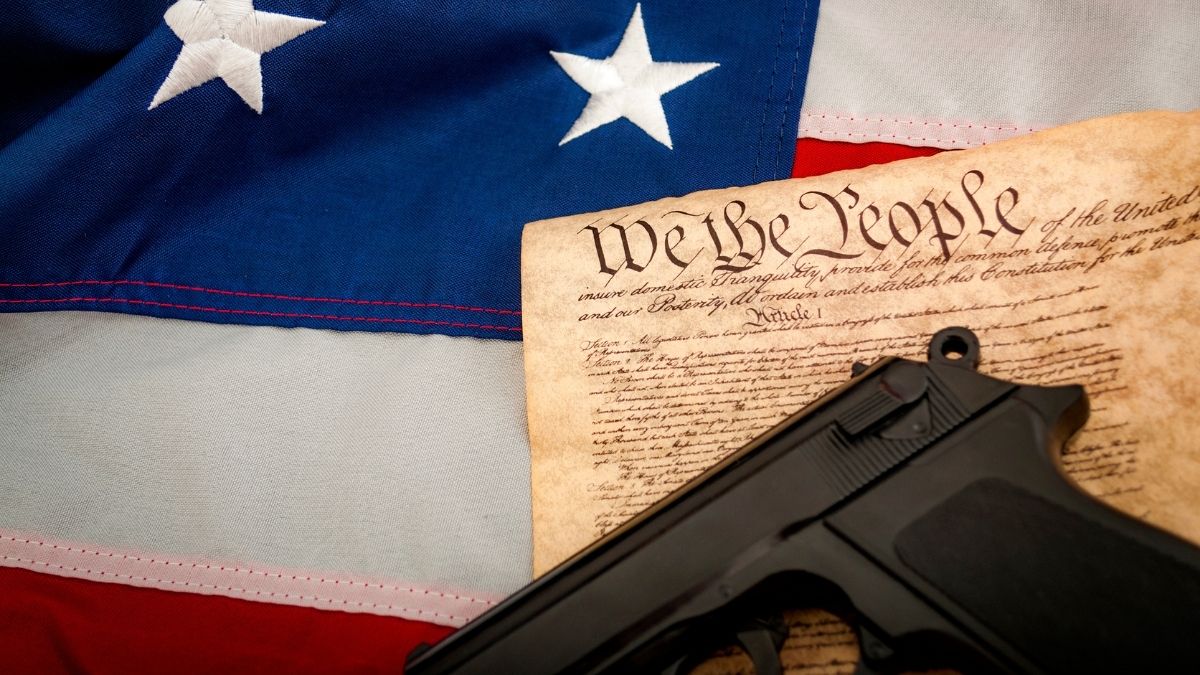
The Supreme Court handed gun-rights advocates a major victory Thursday, striking down Hawaii’s controversial “vampire rule” that effectively banned lawful concealed carry on most private property unless owners explicitly granted permission.
Freedom Is Back
In Style
Premium domains for sale
In a 6-3 decision split along ideological lines, the court ruled that Hawaii’s law violated the Second Amendment, with Justice Samuel Alito writing for the conservative majority.
The law struck down by the court created a default rule prohibiting concealed carry permit holders from bringing firearms onto private property open to the public unless the property owner affirmatively authorized firearms or posted signage allowing them. The measure effectively transformed vast swaths of public life into gun-free zones and forced lawful gun owners to obtain permission before exercising their constitutional right.
The law was dubbed the “vampire rule” by Second Amendment advocates based on classic lore that describes how vampires only enter someone’s home if they’re invited.
The case, Wolford v. Lopez, became one of the most closely watched Second Amendment disputes since the Court’s landmark 2022 decision in New York State Rifle & Pistol Association v. Bruen, which established that modern firearms regulations must be consistent with the nation’s historical tradition of gun laws.
The National Rifle Association quickly hailed the ruling as a major step forward for gun rights.
“Today, the United States Supreme Court delivered a major victory for the Second Amendment in Wolford v. Lopez,” NRA Institute for Legislative Action Executive Director John Commerford said in a statement.
“Building on the NRA’s historic NYSRPA v. Bruen decision, the court struck down Hawaii’s unconstitutional restriction that treated concealed carry permit holders as second-class citizens on publicly accessible private property. Law-abiding gun owners will no longer be forced to beg for special permission simply to exercise their constitutional right to bear arms in public places.”
Commerford added that the organization views the ruling as part of a broader effort to restore Second Amendment protections nationwide. “The NRA celebrates this important win, but it is only another steppingstone in our unrelenting fight to fully restore the Second Amendment rights of all Americans nationwide,” he said.
The court’s liberal justices dissented. Justice Elena Kagan argued that Hawaii’s law closely resembled colonial and founding-era regulations that restricted carrying firearms onto private property without a landowner’s consent. “I would uphold the challenged Hawaii law,” Kagan wrote, arguing that the modern statute was a valid analogue to historical restrictions.
According to Kagan, both the historical laws and Hawaii’s modern law operated in the same way by establishing a default prohibition that property owners could reverse.
“The ‘how’ is identical,” she wrote. “The new law, just like the old ones, sets a default rule against gun carry that a private landowner may reverse.”
Kagan further argued that while some colonial-era laws were focused on concerns such as poaching, they were rooted in the broader principle that armed individuals could create dangers and inconveniences on another person’s property.
The majority disagreed, concluding that Hawaii’s law lacked a sufficiently analogous historical tradition and imposed an unconstitutional burden on lawful gun owners seeking to exercise their Second Amendment rights. The ruling is expected to have implications beyond Hawaii, as several states enacted similar post-Bruen restrictions designed to limit where concealed carry permit holders could legally carry firearms.
The decision marks another significant victory for gun-rights advocates and continues the Supreme Court’s effort to apply the history-and-tradition test established in Bruen to modern firearms regulations.
More from this network:
Domains for Sale · GOTPeople.org · TheDSAPlatform · The Truth About Socialism
What's Your Reaction?
 Like
0
Like
0
 Dislike
0
Dislike
0
 Love
0
Love
0
 Funny
0
Funny
0
 Wow
0
Wow
0
 Sad
0
Sad
0
 Angry
0
Angry
0

I am just an average American. My teen years were in the late 70s and I participated in all that that decade offered. Started working young, too young. Then I joined the Army before I graduated High School. I spent 25 years in, mostly in Infantry units. Since then I've worked in information technology positions all at small family owned companies. At this rate I'll never be a tech millionaire. When I was young I rode horses as much as I could. I do believe I should have been a cowboy. I'm getting in the saddle again by taking riding lessons and see where it goes.
Premium domains for sale


















Comments (0)