

Taxpayer-Funded ‘Cultural Orientation’ Program Teaches Refugees How To Shower And Use A Toilet
Premium domains for sale
Freedom Is Back In Style
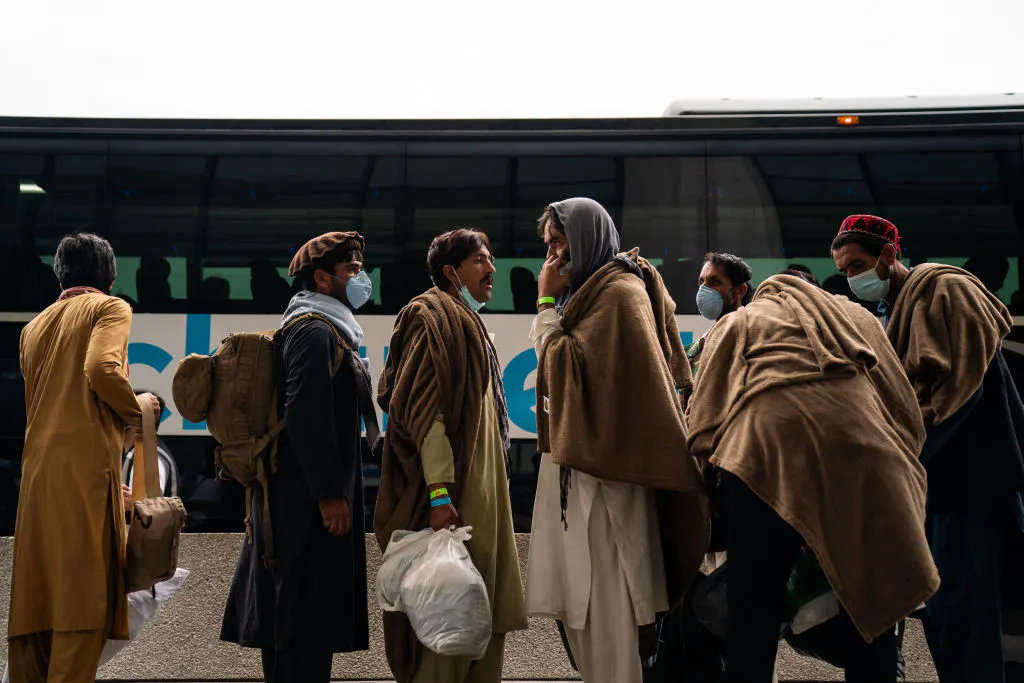
When South African refugees were told they would be shown videos on how to assimilate to American culture, they expected a crash course in local customs and habits they may not have known.
Freedom Is Back
In Style
Premium domains for sale
Instead, they sat wide-eyed as they watched videos teaching them how to shower, use a toilet, and brush their teeth.
Several Afrikaners, members of South Africa’s white minority to whom President Donald Trump has granted special refugee status, told The Daily Wire they were shocked by the videos.
“When we were watching it, we laughed at a lot of these videos and made comedic remarks because they pointed out the obvious regarding not going to the bathroom outside and how to use a microwave even,” said Adriaan, an Afrikaner refugee who arrived in December. “We found it very funny, but we understood as well the idea of like people from Somalia who’ve never had electricity … they were mostly made for people that can’t speak English, that have never lived in a first world country.”
“It was just plain ridiculous,” Marie, another Afrikaner refugee, said.
The videos are produced by an initiative of the nonprofit organization the International Rescue Committee, which is called SettleIn. The program boasts that its content was “developed under agreements financed by the U.S. Department of Health and Human Services, Administration for Children and Families and Bureau of Population, Refugees, and Migration, United States Department of State,” according to its website.
SettleIn’s website adds that its content does not “necessarily represent the policies or official views of those agencies and should not assume endorsement by the Federal Government.”
One of the videos on SettleIn’s YouTube channel promotes “personal hygiene,” saying that “In the United States, this means taking regular showers or baths, applying deodorant daily, washing and grooming hair, and washing clothes frequently.”
“Only toilet paper should be flushed down the toilet,” it adds.
The video goes on to say that “practicing proper personal hygiene promotes good health, prevents the spread of diseases, and may influence relationships with others,” adding: “Personal hygiene is also important for getting and keeping a job.”
An accompanying guide also advises refugees against urinating and spitting “in public.” It also instructs them to “wear clothing that is clean,” “wash hands when they are dirty, after using the bathroom, and before and after eating,” and to “use a tissue, not your hand or the sleeve of your shirt” to wipe a runny nose.
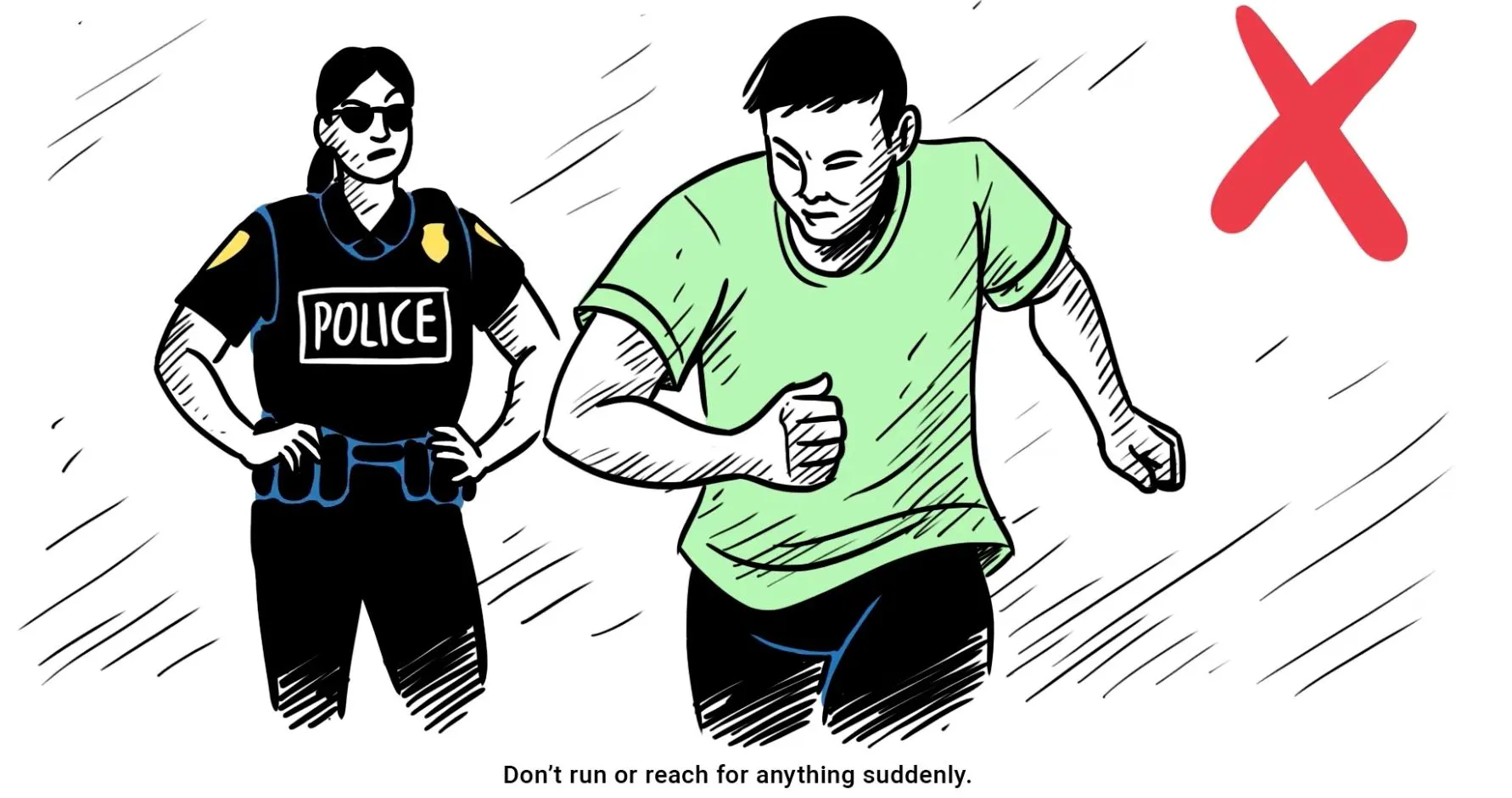
Credit: Settle In on YouTube
Another video advises refugees not to run from the police during encounters with law enforcement.
“Don’t run or reach for anything suddenly,” the video advises.
One of the videos features a refugee woman telling her fellow newcomers that homes in the United States are “not like when we are back home living in the refugee camps, you have to be so clean person, clean your home, take your trash out.”
The International Rescue Committee, which partners with the federal government as part of its U.S. Refugee Admission Program (USRAP), has condemned the Trump administration’s refugee policy to decrease refugee admissions and to prioritize white Afrikaners facing racial persecution in South Africa.
The Trump administration suspended USRAP on January 20, 2025, and subsequently terminated agreements with refugee aid nonprofits, including the International Rescue Committee (IRC).
A federal judge initially blocked the suspension in early 2025 and ordered the government to reinstate its agreements with resettlement groups like the IRC. The 9th U.S. Circuit Court of Appeals later ruled the administration could lawfully suspend refugee admissions, but it left in place the requirement that the government keep funding domestic services for refugees already in the country.
SettleIn is funded by the Department of Health and Human Services’ Office of Refugee Resettlement, according to the International Rescue Committee website. It is part of the committee’s Switchboard, which provides training to refugee support organizations and case managers, which is “100% financed by federal funds,” citing an Office of Refugee Resettlement grant that has provided the organization more than $20 million in taxpayer funds since 2023.
The program offers some practical advice on filing one’s taxes, obtaining a driver’s license, and buying and renting a residence in the United States.
It also provides a cultural guide for refugee organizations and case workers on working with Afrikaner refugees. The packet neglects to mention the racially motivated killings of white farmers in South Africa and other race-based laws discriminating against Afrikaners.
The guide paints Afrikaners as settlers who took part in “displacing native peoples,” which it said in combination with the British Empire holding Afrikaners and black Africans in concentration camps “helped consolidate a concept of Afrikaner nationalism through collective suffering at the hands of the British.”
“From 1948 to 1994, Afrikaners participated in establishing and implementing the South African government’s system of Apartheid, a regime of racial segregation. In the post-Apartheid era, South Africans including Afrikaners continue to grapple with issues of identity, reconciliation, and socio-economic transformation,” the guide reads.
The International Rescue Committee did not respond to a request for comment.
Such federally-funded programs “are intended to support refugees from a broad range of countries of origin, educational backgrounds, languages, and lived experiences,” a Department of Health and Human Services spokesman told The Daily Wire.
“Office of Refugee Resettlement-funded resources, including those developed by technical assistance providers, provide practical information to help refugees navigate daily life in the United States, including topics such as healthcare, education, transportation, housing, employment, and other essential services,” the spokesman said.
“Some materials also provide information about common household and community practices in the United States, recognizing that refugees arrive with varying levels of familiarity with U.S. systems, institutions, and cultural norms,” the official added.
Refugee names have been changed. Blake Schaper contributed to this report.
More from this network:
Domains for Sale · GOTPeople.org · TheDSAPlatform · The Truth About Socialism
What's Your Reaction?
 Like
0
Like
0
 Dislike
0
Dislike
0
 Love
0
Love
0
 Funny
0
Funny
0
 Wow
0
Wow
0
 Sad
0
Sad
0
 Angry
0
Angry
0

I am just an average American. My teen years were in the late 70s and I participated in all that that decade offered. Started working young, too young. Then I joined the Army before I graduated High School. I spent 25 years in, mostly in Infantry units. Since then I've worked in information technology positions all at small family owned companies. At this rate I'll never be a tech millionaire. When I was young I rode horses as much as I could. I do believe I should have been a cowboy. I'm getting in the saddle again by taking riding lessons and see where it goes.
Premium domains for sale




















Comments (0)