

'The American Book of Fables': A feast of the imagination and spirit for readers of all ages
Premium domains for sale
Freedom Is Back In Style
In his 1956 essay “Sometimes Fairy Stories May Say Best What's to Be Said,” C.S. Lewis separates the creator of any given imaginative work (novel, poem, etc.) into two distinct identities: the Author and the Man.
Freedom Is Back
In Style
Premium domains for sale
The Author, initiator of the creation, is he who first feels the desire to put imagined scenes to form. For him, it’s inspiring, it’s fun. It is the Man, on the other hand, who elevates the work. He supplements it by sprouting meaning within the Author’s vision. The two are essential to any great work, says Lewis, in order to create something that is just as edifying as it is pleasing.
I am there to define, explain, or find out more alongside them. We learn together. Each individual piece in the book acts as a wellspring for more.
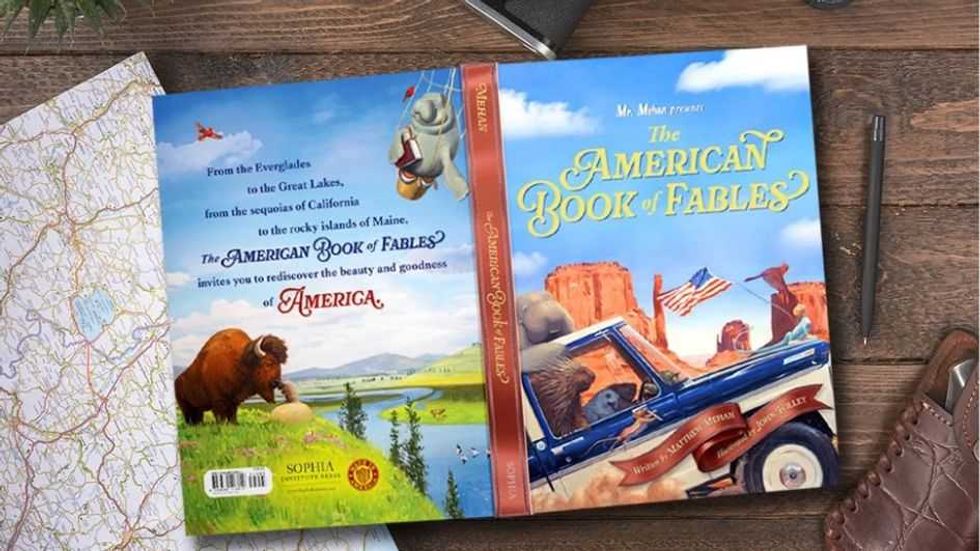
It is within Dr. Matthew Mehan's most recent work — a 375-page tome for all ages, which commemorates our nation’s 250th anniversary — that we see Lewis’ united Author-Man theory perfectly executed.
A good, new book
"The American Book of Fables" is, at long last, a good, new book. Not a reprint of a forgotten favorite, not an old “classic" we must dust off and apply new pictures to. But a new classic, which explores both the natural splendor and man-made creations that make up our United States — alongside (or rather, through) beautiful poetry and prose and stunning illustrations by master artist John Folley.
The book is divided into 13 parts. Each one is introduced by a unique portion of text from the Declaration of Independence and focuses on a different ecological region of the country. Within the text, we find poems, rhymes, fables, and true narrations of America’s historical and cultural traditions. Ensuring no one is left out of the book’s offerings, Mehan includes something each for “littles,” “middles,” and “bigs” in every chapter.
On a personal level (I’m a homeschool mom), this setup has been invaluable. I say this because this year, as we lead up to the semiquincentennial, I’ve struggled with exactly where to begin in teaching my small children about the greatness of our nation.
Yes, we’ll be going to the Independence Day parade in our town. We’ll wear red, white, and blue and wave American flags. We’ll see fireworks and eat hot dogs. But I’d be lying if I said I actually thought these activities mean nearly as much as having a true understanding of America — its epic history, its diverse beauty, its superb design.
Bigs and littles
This is what "The American Book of Fables" offers. I’m able to start my eager 4-year old with the rhymes and poetry in the “littles” section. My 6-year-old especially enjoys the fables of the “middles” section. And I myself have learned a great deal from the section for “bigs,” which we will undoubtedly graduate our kids to as they get older.
It was last fall that I had the honor of interviewing Dr. Mehan about his book, which was then still in the works. Talking with him via FaceTime, I had one of those experiences where I was so obviously in over my head in regard to the content of our discussion. I pride myself on being rather well-read and knowledgeable of historical facts and general information. But Dr. Mehan is a walking encyclopedia of the Western canon. His knowledge of the great books, the great thinkers, and all related fields is light-years beyond my own. I won’t fib and say I didn’t sometimes struggle to remember my philosophers and to understand some of the concepts we discussed.
I don’t say this to stir pity, but rather to emphasize a theme that I’ve come to understand in both talking with Dr. Mehan and reading his book. And that is that it’s good to be a bit in over your head. In fact, this is the way the best thinkers learn. It is, for instance, how our founding fathers learned. And somewhere over the last 250 years, we Americans have forgotten that.
Antidote to brain rot
Shining the spotlight on modern-day kids' literature, I hate to be the millionth parent to say it, but much of it is brain rot. If it doesn’t lack a moral center, it lacks plot or meaning entirely. The oversimplified Corporate Memphis illustrations add nothing. Sometimes, the books are actually evil — for example, in those that encourage kids to believe it’s possible to change their sex.
The children of the founding generation dined on far heartier intellectual fare. And this drove the entire educational process from youth through adulthood.
When we talk about the greatness of America, we do ourselves a disservice by only skimming off the top of what the founding fathers created. Dr. Mehan emphasizes that it’s important to go deeper and examine what they themselves read, studied, and mulled over. This is, after all, what created their imaginations. And “it is just that ‘brilliant imagination’ that formed a crucial and prior condition for all of the founders’ deliberations, words, and deeds — the very things that brought about the formation of this great country,” Dr. Mehan explains.
RELATED: 'The American Family's Book of Fables': Wit and wisdom for our nation's 250th
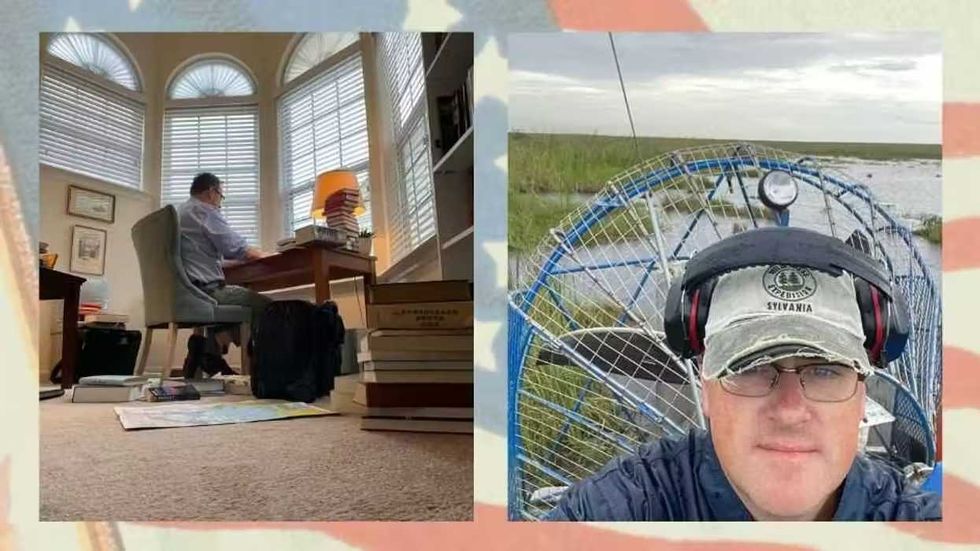 Matt Mehan at work (l, photo by his son) and on a research trip to the Everglades (r). Hulton Archive/Getty Images/mythicalmammal.com
A rich tapestry
In "The American Book of Fables," Dr. Mehan creates a tapestry of Judeo-Christian values, lessons from the "Book of Nature," ancient philosophy, Greek and Roman myths, beast fables, and other imagery that the founding fathers studied. He accomplishes this while weaving within them his own tales and adapting certain works to American soil.
As the title implies, fable stories feature prominently in the book. Fables are, to most modern Americans, a type of story for kids. Historically, however, fables were read and appreciated by adults just as much as children. According to Mehan, these tales were fundamental in the teaching of right from wrong but also in the teaching of human passions and self-government.
The more you read fables, the clearer it becomes that individual animals tend to have their own lower order passions they struggle with. Humans share the same struggles. The pig, for example, the gluttonous pig, errs in his gluttony — a sin that is likewise certainly not unheard of in humans. So how do you learn from the pig and govern yourself better? The fables were very much a part of early America’s self-governing spirit and, Mehan says, were mentioned often in the letters and speeches of the founding fathers.
As my family reads "The American Book of Fables" together, my kids are sometimes flummoxed by new words or ideas. They have a lot of questions. What’s a lynx? What was the Navajo Nation? What does “candor” mean?
Literature to last
But again, this is a good thing. And it’s why this is a family book. I am there to define, explain, or find out more alongside them. We learn together. Each individual piece in the book acts as a wellspring for more — to look up pictures of the Rocky Mountains or videos of otters swimming, to discuss what the Independence Bell is and why it’s important, or to talk about the marriage of John and Abigail Adams — or what marriage means, for that matter. Each line of text and each beautiful image provides thread for new stitches in our own imaginative tapestries.
Two-hundred fifty years from now, God-willing new generations of good Americans will be celebrating our nation’s quincentenary, our 500th anniversary. All of us alive today will be gone. But the good literature of our time will live on, as we have seen good literature do for thousands of years before us.
Undoubtedly, "The American Book of Fables" will make it to that time. Its beautiful pages and stories will continue to enlighten the minds of Americans and their children for innumerable generations to come.
More from this network:
Domains for Sale · GOTPeople.org · TheDSAPlatform · The Truth About Socialism
What's Your Reaction?
 Like
0
Like
0
 Dislike
0
Dislike
0
 Love
0
Love
0
 Funny
0
Funny
0
 Wow
0
Wow
0
 Sad
0
Sad
0
 Angry
0
Angry
0

I am just an average American. My teen years were in the late 70s and I participated in all that that decade offered. Started working young, too young. Then I joined the Army before I graduated High School. I spent 25 years in, mostly in Infantry units. Since then I've worked in information technology positions all at small family owned companies. At this rate I'll never be a tech millionaire. When I was young I rode horses as much as I could. I do believe I should have been a cowboy. I'm getting in the saddle again by taking riding lessons and see where it goes.
Premium domains for sale



















Comments (0)