

The Everlasting Resilience Of American Patriotism
Premium domains for sale
Freedom Is Back In Style
The major intellectual project of the far Left in the United States has long been its attempt to get Americans to hate their country. Its proponents may allow for hope of future love of country, once the left has been swept into power and undertaken the necessary reforms or even a revolution. But as for the country’s past and its condition today, it is chiefly worthy of visceral detestation and condemnation.
Freedom Is Back
In Style
Premium domains for sale
As for the view of their country among Americans writ large, we will likely get a better impression of the prevailing mood in the weeks ahead. Prediction: Americans will mark their country’s 250th birthday with celebratory gusto, not disgust.
Those in the public square who don’t share the condemnatory view, including President Trump, often speak of Trump Derangement Syndrome. Frequently, however, TDS is a symptom of a more encompassing malady. Call it “America Derangement Syndrome” — the view that this country stinks in all major and many minor ways. The mobilization against Trump is personal, but he is often a proxy for a bigger target: the idea of a great America.
This view mainly spreads from its sturdy long-time redoubt on the end of the political spectrum, where Americans identify themselves not as “liberal” but as “very liberal.” The intensifier has made a big difference in attitudes toward American exceptionalism (no such thing), views of the U.S. military (highly suspect), DEI and transgender policy preferences (enthusiastic support), and, in pandemic times, personal fear of COVID (very high).
Over decades, Gallup surveys found Americans embraced this “very liberal” self-description in low numbers, typically no more than 10% of respondents, compared to 25% or so identifying as “liberal.” Yet the “very liberal” do command cultural heights from Hollywood and academia to publishing to major media outlets. They are a tiny minority of Americans, but they don’t act like it and never have. Meanwhile, surveys have shown that in recent years, more Democrats have been tipping toward “very liberal.” In terms of political domination of the party, the “very liberal” seem to have routed or cowed into submission moderate or old-school “liberal” Democrats.
The representative cultural document of “very liberal” America is the “1619 Project,” which sought to redate the founding of the United States to the year the first African slaves arrived in the British colonies of North America. To slavery, add “settler genocide” as practiced against Native Americans, the all-encompassing subjugation of women by men, stultifying religious conformism, the turn of the United States to imperial conquest in the late 19th century, Japanese internment during World War II, the South of Jim Crow, ongoing structural racism and sexism, income inequality, and the overweening political influence of billionaires. The cumulative impression is that of an American moral cesspool. A Gallup survey last year found 9% of respondents said they had no pride in the United States; an additional 11% said they had only a little.
Lately, however, this broad-based rejection of the United States as a political project has also taken inchoate root on the “postliberal” right. Here, the primary objection is the primacy accorded to individual rights and freedom in liberal societies, especially the United States. Liberty, in this view, inevitably becomes license and runs roughshod over any notion of the common good, which societies must embrace to survive. Postliberals divide over whether the United States, at its origin, was in fact a liberal society. One view holds that because it was, the venture was doomed to failure from the outset once liberalism had run its course. Another view is that the United States was born a Christian nationalist polity but became corrupted over time by liberal individualism.
As for where to go from here, the recovery of the sense of collective good requires some form of authoritarian transformation. Most postliberals are vague on the details, though some are explicit in their yearning for a strongman. Both the postliberals and the left aspire to cultural hegemony and the suppression of ideas about the “common good” that deviate from their own. This requires enforcement power that they won’t find in the Constitution of the United States.
While “very liberal” self-describers are a small but growing minority, the postliberal sort is a growing minority but still an infinitesimal one. J.D. Vance has called himself postliberal, but he is less well known for that than for his conspicuous patriotism as vice president of the United States.
The “very liberal” and the postliberal are one in spirit in that their advocacy takes place not outside the confines of the society they claim to despise, or even on its margins, but in its bosom. Many on the Left have long been adept at cashing in on their views in societies such as the United States, which readily enable individuals to do so. The ability of right-wingers to do so seems to be improving as social media is monetized. In this, paradoxically or not, both camps have a lot in common with the hundreds of millions of other individuals bustling in pursuit of happiness in the United States.
So even as those who peddle disgust with America continue to make the most of living here, 41% in that Gallup survey said they are extremely proud of their country, 17% very proud, and 19% moderately proud. It’s true that the extremely/very numbers were down from 2024, but there is clearly a partisan effect from Donald Trump’s reelection to account for. So the inroads of America Derangement Syndrome are real but small.
This shouldn’t really come as a surprise, and it points to a fundamental misconception among evangelists of America-hate. Guess what? All sentient Americans are aware of their country’s history of slavery, and polls show most agree its negative effects remain with us. Yet 77% are at least moderately proud of their country anyway. Love of one’s country or pride in it doesn’t require a view that its past was sinless. So “educating” people about its sinfulness, by way of the 1619 Project, will not produce the hoped-for levels of radicalization a new revolution requires. The “very liberal” may or may not believe they are speaking to the masses, but their message resonates mainly with their preexisting ideological soulmates. It can, however, produce an unwarranted degree of self-doubt among Americans about their country and a reluctance to speak up for it for fear of monomaniacal “very liberal” denunciation. This is a problem, and it demands greater outspokenness on behalf of the 77% who recognize, wholly or in part, that they live in a great country.
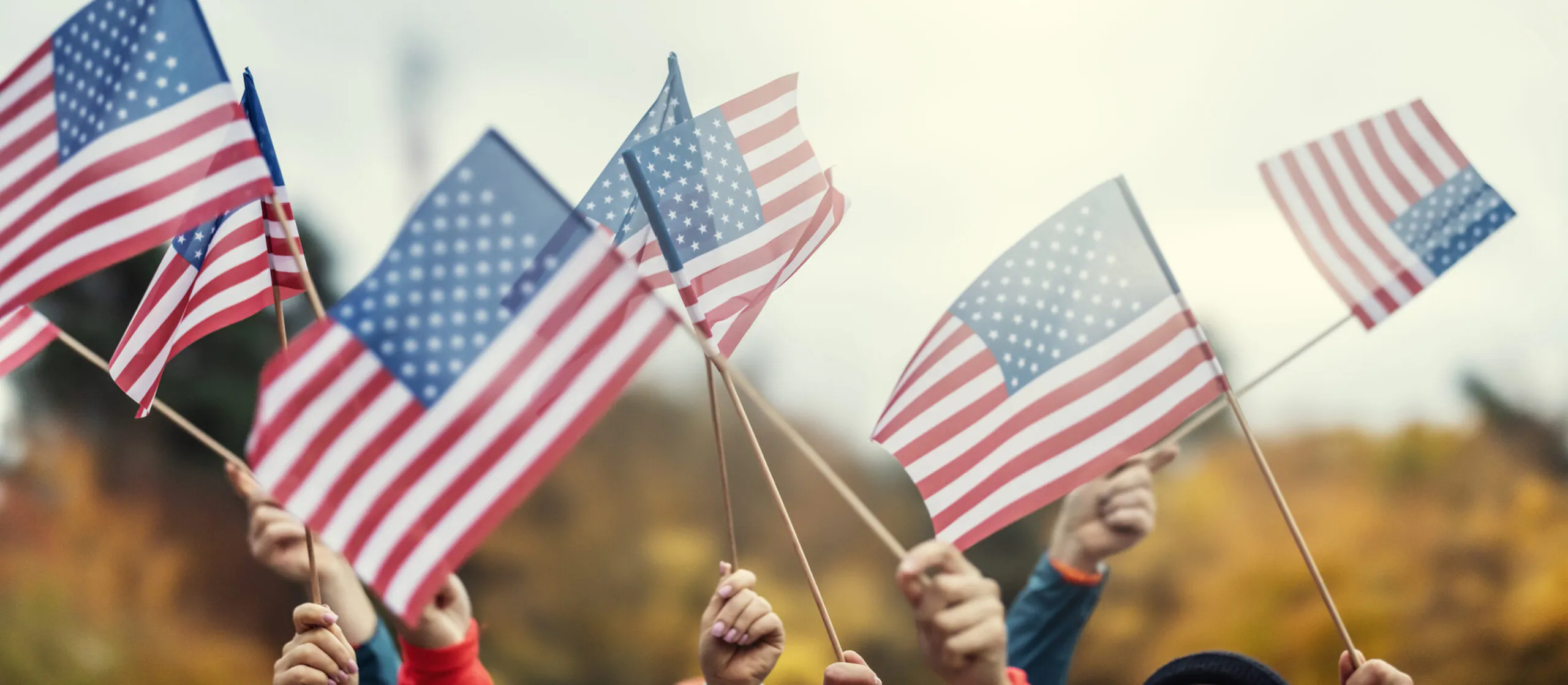
In fact, most of the time, most citizens of most countries feel a sense of attachment to them. This is visceral. Here, it’s what causes otherwise even-keeled individuals at international sporting events to chant “U-S-A! U-S-A!” and to be moved to tears by especially powerful renditions of the “Star-Spangled Banner.” These reactions do not require an unblemished historical record of goodness and achievement, nor are they easily undone by affluent scolds with an agenda. The notion that you could talk Americans out of pride in their country is part and parcel of the derangement.
Once, when asked in Europe about American exceptionalism, President Barack Obama replied, “I believe in American exceptionalism, just as I suspect that the Brits believe in British exceptionalism and the Greeks believe in Greek exceptionalism.” He chose to answer by pretending not to know of the specific use of the term “exceptionalism” as applied to the American experience. That left many Americans dissatisfied or worse, because if everyone rightly feels exceptional, it’s the rule, not the exception.
Nevertheless, to the extent Obama was simply describing the pride people generally take in their country, he was on to something. He selected safe countries to set alongside America. The German and Japanese examples, had he picked them, would have created a different hubbub. Yet it’s impossible to find countries or peoples in the world today whose history includes nothing blameworthy. An overall identity-driven affinity and affection persists among their people even so.
There will always be a fringe of outlying haters. Those living in societies whose top political priority is the protection of individual rights — the United States, for example — have the great advantage of freedom to seek recruits to their point of view. But they are pitching lunacy, and they should not be surprised when their inroads are not great.
***
Tod Lindberg is a senior fellow at the Hudson Institute.
More from this network:
Domains for Sale · GOTPeople.org · TheDSAPlatform · The Truth About Socialism
What's Your Reaction?
 Like
0
Like
0
 Dislike
0
Dislike
0
 Love
0
Love
0
 Funny
0
Funny
0
 Wow
0
Wow
0
 Sad
0
Sad
0
 Angry
0
Angry
0

I am just an average American. My teen years were in the late 70s and I participated in all that that decade offered. Started working young, too young. Then I joined the Army before I graduated High School. I spent 25 years in, mostly in Infantry units. Since then I've worked in information technology positions all at small family owned companies. At this rate I'll never be a tech millionaire. When I was young I rode horses as much as I could. I do believe I should have been a cowboy. I'm getting in the saddle again by taking riding lessons and see where it goes.
Premium domains for sale
















Comments (0)