

The GOP’s 2028 ticket math is already brutal
Premium domains for sale
Freedom Is Back In Style
The ink will not even be dry on the final 2026 midterm ballots before Washington turns to the next race: the battle for the White House in 2028.
Freedom Is Back
In Style
Premium domains for sale
Election Day ends November 3. By the morning of November 4, the campaign for America’s next president will already be under way.
There is one rule every VP nominee must follow: Do not become the story. The job is to amplify the presidential candidate, not compete with him.
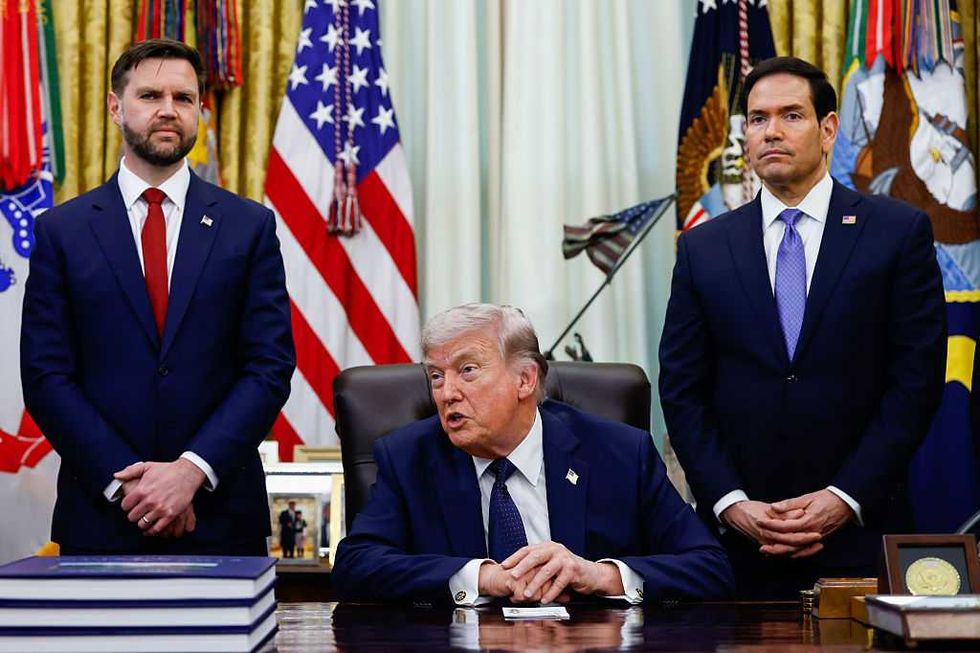
The biggest names — Vice President JD Vance and Secretary of State Marco Rubio among them — will dominate early speculation. But the more interesting question may be the second spot on the ticket.
Vice presidential picks are no longer afterthoughts. Gone are the days when running mates were chosen simply to “balance the ticket.” Today’s contenders are expected to serve as attack dogs, media stars, policy messengers, fundraising powerhouses, and trusted governing partners.
They must energize the base, reassure swing voters, and be ready to step into the Oval Office if necessary.
Which running mate gives the Republican nominee the greatest advantage?
The answer will not be about geography alone. It will be about chemistry, fundraising, media skill, governing experience, and the ability to help win the handful of battleground states likely to decide another close election.
Several Republicans are already generating early speculation.
Andy Ogles — Tennessee, 11 electoral votes
Ogles belongs at the top of the watch list.
The Trump-endorsed Tennessee congressman has built a reputation as one of the House’s most outspoken conservatives, championing limited government and an unapologetic defense of Trump-era policies.
Ogles pairs an easygoing manner with hard-line positions. He has become a familiar figure in congressional battles over immigration, federal spending, election integrity, and cultural issues.
As chairman of the House Homeland Security Subcommittee on Cybersecurity and Infrastructure Protection, Ogles also works on an issue likely to grow more important in future campaigns.
Tennessee is safely Republican, so his value would lie less in changing the Electoral College map than in energizing conservatives across other states.
Byron Donalds — Florida, 30 electoral votes
Donalds combines strong media skills with a compelling personal story and growing national recognition.
Frequently mentioned as a leading contender in Florida’s 2026 gubernatorial race, the Florida congressman has become one of the Republican Party’s most visible communicators. Supporters argue that his appeal extends beyond the party’s traditional coalition, making him one of the GOP’s fastest-rising figures.
With Florida’s 30 electoral votes already central to any Republican path to the White House, Donalds would bring both state-level strength and national media reach. His New York roots also have some Republicans wondering whether he could help the party make inroads with voters in the Northeast.
Sarah Huckabee Sanders — Arkansas, 6 electoral votes
Sanders brings executive experience and years in the national spotlight.
The Arkansas governor first became a national figure as White House press secretary, then returned home to lead a reliably Republican state. Her familiarity with the Trump movement, fundraising network, and communications experience continue to make her a frequently mentioned possibility for a future Republican ticket.
Arkansas’ six electoral votes are not in doubt. Sanders’ value would come from her executive résumé, conservative credibility, and ability to speak directly to the Trump coalition.
Her appearances at high-profile fundraising events, including in Palm Beach, have only fueled speculation about her national ambitions.
Tim Scott — South Carolina, 9 electoral votes
Scott has built his national profile around economic opportunity, education, faith, and conservative policy priorities.
After his 2024 presidential campaign, the South Carolina senator remains a respected figure within the party and has continued expanding his national profile.
South Carolina’s nine electoral votes are safely Republican. Scott’s appeal would lie less in delivering his home state than in his optimistic message, donor network, and ability to broaden the ticket’s tone without abandoning conservative priorities.
RELATED: Trump to address declassified intel revelations about 2020 foreign interference: Report
 Anna Moneymaker/Getty Images
The Trump name may not be leaving the stage
Another variable remains impossible to ignore: the Trump political brand.
Donald Trump Jr.’s name continues to circulate among supporters and commentators as a potential future candidate. Although he has repeatedly said he is focused on advancing the America First movement rather than seeking office himself, his national profile, fundraising network, and loyal following keep him in nearly every early conversation about 2028.
Unlike many political heirs, Trump Jr. has spent years campaigning across the country, building relationships with conservative activists, appearing regularly in conservative media, and becoming one of the Republican Party’s most recognizable surrogates.
Whether he ultimately seeks the presidency, accepts a vice presidential nomination, or remains one of the party’s most influential campaign voices, his involvement would almost certainly keep the Trump family’s political movement at the center of Republican politics.
There is one rule every VP nominee must follow: Do not become the story. The job is to amplify the presidential candidate, not compete with him.
In a country where elections are often decided by razor-thin margins in a handful of battleground states, even a small advantage can mean the difference between victory and defeat.
More from this network:
Domains for Sale · GOTPeople.org · TheDSAPlatform · The Truth About Socialism
What's Your Reaction?
 Like
0
Like
0
 Dislike
0
Dislike
0
 Love
0
Love
0
 Funny
0
Funny
0
 Wow
0
Wow
0
 Sad
0
Sad
0
 Angry
0
Angry
0

I am just an average American. My teen years were in the late 70s and I participated in all that that decade offered. Started working young, too young. Then I joined the Army before I graduated High School. I spent 25 years in, mostly in Infantry units. Since then I've worked in information technology positions all at small family owned companies. At this rate I'll never be a tech millionaire. When I was young I rode horses as much as I could. I do believe I should have been a cowboy. I'm getting in the saddle again by taking riding lessons and see where it goes.
Premium domains for sale














Comments (0)