

The KIDS Act would turn web browsing into a TSA line
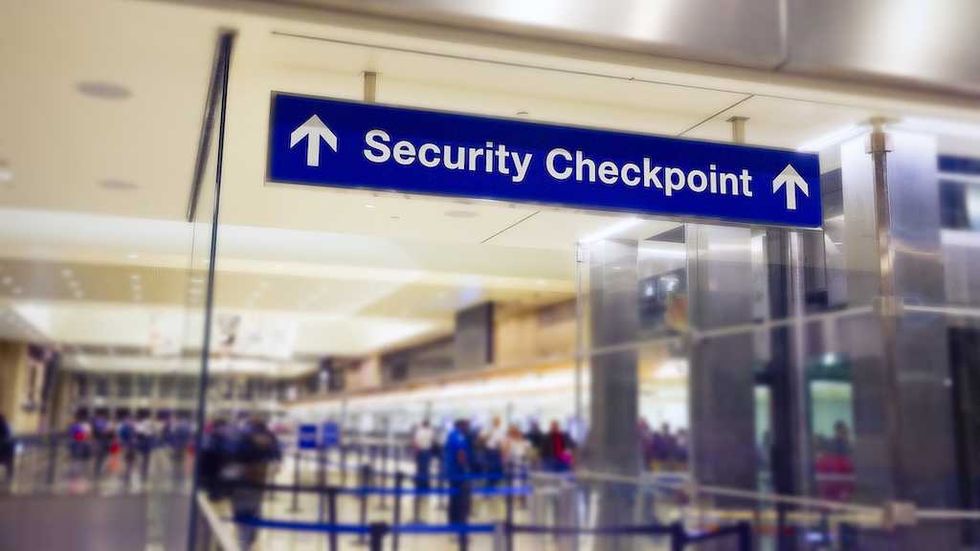
Lawmakers never tire of devising new ways to undermine digital privacy and First Amendment rights, always under the guise of “protecting kids.”
Live Your Best Retirement
Fun • Funds • Fitness • Freedom
The KIDS Act — the Kids Internet and Digital Safety Act — is the latest piece of smug political branding and virtue-signaling to dress up heavy-handed federal overreach in the gentle language of child welfare. Lawmakers considering this legislation should ask a simple question: Could its broad and vague provisions someday be wielded by their political opponents to muzzle speech they favor?
Children deserve real and meaningful protection in the digital age. But true safety comes from empowering parents and holding actual bad actors accountable under existing laws.
Congress should reject the KIDS Act and defend the constitutional rights of all Americans.
House Energy and Commerce Committee Chairman Brett Guthrie (R-Ky.) and Ranking Member Frank Pallone Jr. (D-N.J.) claim this latest “safety package” is about “empowering parents, establishing safety as a default, strengthening privacy for children and teens, increasing transparency around data brokers, and holding Big Tech accountable.”
Washington has heard this pitch before. Wide-ranging digital legislation is routinely sold as a privacy measure even when it undermines privacy.
As Taxpayers Protection Alliance research director David McGarry wrote in December, “Consensus [around digital safety legislation] remains elusive, and for good reason. The regulation of the internet is shot through with difficulties.”
The Kids Online Safety Act proves the point. McGarry observed, “Seeing the imprudence and constitutional vulnerabilities of the bill, its supporters have continuously trimmed and reshaped the legislation, each time declaring that this time — finally — the bill had been rid of its deficiencies. Each time, however, the amendments proved wanting, and further efforts to amend KOSA were undertaken.”
That analysis applies just as well to the current version of KOSA included in the KIDS Act.
Supporters claim the latest version removes the “duty of care” requirement that would have forced platforms to withhold poorly defined categories of online content from underage users. But the bill still targets broad categories of constitutionally protected speech.
Digital platforms are instructed to “establish, implement, maintain, and enforce reasonable policies, practices, and procedures” addressing supposed harms to minors, including the “use of ... alcohol”; “threats of physical violence so severe, pervasive, or objectively offensive that such threats impact a major life activity of a minor”; and “financial harm caused by deceptive practices.”
RELATED: Digital tyrants want your face, your ID … and your freedom
 imaginima/iStock/Getty Images
Those terms are vague and dangerously elastic. What counts as the “use” of alcohol? Could a platform face scrutiny for allowing video clips featuring champagne toasts? Could a joke between friends be treated as a threat of physical violence? Because “deceptive” remains undefined, virtually any online transaction or promoted product could become a federal enforcement hook.
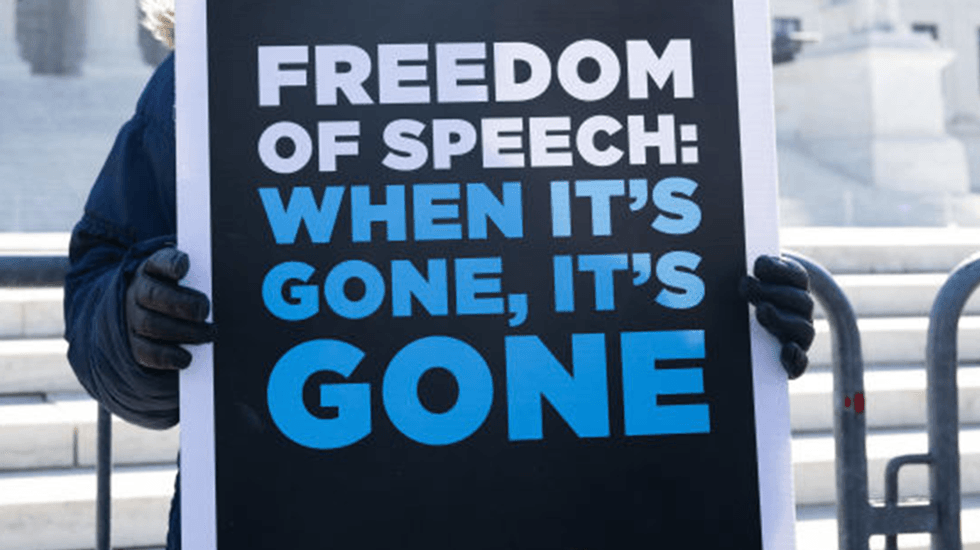
This minefield of liability makes a mockery of the First Amendment and chills expression across the digital domain.
The bill’s most insidious provision involves age verification.
On paper, the KIDS Act says it does not mandate age verification. That language sounds reassuring, but it functions as a legislative bait and switch. The bill imposes a legal standard holding tech platforms liable for content if they “know or should have known” a user’s age.
Consider the real-world meaning of “should have known.” If a company faces massive legal penalties or federal lawsuits for failing to determine a user’s age, it will feel compelled to verify the identity of everyone who logs on — children and adults alike.
That creates a de facto mandate requiring adults to upload driver’s licenses, biometric data, or government IDs just to read a news article, browse a forum, or use a search engine. Web users would be asked to hand over their most sensitive personal information to corporate databases that have repeatedly proved vulnerable to data breaches and foreign hackers.
Age verification on this scale is not a “best practice,” as the bill’s language suggests. It is constitutional malpractice.
The KIDS Act also responds to alleged online harms by expanding federal bureaucracy and spending more taxpayer dollars. It establishes a asinine array of busywork for busybodies: Federal Trade Commission and Health and Human Services studies, a four-year National Institutes of Health longitudinal study, public awareness campaigns, and a new “Kids Internet Safety Partnership” inside the Department of Commerce.
RELATED: Age verification laws do not make us safer
 Waldemarus/iStock/Getty Images
This amounts to a major expansion of taxpayer-funded bureaucracy tasked with creating a “playbook” for more age verification.
Supporters will note that lawmakers stripped the highly controversial “duty of care” provision from previous versions of KOSA and retained explicit protections for data encryption. But removing the worst elements of an inherently broken bill does not transform it into good policy.
Children deserve real and meaningful protection in the digital age. But true safety comes from empowering parents with robust tools, advancing media literacy, and holding actual bad actors accountable under existing criminal laws.
It does not come from turning the internet into a surveillance state where adults must show their papers to browse the web.
Congress must reject the KIDS Act and protect both the Constitution and the digital domain.
What's Your Reaction?
 Like
0
Like
0
 Dislike
0
Dislike
0
 Love
0
Love
0
 Funny
0
Funny
0
 Wow
0
Wow
0
 Sad
0
Sad
0
 Angry
0
Angry
0

I am just an average American. My teen years were in the late 70s and I participated in all that that decade offered. Started working young, too young. Then I joined the Army before I graduated High School. I spent 25 years in, mostly in Infantry units. Since then I've worked in information technology positions all at small family owned companies. At this rate I'll never be a tech millionaire. When I was young I rode horses as much as I could. I do believe I should have been a cowboy. I'm getting in the saddle again by taking riding lessons and see where it goes.















Comments (0)