

The Most Telling Moment Of Poilievre’s Joe Rogan Interview
Premium domains for sale
Freedom Is Back In Style
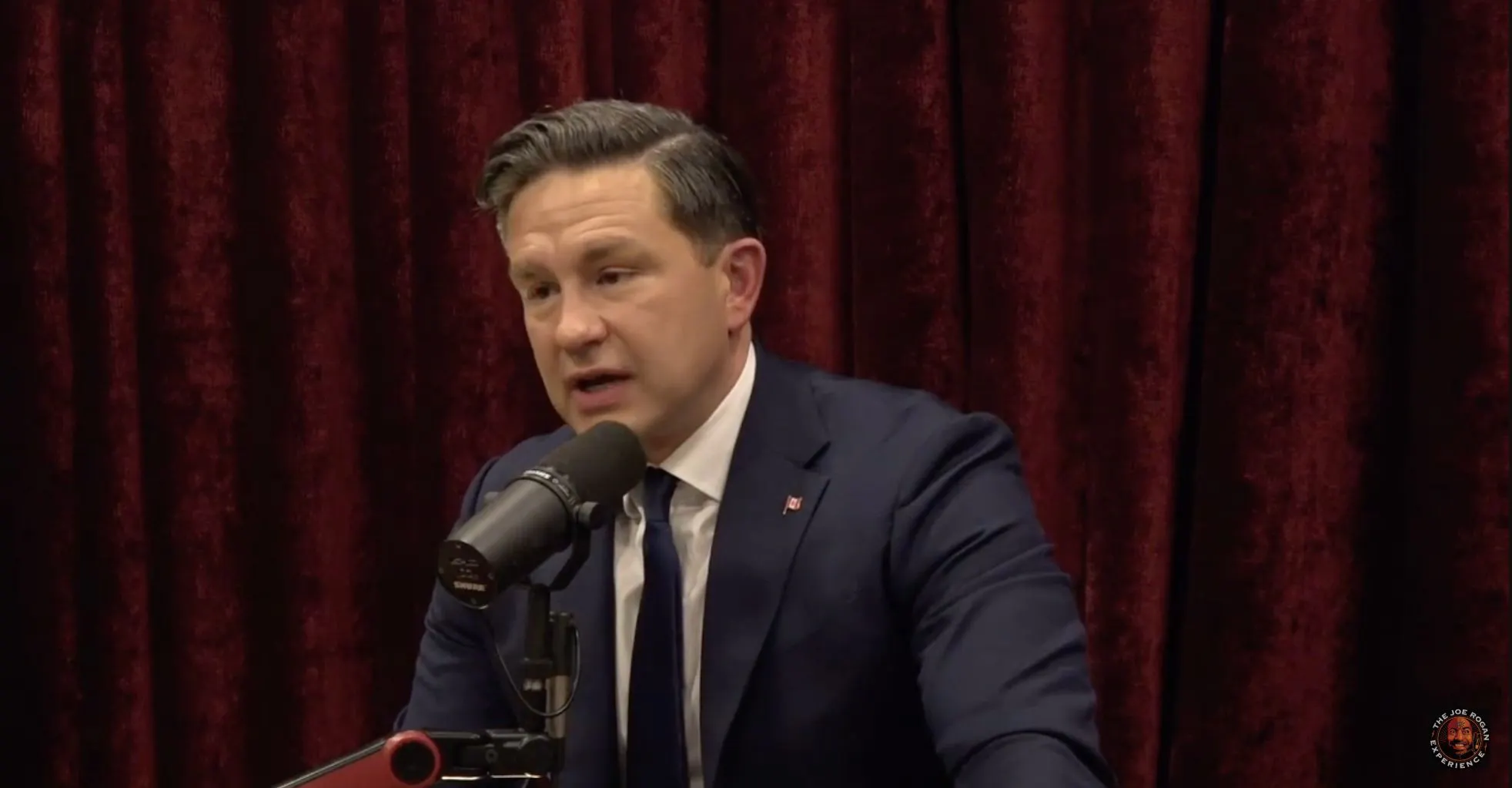
On the surface, Pierre Poilievre’s recent appearance on the Joe Rogan podcast had more good than bad. The Conservative leader came across as likable, down-to-earth, and clear. He stressed the need to unleash Canada’s energy potential. He called for cutting regulations that have suppressed innovation. He pushed for lower government spending. These are all sound ideas and Canada would surely benefit from them.
Freedom Is Back
In Style
Premium domains for sale
But one key moment showed the real substance of Poilievre’s platform: empty individualism. This view defines human dignity as absolute self-expression. It not only cheapens human life, it weakens the institutions that support Canadian culture.
The moment happened when Rogan critiqued the current state of Canada’s euthanasia program.
Rogan expressed a reasonable concern. He noted that 1 in 20 Canadian deaths now come from so-called assisted suicide or Medical Aid in Dying (MAID). Poilievre replied that he believes people should “have the choice” to be euthanized. His main concern was the idea that it would be offered to kids or to people whose only condition is mental illness.
In other words, his issue is not with Canada’s current euthanasia rules. His issue is only with suggestions that have not yet become law.
Canada’s euthanasia regime is abhorrent, with or without amendments. Track 2 euthanasia lets individuals apply for MAID based on an incurable physical condition. This includes a disability. The Atlantic recently published a piece on the ethical and practical questions facing “providers.” A more accurate word would be deprivers. These providers must interpret euthanasia rules on their own. One story described a doctor who euthanized a man in his 30s. The man had a treatable form of cancer, but he had refused all other treatment. This made his condition “irremediable.”
Human dignity should be the first commitment of any conservative. Poilievre often touts individual rights. Yet he ignores the most fundamental one: the right to life. To say someone has an intrinsic right means they possess it simply because of who they are. It does not depend on what they do.
But Poilievre’s willingness to allow euthanasia for those who are suffering and dying sends a clear message. It says the value of human life depends on personal judgment.
His criticism of euthanasia for the mentally ill is confusing. If people should have a “freedom” to die on their terms — in Canada that includes the terminally ill, disabled, and chronically sick — why must those symptoms be physical? In fact, we know they often are not.
Stories abound of individuals struggling with depression who have applied for MAID. One example is 26-year-old Kiano Vafaeian. He was struggling with vision loss and depression.
At the heart of Poilievre’s blunder on euthanasia is a false understanding of human dignity. Ironically, it is the same understanding that drives the woke excesses of the Liberal elite. They see dignity as absolute self-expression. This empty individualism separates life’s meaning from the broader context of nature, community, and tradition.
When applied to culture, this leads to a cheapening of human life. It is no surprise that places that legalize assisted suicide see an increase in overall suicide rates. Chosen or not, Poilievre fails to understand one key point. Euthanasia is a symptom of a sick, depressed, and lonely culture.
A culture that is killing itself is not going to be saved by lower housing costs. Economic prosperity can certainly help but it is not the sole solution.
Poilievre’s wholesome vision for Canada is admirable. He wants a future where families enjoy the fruit of their labor without government interference. Ideally, they live in a white-picket-fenced home that they can afford. But this vision is unachievable without cultural renewal. The expressive individualism of the Liberal and Conservative elites will not deliver that renewal.
Canadian culture is not only suicidal it is also sterile. Nearly one in four Canadian women in their 40s have no kids. Last year, Poilievre was absurdly reprimanded by Liberal MPs. They criticized him for recognizing that unaffordable housing causes couples to run out of time to start families before their “biological clocks” expire. The idea that government should be completely impartial to marriage and fertility rates is ludicrous.
These rates can give a glimpse into the hope people place in their future. Economic strain can suppress this hope and so can a nihilistic culture that has cheapened human life. The family is not merely an economic unit. It is a legacy-making enterprise. A culture that sees no value in life beyond individual expression makes the self-sacrificial reality of marriage seem absurd.
Unlike Poilievre, a true conservative recognizes that dignity is not rooted in our personal judgment. It is intrinsic to who we are. Our identity should be understood in reference to the people, institutions, and traditions that shape us. We should seek economic prosperity. But we should not seek it at the cost of the integrity of those institutions.
Poilievre has an impressive ability to explain those institutions. One of the best moments from the podcast was his explanation of the Westminster tradition, which is deeply connected to Canada’s British heritage.
What Poilievre takes for granted is this: hopelessness grows when people feel isolated. Yet the political elite — both Conservative and Liberal — expect the average Canadian to accept this isolation without complaint. Canada has some of the highest immigration rates per capita in the world. Conservatives claim to support assimilation into Canadian culture but they lack the ability to identify and preserve what is exemplary of that culture.
At Confederation, Canadian culture wasn’t divorced from a broader religious and moral consensus. It was founded against the backdrop of a predominantly Christian society. The 1871 census showed over 98% of the population as Christian. All 36 Fathers of Confederation were raised in a Christian tradition. This included Roman Catholicism, Anglicanism, and Presbyterianism. Yet Poilievre’s policies, especially on immigration, fail to take this into account. His view is that anyone can “become” Canadian. He defines it loosely as a belief in “freedom.” This view will not produce the assimilation needed for cultural unity. It will lead Canada further down the path of cultural decay.
Does this mean that people of non-Christian faiths should not come to Canada? Not at all. But it does mean that policymakers should protect the shared morality, customs, and traditions passed down from the time of Confederation. They should make judgments on immigration policy with prudence. They should keep the interests of Canadians in mind. Those interests should not be measured only in economic output. They should include cultural unity.
Poilievre’s discussion was typical of the decades-long drift of the Conservative establishment. It has moved toward a “balancing the budget” style of liberalism. This style redefines human dignity. It has cheapened human life. It has undermined the family. It has squandered Canada’s cultural inheritance. It has failed.
Moving forward, the Conservatives should let their party’s name guide their ideology. Canadians do not just want lower costs, they want flourishing families. They want a unified nation and a culture of hope. That is the true mission of conservatism. The Conservative establishment would do well to remember it.
* * *
Liana Graham is a research assistant in domestic policy at the Heritage Foundation. She is originally from Oakville, Ontario, Canada.
More from this network:
Domains for Sale · GOTPeople.org · TheDSAPlatform · The Truth About Socialism
What's Your Reaction?
 Like
0
Like
0
 Dislike
0
Dislike
0
 Love
0
Love
0
 Funny
0
Funny
0
 Wow
0
Wow
0
 Sad
0
Sad
0
 Angry
0
Angry
0

I am just an average American. My teen years were in the late 70s and I participated in all that that decade offered. Started working young, too young. Then I joined the Army before I graduated High School. I spent 25 years in, mostly in Infantry units. Since then I've worked in information technology positions all at small family owned companies. At this rate I'll never be a tech millionaire. When I was young I rode horses as much as I could. I do believe I should have been a cowboy. I'm getting in the saddle again by taking riding lessons and see where it goes.
Premium domains for sale


















Comments (0)