

The Rebels Of American Sports Have Changed Sides
Premium domains for sale
Freedom Is Back In Style
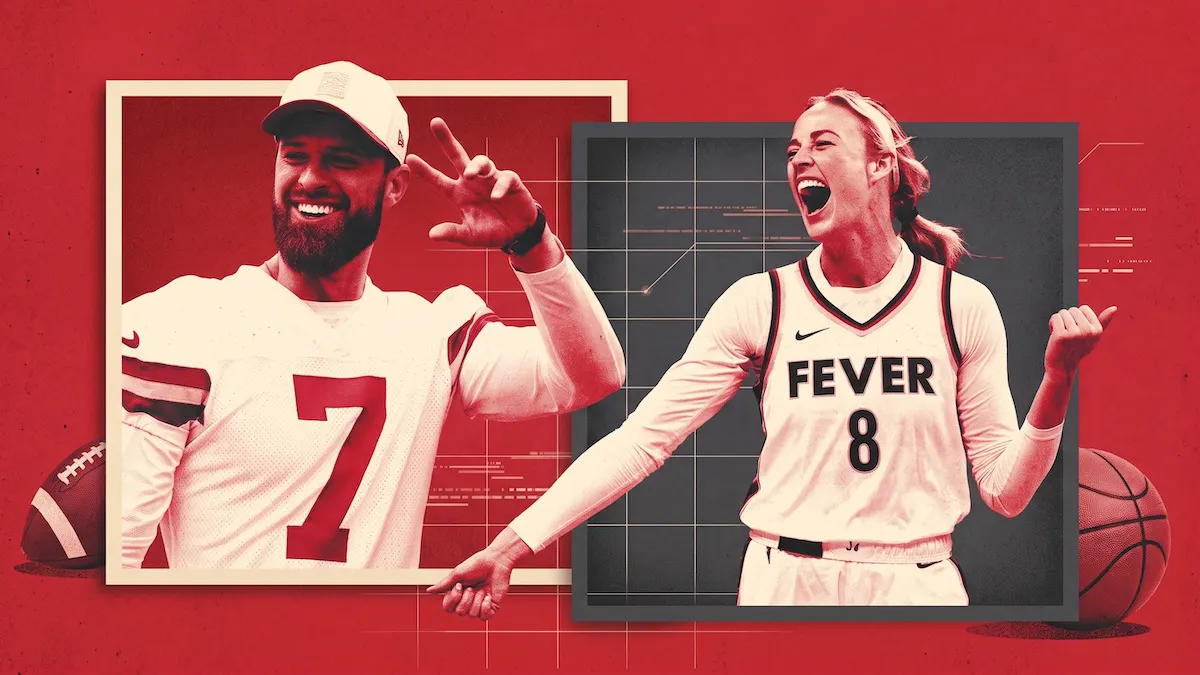
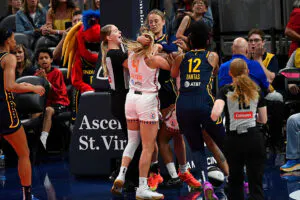
Chicago Sky guard DiJonai Carrington viciously clotheslined the Indiana Fever’s Sophie Cunningham while Cunningham was driving for a layup during an Aug. 8 WNBA game. The referees called a flagrant foul on Carrington immediately and ejected her from the game. Sports Illustrated decided to frame it, in its headline, as payback: “Sophie Cunningham Got A Bitter Taste of Karma After Drawing Flagrant Foul.”
Freedom Is Back
In Style
Premium domains for sale
What was the “karma” that led to Cunningham’s hardwood tumble? The conservative sports media website Outkick postulated that it came from a late-July ESPN.com profile (“Love her or hate her, Sophie Cunningham Won’t Be Ignored”) where Cunningham spoke out against transgender participation in women’s sports. “I want to protect young girls in a locker room, or young girls in sport who shouldn’t have to go against biological men,” she said. And maybe SI did mean the headline to act as a callback to that. But the article itself explicitly referred to Cunningham’s own hard retaliation foul on Jacy Sheldon the previous season.
Nevertheless, when the Cunningham profile ran in July, all the progressive media opinions flew out of Pandora’s box. The left-leaning sports and politics site Defector ran a response called “Sophie Cunningham Is About As Edgy as a Beach Ball,” faulting ESPN’s “view-from-nowhere style” and calling Cunningham a “straight blonde woman with tenuous political commitments.” We had every reason to believe the political knives were out for Sophie Cunningham.
So this had me wondering: How did the culturally conservative athlete — and there are a lot of them — suddenly become the rebel in American sports? When did sportswriters become comfortable treating that rebellion as a character flaw, as opposed to a political opinion? I dived into research and arrived at a surprising conclusion. It’s usually been this way.
Erica Denhoff/Icon Sportswire via Getty Images
Sportswriters have always simped for the establishment. Old-school sports journalists valued authority, patriotism, and tradition above anything else. “They just wanted to cover sports their way, and a lot of them were highly conservative,” wrote Washington Post columnist Robert Lipsyte, recalling prominent 1960s sportswriters.
But it was more than just encouraging baseball fans to buy war bonds or fly the flag. In 1942, J.G. Taylor Spink, publisher of the Sporting News, America’s self-proclaimed sports Bible, actively spoke out against integrating baseball, saying no good came from “raising the race issue,” claiming that integrationists “run the risk of damaging their own game.” In 2021 during Peak Woke, the Sporting News, now a minor media property, reckoned with its past and supported removing Spink’s name from an annual baseball writer’s award.
In 1964, prominent New York sports columnist Jimmy Cannon said of Muhammad Ali’s Muslim name change, “I pity Clay and abhor what he represents.” Venerated columnist Red Smith called Ali’s anti-Vietnam protests in 1967 “as sorry a spectacle as those unwashed punks who picket and demonstrate against the war.” In 1965, Cleveland sportscaster John Fitzgerald told running back and future Dirty Dozen star Jim Brown to “pipe down and stick to football” after Brown spoke out about civil rights issues.
The old sports press enforced the dominant cultural order. But at some point the dominant order changed.
The key date of American sports media’s leftward shift was January 1, 2012, when John Skipper became ESPN’s president. His tenure responded to trends already occurring in the culture. ESPN had established Bill Simmons’ Grantland magazine in 2011 and had for years been featuring columnist Jemele Hill, who wrote in 2008 that “rooting for the Celtics is like saying Hitler was a victim,” which got her suspended.
Under Skipper, ESPN highlighted Grantland, Nate Silver’s FiveThirtyEight, the female-centered espnW/Nine for IX, and “unique points of view.” Pre-Trump, it gave Caitlyn Jenner the 2015 Arthur Ashe Courage Award, making a major institutional judgment about the social meaning of transgenderism. In May 2016, it launched the Undefeated, built around the “intersection of sports, race, and culture.”
People began to notice. ESPN public editor Jim Brady wrote about a “perceived move leftward” in the organization. He quoted one staffer as saying, “If you’re a Republican or conservative, you feel the need to talk in whispers. There’s even a fear of putting Fox News on a TV [in the office].”
Brady wrote another column in 2017 where he said, “like it or not, ESPN isn’t sticking to sports.” Skipper said in the column that “ESPN is not a political organization … we consider this human, not political.” Skipper was out by the end of the year, resigning to deal with substance-abuse issues, and, he later revealed, a cocaine extortion attempt that he said put his family at risk.
Meanwhile, Jemele Hill was still at ESPN, tweeting that President Donald Trump was a “white supremacist” while also hosting the 6 p.m. Sportscenter. But the gravity had shifted to the center at the “Worldwide Leader.” In 2018, at Football Media Day, ESPN President Jimmy Pitaro said, “When people tune into ESPN, they are not looking for political commentary from us.”
Heidi Gutman/Walt Disney Television via Getty Images
However, the genie had long ago popped out of the bottle. The internet had changed the temperament of sports commentary forever. In 2005, Gawker Media launched Deadspin, its sports website without “favor, access, or discretion,” which provided a needed balm to a sports media that was way too deferential to owners and agents and advertisers. It was snarky and irreverent and an essential read for a new generation of fans. “We were consciously fashioning an alternative to ESPN,” editor Tommy Craggs later said.
It also was gradually, and then extremely, left-wing. “Deadspin’s already venomous bite was imbued with a political sensibility,” a retrospective later said. After the collapse of Gawker Media, a private equity firm took over, fired editor Barry Petchesky, and ordered the staff to “stick to sports.” Everyone quit. Writer Drew Magary, the most prominent Deadspin voice and an always-strident anti-Trumper, said, “There is no sticking to sports.”
The Deadspin refugees formed a site called Defector, which developed progressive sports snark into a fetishistic art form. Once again, ESPN, now out of its progressive cup, was the man that refused to speak truth to power. So to Defector, Sophie Cunningham could be as edgy as a “beach ball.” New York Giants quarterback Jaxson Dart, who introduced Trump at a rally in May, is an “enthusiastic MAGA freak.”
When Republican-tinged Chiefs kicker Harrison Butker announced an entry into politics, Defector said his PAC “coffers were as empty as his head.” San Francisco 49ers player Nick Bosa wore a MAGA hat after a postgame interview and Defector said he “preened like a jackass.” Would Defector run equally snarky language about a progressive athlete’s racial, feminist, or LGBT politics? Unlikely.
(Photo by Ronald Martinez/Getty Images)
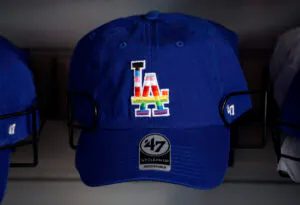
Take, for example, this season’s baseball Pride Night cap controversy. Dodgers players Blake Treinen (so openly conservative that Dodgers fans nicknamed him “MAGA”) and Alex Call wore their regular caps instead of a rainbow-flag Pride Night cap. The gay-themed website “Outsports” concluded that “their refusal gives us a glimpse into the continued presence of anti-LGBTQ sentiments amongst pro athletes, and the need to double our efforts,” but also said, basically, leave these guys alone.
A reasonable perspective, unlike what happened when three San Francisco Giants players wore Bible verses on their Pride caps. The Giants blog McCovey Chronicles went with the headline “Bad and bigoted: The Giants told fans exactly who they are on Friday.” As a Dodgers fan, I can tell you for certain that the Giants are bad. Especially this year. But are they really bigoted? Are we really supposed to believe that the Major League Baseball organization in San Francisco tolerates hatred toward LGBTQ people? It seems hard to imagine.
But what I found most striking about that headline, or about Defector’s Cunningham “beach ball” headline, is that they’re actually rarer than one might think. The Sports Illustrated conclusion that Cunningham deserved her flagrant foul was horrific and cruel, but it was also an outlier. SI isn’t the cultural force that it was in previous decades.
If anything, the boundaries have shifted in sports media again. For a decade or more, snarky blogs and ESPN itself pushed a progressive agenda. Gawker is long gone, Defector is subscriber-only, and the conservative sports site Outkick is booming, with a lead story, as I’m writing this, about former ESPN honoree Caitlyn Jenner speaking out against the WNBA’s reported consideration of allowing trans former NBA players to join the league.
ESPN does sometimes cover sports political discourse, but much less than it once did. The Ringer’s Bill Simmons, who loves basketball more than any person on earth, said on a recent podcast that the WNBA needs to feature its awesome players, not get strung up in the culture wars, arguing that the league badly needs a commissioner.
As for the Sporting News, which once said no to Jackie Robinson, it ran a long press release wishing Sophie Cunningham a happy 30th birthday. “Cunningham has become a fan favorite because she rarely hides what she is feeling,” the piece goes. “She plays with visible emotion, supports her teammates and understands how to engage with Fever fans both inside Gainbridge Fieldhouse and on social media.”
Now that coverage is about as edgy as a beach ball.
***
Neal Pollack, “the greatest living American writer,” is the author of 12 semi-bestselling books of fiction and nonfiction and is a three-time “Jeopardy!” champion.
This article is part of Upstream, The Daily Wire’s new home for culture and lifestyle. Real human insight and human stories — from our featured writers to you.
More from this network:
Domains for Sale · GOTPeople.org · TheDSAPlatform · The Truth About Socialism
What's Your Reaction?
 Like
0
Like
0
 Dislike
0
Dislike
0
 Love
0
Love
0
 Funny
0
Funny
0
 Wow
0
Wow
0
 Sad
0
Sad
0
 Angry
0
Angry
0

I am just an average American. My teen years were in the late 70s and I participated in all that that decade offered. Started working young, too young. Then I joined the Army before I graduated High School. I spent 25 years in, mostly in Infantry units. Since then I've worked in information technology positions all at small family owned companies. At this rate I'll never be a tech millionaire. When I was young I rode horses as much as I could. I do believe I should have been a cowboy. I'm getting in the saddle again by taking riding lessons and see where it goes.
Premium domains for sale












Comments (0)