

The School Board Keeping Racism Alive In Its Public Schools
Premium domains for sale
Freedom Is Back In Style
The prohibition against the use of race to deny or abridge the right to vote is a bedrock principle protecting citizens and our democratic election process from invidious discrimination. Yet the Denver Public School Board, to its great shame, blatantly violated this principle by engaging in undemocratic, racist redistricting based on the patronizing view that your skin color determines how you think, how you vote, and who you are entitled to represent as an elected official.
Freedom Is Back
In Style
Premium domains for sale
A complaint filed in federal court by the Public Interest Legal Foundation alleges that the board violated both Section 2 of the Voting Rights Act and the Fifteenth Amendment in its 2024 redistricting. Members proudly admitted “during the public hearing process [that] the school district lines were deliberately drawn to engineer racial outcomes” in two of the seven school board districts. In other words, the board “intentionally and brazenly drew district boundaries to ensure Black and Latino racial majorities achieved race-based representation over Denver’s increasing White population.”
The Fifteenth Amendment provides that the “right of citizens…to vote shall not be denied or abridged…on account of race.” Section 2 of the Voting Rights Act specifies that no “voting qualification or prerequisite to voting or standard, practice, or procedure shall be imposed or applied…which results in a denial or abridgement of the right of any citizen…to vote on account of race or color.”
As the Supreme Court recently held in Louisiana v. Callais, under Section 2, race can only be used to remedy proven, intentional racial discrimination. There was no evidence of any kind presented during the board’s redistricting meetings of any current or prior discrimination against black or Hispanic residents that would meet this standard.
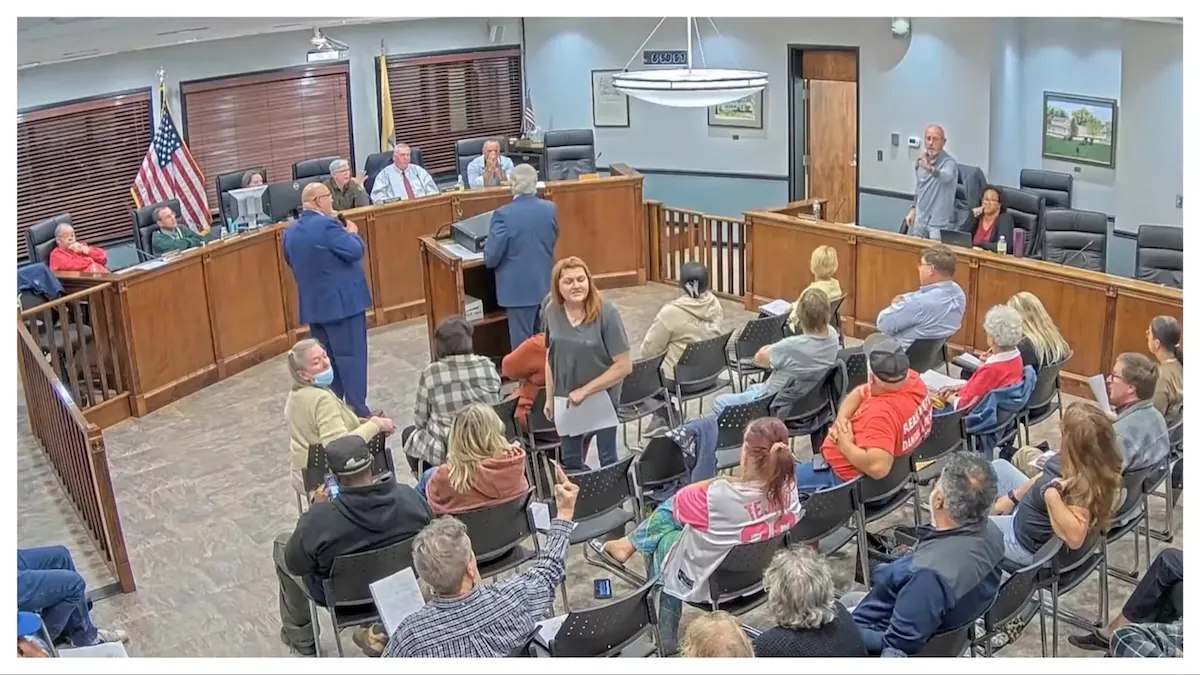
Instead, the evidence from the board’s public meetings and the statements of the members make it clear that there was a deliberate effort to illegally discriminate. For instance, the complaint alleges that one board member stated that “students being represented by people who look like them is really important.” A slide in the redistricting presentation included an analysis of proposed maps’ “Impact on Racial/Ethnic Concentration,” and the complaint says the board “explicitly used racial data to decide how to draw map lines.” A former candidate for the board said that “[t]he common theme” of the map’s supporters was to keep “historically Black communities in a district historically held by Black board members.”
In other words, in the eyes of the school board members, you are only qualified to represent black residents if you are black.
Similarly, a second district was deliberately redrawn to ensure Hispanic control and to retain a Hispanic board member because, apparently, you are also only qualified to represent Hispanic residents if you are Hispanic.
Another board member thanked those supporting these racist maps because they “confront[ed] the legacy of oppression rooted in White supremacy.” The board’s president said the map “was an act of resistance and empowerment.” Referring to “gentrification” (i.e., white residents moving into Denver neighborhoods), she complained that they couldn’t “stop where people move and who lives there, but we can…make sure those cultural icons are preserved.” A board member claimed those who passed the Voting Rights Act couldn’t have “imagined the level of gentrification across our communities” and that what the board was doing with these racist districts was “breaking down systems of oppression.”
In short, race motivated and permeated the map drawing process, and the obvious intent was to discriminate against white voters in order to “abridge” their vote.
If these complaints about “gentrification” and the importance of elected officials matching the skin color of their constituents sound familiar, they should. The complaints of these board members about whites moving into their neighborhoods mirror those of Southern segregationists who complained that their neighborhoods were being diluted by black voters moving in and that they needed to take measures to preserve white voting power.
The school board members are no different in perpetuating the unconstitutional and morally repugnant consideration of race in deciding the makeup of these representational districts. The complaint alleges that those pushing the racially segregated map adopted by the board similarly associated voting patterns with race. The board’s executive director of enrollment and campus planning claimed that because new white residents were more likely to vote in low-turnout elections, “the voice of the folks who lived” there would be “overshadowed by the new group of people” (i.e., white families).
The Supreme Court’s decision in Callais affirmed the protection of the Fifteenth Amendment and the Voting Rights Act against the use of race in the voting context except when there is a strong inference that intentional discrimination occurred. There is and has been no prior discrimination that could possibly justify this type of blatant racial gerrymandering by the school board.
Instead, the shameful words and actions of the school board members demonstrate that they intentionally discriminated against families moving into these districts for the sole reason that they do not have the same skin color as residents who already live there and whom they favor. Gentrification, which tends to improve neighborhoods as new families — regardless of their color — move in and renovate and restore housing, is apparently an “evil” that the school board believes it has to fight.
What is also shocking is not only the flagrant discrimination by the Denver Board, but the support it has received. Justin Leavitt, a law professor at Loyola Marymount University, claims the law does not prohibit racial considerations in redistricting and says “talking about race is fine.” He dismisses this as no different from drivers speeding and checking the weather and traffic, as if racial discrimination is just a minor inconvenience. It tells you something about the tolerance of the Obama and Biden administrations for the “right” kind of discrimination that he worked on voting issues as a political appointee in the Obama Justice Department and as a senior policy advisor in the Biden White House.
As America celebrates its 250th birthday, we should remember the central principle of our Declaration of Independence: all men are created equal. It is the duty of our elected representatives to treat us as such based on the content of our character, not the color of our skin. Perhaps if the board spent its time concentrating on education instead of racial segregation and phony claims about “White supremacy,” the education of its students would vastly improve.
***
Hans von Spakovsky is a Senior Legal Fellow at the Edwin Meese III Center for the Institute for the Rule of Law at Advancing American Freedom and Chairman of the Board of the Public Interest Legal Foundation
More from this network:
Domains for Sale · GOTPeople.org · TheDSAPlatform · The Truth About Socialism
What's Your Reaction?
 Like
0
Like
0
 Dislike
0
Dislike
0
 Love
0
Love
0
 Funny
0
Funny
0
 Wow
0
Wow
0
 Sad
0
Sad
0
 Angry
0
Angry
0

I am just an average American. My teen years were in the late 70s and I participated in all that that decade offered. Started working young, too young. Then I joined the Army before I graduated High School. I spent 25 years in, mostly in Infantry units. Since then I've worked in information technology positions all at small family owned companies. At this rate I'll never be a tech millionaire. When I was young I rode horses as much as I could. I do believe I should have been a cowboy. I'm getting in the saddle again by taking riding lessons and see where it goes.
Premium domains for sale






















Comments (0)