

The Sneaky Way the Left Gets Corporate America to Blacklist Conservatives
Premium domains for sale
Freedom Is Back In Style
Major employers systematically—though perhaps unintentionally—blacklist conservative nonprofits from their employee charitable giving programs through a third party.
Freedom Is Back
In Style
Premium domains for sale
Corporate generosity platforms such as Benevity act as middlemen, connecting employers such as AT&T, Coca-Cola, McDonald’s, and Starbucks to a host of nonprofits. Benevity, for example, connects “nearly 1,000 enterprise companies” to a network of 513,000 nonprofits after vetting 2.2 million of them.
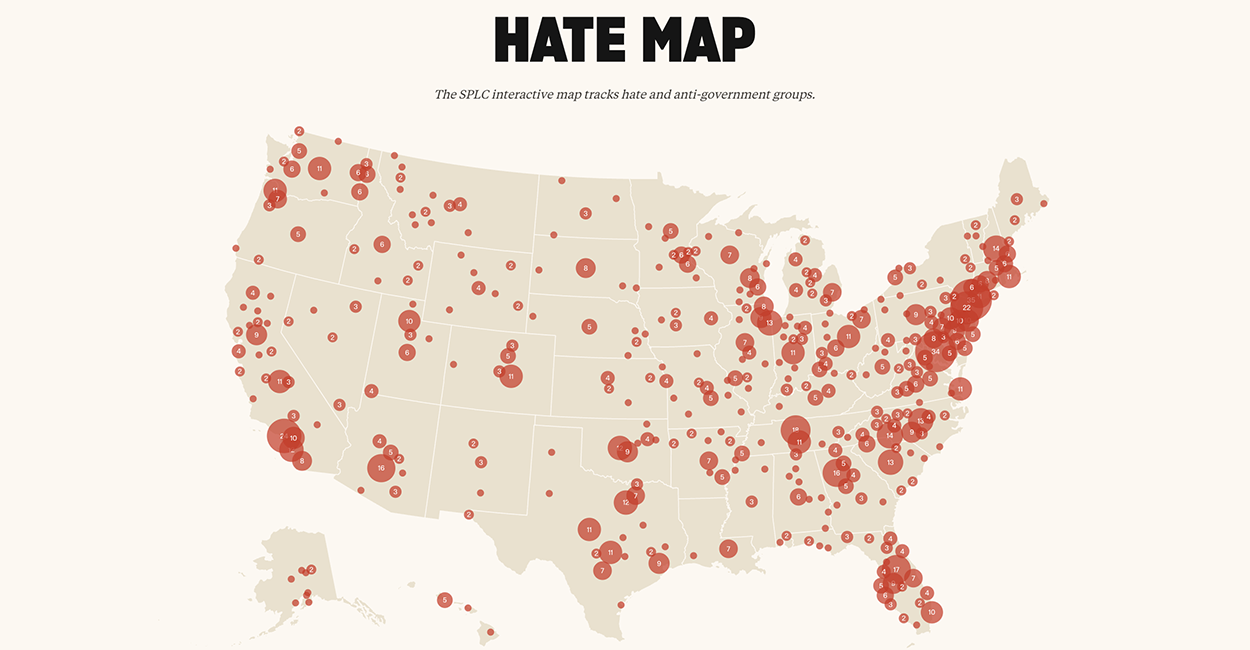
But these middleman platforms often refuse to partner with mainstream conservative or Christian nonprofits, because yet another third party—the Southern Poverty Law Center—puts those nonprofits on a “hate map” with chapters of the Ku Klux Klan.
The SPLC, which gained its reputation by suing Klan groups into bankruptcy, now stands accused of funneling money to Klan members, propping up the hate threat in order to raise money by claiming to oppose it. The SPLC claims it paid these Klan members as informants, to snuff out violent threats, but a federal grand jury indicted the SPLC for wire fraud and bank fraud based on claims that the SPLC paid for Klan robes and reimbursed a cross-burning, among other things.
At least one of these corporate generosity platforms has stopped using the SPLC in its entirety, but others continue to use it.
Calls to Stop Using SPLC
1792 Exchange, a nonprofit dedicated to bringing ideological balance back to public companies, and Alliance Defending Freedom, a conservative Christian law firm on the SPLC “hate map,” called on corporate generosity platforms to stop using the SPLC.
“The scandal-ridden, federally indicted Southern Poverty Law Center has demonstrated for decades that it is a laughably unserious organization,” Greg Scott, executive vice president at 1792 Exchange, told the Daily Signal. “Its defamatory ‘Hate List’ is nothing more than a blacklist used to smear mainstream conservative, pro-life, and Christian organizations.”
“Charity processing platforms like Benevity, Deed, and YourCause should immediately stop relying on the SPLC to ban legitimate nonprofits from corporate generosity programs,” Scott added.
“Unfortunately, many business leaders still don’t realize their companies are indirectly relying on the SPLC’s thoroughly discredited ‘hate map’ to make important business decisions—imposing viewpoint discrimination on their own workforce and customer base in the process,” ADF Senior Counsel Jeremy Tedesco told the Daily Signal.
“No business leader wants to explain to their board why they’re outsourcing decisions to a federally indicted organization,” he added. “The reputational and legal risks of continuing to rely on the SPLC are entirely unjustified—and the only responsible move is to cut ties completely.”
Some companies have directed their corporate generosity platforms to stop using the SPLC to screen eligible nonprofits. DoorDash directed the platform Deed to stop using the SPLC for this purpose. According to Bowyer Research and previous reporting, companies that use Benevity have opted out of using the SPLC, including American Express, AT&T, Mastercard, McDonald’s, Morgan Stanley, Nvidia, and Salesforce. Verizon directed CyberGrants, another such platform, to stop using the SPLC for its employee giving.
Only one of these platforms has sworn off the SPLC, however.
Benevity
“Benevity’s platform is designed to give clients flexibility and control over which nonprofits are eligible for their programs, including which third-party data sources, if any, they choose to apply,” a company spokesperson told the Daily Signal. “These options are not a default setting.”
Scott has disputed this claim, saying it is “hard to square with [Benevity’s] own history.”
In 2021, then-Benevity CEO Kelly Schmitt delivered a PowerPoint presentation explicitly stating that the company had “vetted” almost “2 million nonprofits,” adding that it used the “Southern Poverty Law Center Hate List.”
Bonterra
Bonterra, the company that owns Deed and the similar platform CyberGrants, told the Daily Signal that it is giving the companies that use its services the option to stop using the SPLC as a filter and to remove the SPLC from the program as a recipient of grants.
“Bonterra is actively monitoring the SPLC indictment and evaluating any implications for our platform and the programs we support,” Melanie Mahaffey, senior director of strategic communications at Bonterra, told the Daily Signal. “We maintain nonprofit eligibility standards grounded in a robust internal compliance framework, which we review on an ongoing basis to ensure they remain current and defensible.”
“In light of this developing situation, we are giving our customers two options: the ability to disable SPLC-based vetting within their program, and the ability to remove SPLC as an eligible nonprofit organization within their platform — both at their discretion,” she said.
Groundswell
Groundswell, a similar platform that offers “workplace giving, volunteering, matching, and grantmaking technology,” said it no longer uses third-party vetting systems like the SPLC “hate map.”
“Historically, Groundswell incorporated third-party nonprofit data sources, including SPLC designations, as part of platform-level eligibility screening in line with common industry practices at the time,” Sarah Kuntsal, the company’s head of product marketing, told the Daily Signal.
In 2024, however, the company “introduced enhanced controls that give customers more granular authority over nonprofit eligibility and restrictions,” Kuntsal explained. “As a result, Groundswell no longer applies platform-level restrictions based on any single third-party designation system.”
The platform encourages employers to give workers “broad opportunities for participation and giving.” Groundswell “does not prescribe or advocate for any particular nonprofit screening methodology,” and it “does not discuss the specific configurations, preferences, or decisions of individual customers.”
Groundswell’s frequently asked questions page stated that the platform “does not process donations to organizations denoted as hate groups by the Southern Poverty Law Center” as recently as December 2025, but the page no longer includes this language.
Millie Giving
Millie Giving, another corporate generosity platform, published a blog post in 2022 citing the SPLC on “hate groups.” The blog post claims that “vetting for hate groups in-house would be very difficult,” and states that “All vetting for the Millie database is even through the SPLC!”
Millie Giving did not respond to the Daily Signal’s requests for comment.
2 More Platforms
Two other corporate generosity platforms partner with companies but have not said they use SPLC “hate map.”
The Daily Signal also reached out to Submittable, which runs a similar corporate giving platform, and Blackbaud, which owns the corporate generosity platform YourCause. Neither of these companies has publicly stated any use of the SPLC “hate map” in the past, and neither responded to requests for comment.
The Southern Poverty Law Center did not respond to the Daily Signal’s request for comment.
More from this network:
Domains for Sale · GOTPeople.org · TheDSAPlatform · The Truth About Socialism
What's Your Reaction?
 Like
0
Like
0
 Dislike
0
Dislike
0
 Love
0
Love
0
 Funny
0
Funny
0
 Wow
0
Wow
0
 Sad
0
Sad
0
 Angry
0
Angry
0

I am just an average American. My teen years were in the late 70s and I participated in all that that decade offered. Started working young, too young. Then I joined the Army before I graduated High School. I spent 25 years in, mostly in Infantry units. Since then I've worked in information technology positions all at small family owned companies. At this rate I'll never be a tech millionaire. When I was young I rode horses as much as I could. I do believe I should have been a cowboy. I'm getting in the saddle again by taking riding lessons and see where it goes.
Premium domains for sale



















Comments (0)