

The Terrible Truth About The Lindsay Clancy Case
Premium domains for sale
Freedom Is Back In Style
Medical examiner Kimberley Springer on Thursday, August 6, walked a jury through an autopsy photograph of 8-month-old Callan Clancy, explaining his visible injuries. “…You can also begin to see petechial hemorrhages, which are dot-like hemorrhages underneath the skin, on the face,” she testified, aiming a laser pointer towards the screen.
Freedom Is Back
In Style
Premium domains for sale
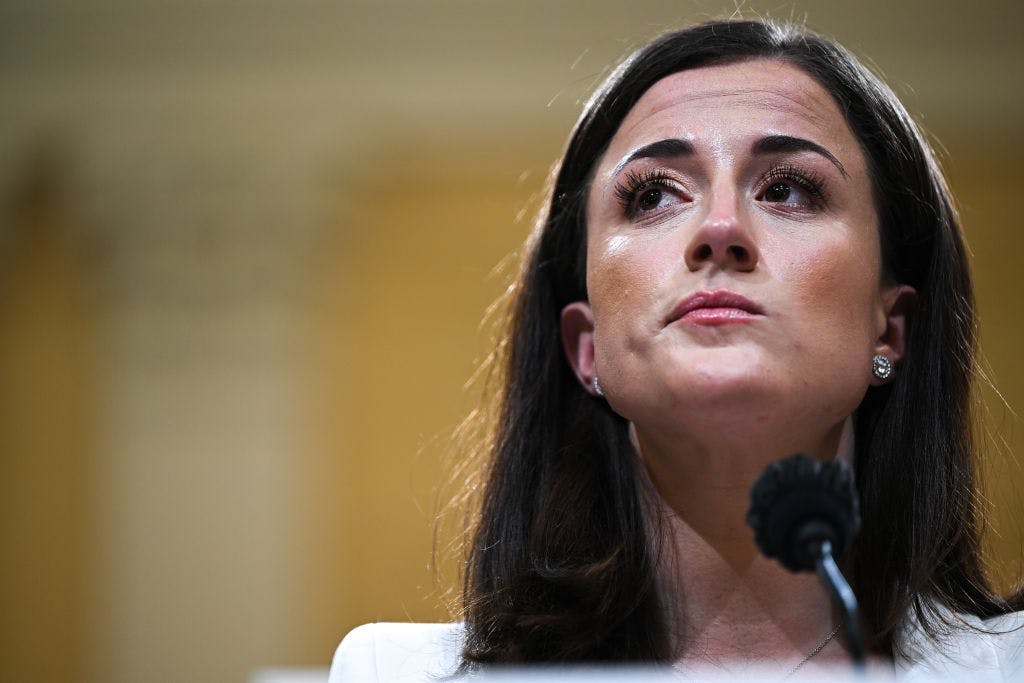
Callan’s mother, Lindsay Clancy, could be heard sobbing, her folded hands and dark hair veiling her face from prying cameras. Her attorney, Kevin Reddington, leaned toward her and whispered. A court officer moved toward her in the background.
“In terms of the marks around Callan’s neck, and the petechiae around his eyes and face, did that give you an indication here of the mechanism of death for Callan?” asked the prosecutor.
“Yes,” Springer continued, “it is consistent with a ligature strangulation.”
Moments later, the court broke for recess. As she was wheeled from the courtroom, Lindsay’s body slumped forward in her wheelchair. She appeared unable to hold herself upright.
A mother in any other circumstance would never be forced to sit, stone-faced, through such gruesome testimony about her own child. In this case, however, it was Clancy herself who murdered Callan, along with her two other children, five-year-old Cora and three-year-old Dawson.
The facts of the case are undisputed by the defense. On January 24, 2023, Clancy sent her husband, Patrick, to pick up takeout and medication for their daughter, Cora, leaving her alone with their three children at their home in Duxbury, Massachusetts. In Patrick’s absence, Clancy lured the children to the basement and, using rubber exercise bands, strangled them one by one.
Then, she climbed the stairs to the master bedroom. She locked the door, slit her wrists and neck with a kitchen knife, and threw herself from the second-story window.
When Patrick returned home a short time later, the house was quiet — an oddity for a family with three young children. “Guys?” he called, expecting an enthusiastic answer. He first checked for his family in the children’s bedrooms, and then the upstairs bathroom for signs of bath time. When he reached the locked door of the master bedroom, he knew something was wrong.
Behind it, he found the room in disarray. Blood speckled nearly every surface, as though it had been sprayed “with a hose.” The bed had been pushed diagonally into the middle of the room. The far window was open, the screen pushed up, the pitch-black 40-degree night blowing in against the silver curtains.
Lindsay left bloodstains on the shingled siding before landing on the frozen ground beneath the window, her head toward the house. The fall shattered her thoracic spine and multiple ribs and caused a Jefferson fracture in her neck, leaving her paralyzed. By the time she was found, her internal temperature had reached 82 degrees Fahrenheit, indicating severe hypothermia.
The 911 call capturing Patrick’s discovery of his wife and children was deemed too graphic to release publicly. Lindsay heard the call in court, as did the unusually large panel of 18 jurors.

Photo by David L. Ryan/The Boston Globe via Getty Images
The questions before them are more complicated than whether Clancy killed her children. Instead, the case asks the jury to grapple with some of the most difficult issues in criminal law and medical ethics: Did she possess the mens rea (or guilty mind) required for first-degree murder? Did postpartum psychosis absolve her of legal responsibility for her actions?
And another question the verdict cannot answer: did the medical system fail her long before she killed her children?
The warning signs
By all accounts, Lindsay Clancy was a “wonderful mom.”
The sentiment was repeated ad nauseam by countless of the prosecution’s own witnesses over the first nine days of testimony, including her ex-husband, father-in-law, nanny Elaine Rossi, co-workers, pediatrician, and close friends.
Lindsay “loved our children,” Patrick said, and “never took her frustration out on the kids.” She was dedicated to being a mom, he recalled, and “worked twice as hard as most,” rarely taking a break to rest.
However, after the birth of her third child, she experienced what defense experts assert was a bout of postpartum mania, waking every day at 4 a.m. to run three miles, ride her Peloton for 30 minutes and do another 30 minutes of aerobics. Just five weeks after giving birth, she ran a five-mile race.
The mania was followed by sudden and severe anxiety and depression. Recognizing that something was very wrong, and trusting in the medical system as a labor and delivery nurse at Massachusetts General Hospital, she reached out for help. Psychiatrist Dr. Jennifer Tufts prescribed Zoloft, to which Clancy had a serious adverse reaction: she did not sleep for 48 hours, experienced racing thoughts and intense anxiety, and felt “awful.”
As Clancy asserts in her civil suit against the many healthcare professionals who treated her in the months following Callan’s birth, this was a “dramatic departure from her previous sleep patterns and was an obvious warning sign of medication-induced activation consistent with bi-polar disorder.”
The risk is sufficiently well-recognized that Zoloft’s labeling includes a warning about the potential for these symptoms.
Clancy reported the reactions in October 2022 to Dr. Tufts, who simply discontinued the Zoloft and prescribed a cocktail of Ativan and Benadryl. She would consult with Dr. Tufts at least four times in the fall and winter months.
The cycle continued with different providers. “Frustrated and scared,” Clancy checked herself into the South Shore Hospital emergency room and was later treated through the hospital’s Perinatal Behavioral Health Program. There, she was prescribed trazodone and Prozac, both of which she later reported had worsened her symptoms. South Shore psychiatric nurse practitioner Julie Paul discontinued those medications and started her on Ambien, Remeron, and Klonopin, after which she experienced dissociation.
She was “unable to determine what was real,” and “unable to be alone.”
She then contacted a new practitioner in Weymouth, nurse Rebecca Jollatta, who prescribed Seroquel, after which “Lindsay’s condition took a dramatic turn for the worse,” according to the civil suit. “She developed suicidal ideation and began experiencing what she described as ‘intrusive thoughts’—which were actually auditory hallucinations. The voice said, ‘I will not be the same. I want to die.’”

Photo by Matt Stone/MediaNews Group/Boston Herald via Getty Images
In December 2022, her suicidal ideation worsened, accompanied by “thoughts of harming the kids,” which she reported to Patrick and to her mother, who drove her to the emergency room. She was admitted to a partial hospitalization program at Women & Infants Hospital in Providence, Rhode Island. By then, she had lost 15 pounds in a month.
Over the course of her illness, Clancy repeatedly sought help — at least 40 times — from family and friends, suicide hotlines, emergency departments, inpatient programs and mental health providers. She continued reaching out even as her condition deteriorated, but some support clinicians turned her away because she “did not have a suicide plan.”
She ultimately self-admitted to additional emergency rooms and inpatient programs, the last of which was at McLean Hospital. She was released after only five days so she could attend her daughter’s birthday party.
All in all, Clancy was prescribed 13 different medications, including benzodiazepines, antidepressants, and sleep aids, in the four months leading up to the deaths of her children.
The defense’s central claim is encapsulated in Clancy’s civil suit: “The psychotropic medications Lindsay received appear to have paradoxically exacerbated her underlying psychiatric vulnerability, precipitating a state of manic psychosis characterized by compelling command hallucinations.” In other words, Clancy was experiencing severe postpartum psychosis, a condition they contend was worsened by the medications she was prescribed.
The persistence of postpartum psychosis
To outside observers, Clancy’s case appears to fit a rare but tragic pattern: women whose postpartum psychosis was not adequately recognized or treated before it ended in catastrophe.
The most famous is Andrea Yates, the Houston mother who drowned her five children in the family bathtub after experiencing severe postpartum psychosis, including commands “from Satan” she believed were commanding her to harm them. Before the killings, Yates had sought psychiatric help, including multiple hospitalizations, but her condition continued to deteriorate. She was initially convicted of capital murder in 2002, though that verdict was overturned on appeal in 2005. Yates was retried in 2006 and found not guilty by reason of insanity. Yates was retried in 2006 and found not guilty by reason of insanity.
Another is Carol Coronado, a California mom who was sentenced to life in prison after stabbing her three daughters to death and attempting suicide by stabbing herself so deeply that she punctured the sac surrounding her heart. In the months before the tragedy, Coronado reportedly sought help multiple times — from her husband, family, and healthcare professionals — but those around her failed to recognize the severity of her condition. She remains incarcerated to this day.
These women were also attentive mothers, by all accounts, who were overtaken by a psychiatric condition more common than many people realize. Postpartum psychosis affects approximately one in every 500 mothers, though the risk rises dramatically, to 20–30%, among women with bipolar disorder, whether diagnosed or undiagnosed. Yet when a new mother leaves the hospital, her chance of being screened for postpartum depression varies widely. When she is screened, it’s often through a 10-question survey developed in 1987. There is currently no widely used screening tool specifically designed to identify postpartum psychosis.
“Throwing drugs at problems”
Expert psychiatric witnesses set to testify for the defense have also spoken publicly about Clancy’s case and what they describe as significant failures by her medical providers. Dr. Margaret Spinelli, a clinical professor of psychiatry at Columbia University College of Physicians and Surgeons and founder of the university’s Women’s Program in Psychiatry, conducted a comprehensive forensic psychiatric evaluation of Clancy over multiple hours-long visits. She diagnosed Clancy with severe Bipolar I Disorder with psychosis and postpartum onset.
Spinelli said Clancy’s providers “never seemed to communicate with each other,” adding that Clancy “did all she could to obtain the appropriate treatment.”
The defense is also set to call Dr. Phillip Resnick, a prominent forensic psychiatrist who served as a key witness in the defense of Andrea Yates.
“I don’t know anyone that could hear this case, and not just feel utterly enraged by what happened to her,” said outside expert Dr. Josef Witt-Doerring, a board-certified psychiatrist and leading expert in psychiatric drug side effects and withdrawal.
“The senseless loss of life of these three children, for no reason, when it was so clear that she was responding poorly to these medications — I don’t know when the psychiatric establishment will wake up and realize that you can’t just keep on throwing drugs at problems.”
And then, in a subsequent interview with East Idaho News: “A terrible evil has occurred.”
The Clancy case
The prosecution is nearing the end of its case, having worked through the vast majority of its 168-person potential witness list. Plymouth County Assistant District Attorney Shanan Buckingham, who wears a large bow in her hair each day in what appears to be a tribute to Cora Clancy, contends that Lindsay acted “intentionally, rationally, and swiftly,” meticulously planning the killings and staging a suicide attempt.
Buckingham and her co-counsel, Jennifer Sprague, have presented the jury with hours of testimony detailing the facts of the case, many of which have already been stipulated to by the defense. They’ve played the graphic 911 call, presented autopsy photographs of the dead children, and held up the Christmas pajamas baby Callan was wearing when he died.
But the prosecution’s tactics are not landing with the increasingly skeptical public in the way prosecuters may have expected. Messages of mourning, and of support, for Lindsay have overwhelmed social media. Think pieces have been published in major media outlets about the culpability of Big Pharma in this particular tragedy.
The prosecutors have failed to recognize an important cultural shift: We no longer live in a world where a judge could sentence Carol Coronado, a mentally ill mother, to life in prison with little public examination of the relational and medical failures that preceded the tragedy. And we’re past 2020, when a largely compliant public, driven by fear, surrendered extraordinary liberties in deference to government agencies without scrutiny of the science behind each consequential decision.
We live instead in an age of appropriate skepticism, where institutions are expected to prove their competence, not merely invoke their authority. If the jury reflects that broader public sentiment, it should prove consequential for Lindsay Clancy, whose failure by the system had deadly consequences.
***
Grace Salvatore is a Nebraskan writer based in New York City.
This article is part of Upstream, The Daily Wire’s new home for culture and lifestyle. Real human insight and human stories — from our featured writers to you.
More from this network:
Domains for Sale · GOTPeople.org · TheDSAPlatform · The Truth About Socialism
What's Your Reaction?
 Like
0
Like
0
 Dislike
0
Dislike
0
 Love
0
Love
0
 Funny
0
Funny
0
 Wow
0
Wow
0
 Sad
0
Sad
0
 Angry
0
Angry
0

I am just an average American. My teen years were in the late 70s and I participated in all that that decade offered. Started working young, too young. Then I joined the Army before I graduated High School. I spent 25 years in, mostly in Infantry units. Since then I've worked in information technology positions all at small family owned companies. At this rate I'll never be a tech millionaire. When I was young I rode horses as much as I could. I do believe I should have been a cowboy. I'm getting in the saddle again by taking riding lessons and see where it goes.
Premium domains for sale
























Comments (0)