

The top 5 apps to beat your seasonal allergies before they beat you

Premium domains for sale
Freedom Is Back In Style

Seasonal allergies are nothing to sneeze at, especially if you live in a hot zone. Between a runny nose, congestion, watery eyes, and everything else that comes with spring, bothersome symptoms can make it harder to focus and downright ruin your day. Stay on top of the allergy forecast with these essential apps for allergy season.
Freedom Is Back
In Style
Premium domains for sale
The Weather Channel
The Weather Channel isn’t just a great app for monitoring severe weather; it also includes a helpful seasonal allergy tracker. Scroll down to the Health & Wellness section, and you’ll find a graph with allergy metrics for the current week. Tap on each section to get specific data about tree, grass, or ragweed allergens. Below that, you’ll find a pollen breakdown with callouts of the most prevalent allergens in the air. The final graph below that offers a two-week look at when your allergy symptoms are most likely to spike so that you can prepare with the proper medications or schedule modifications.
You can identify bad allergy days, minimize your symptoms, and tailor your schedule to keep allergies at bay.
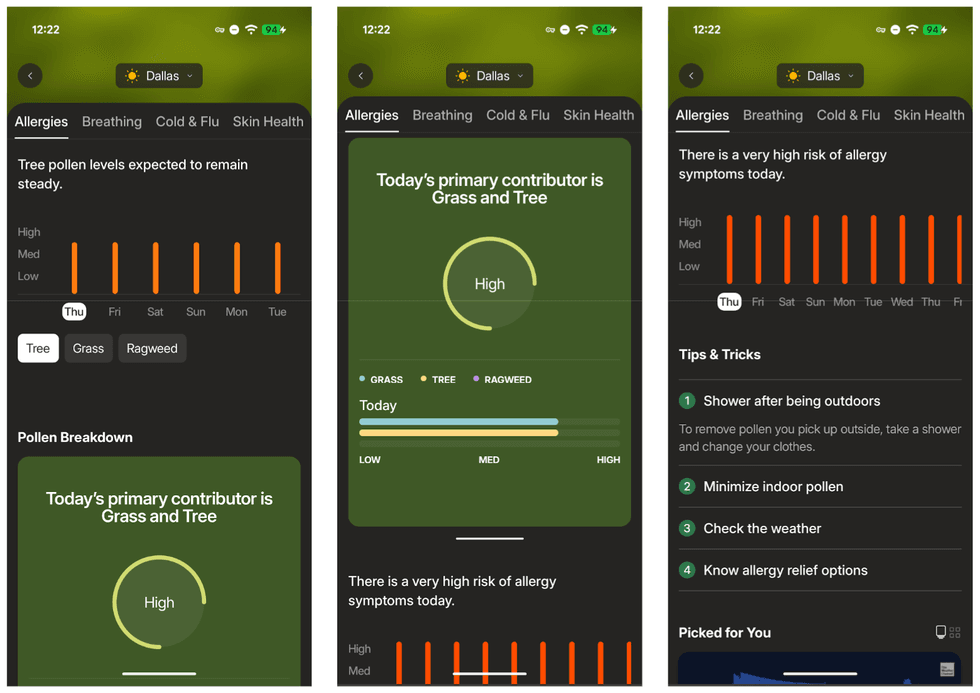 Screenshots by Zach Laidlaw/The Weather Channel
AccuWeather
Also another contender in our must-have apps for storm season, AccuWeather is equipped with a 10-day seasonal allergy outlook graph. It includes a breakdown for the most troubling allergens, like tree pollen, ragweed pollen, mold, grass pollen, and dust and dander, along with color-coded warnings that indicate low to extreme levels of each so you know when your most sensitive allergies will be a problem. Swipe left on this graph to see how the air impacts common health conditions (arthritis, common cold, flu, and asthma), the best time to do certain outdoor activities (running, biking, fishing, and mowing the lawn), and even the best days to travel (either by car or plane).
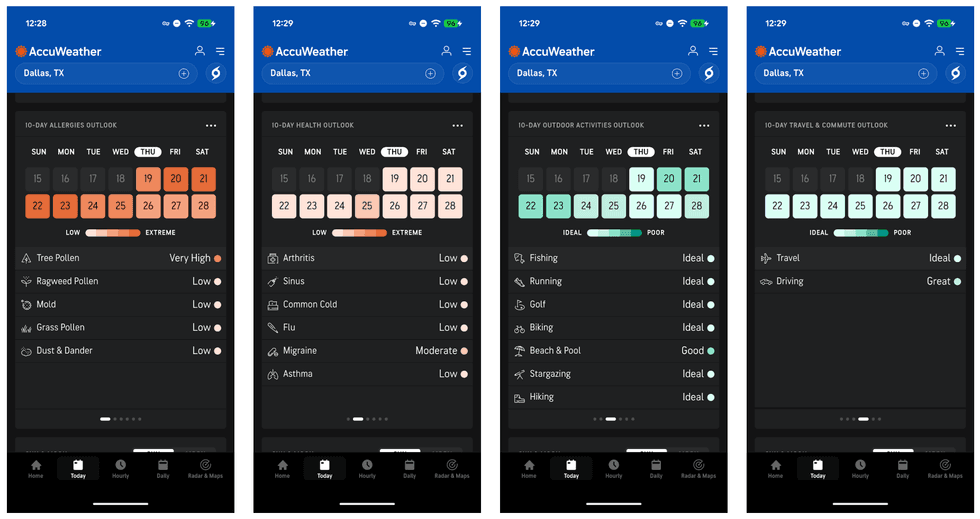 Screenshots by Zach Laidlaw/AccuWeather
My Pollen Forecast (iOS only)
I normally wouldn’t include an app that is only available for one mobile platform in a list like this, but since this one is my personal favorite, I had to throw it into the mix. My Pollen Forecast starts with a glanceable color-coded map that shows the pollen count in your area. Green indicates low pollen, yellow is for medium levels, orange stands for medium-high pollen, and red can range from high to very high counts.
RELATED: Storm season is here. Yes, you need a better weather app.
 Joe Raedle/Getty Images
Tap into the forecasts tab to get a multiday forecast of allergy conditions, plus temperature and humidity. My favorite part about My Pollen Forecast, though, is that you can set notifications for your phone to automatically alert you if high pollen is predicted for your area, providing a helpful reminder to curb symptoms with any necessary allergy medications or nasal sprays.
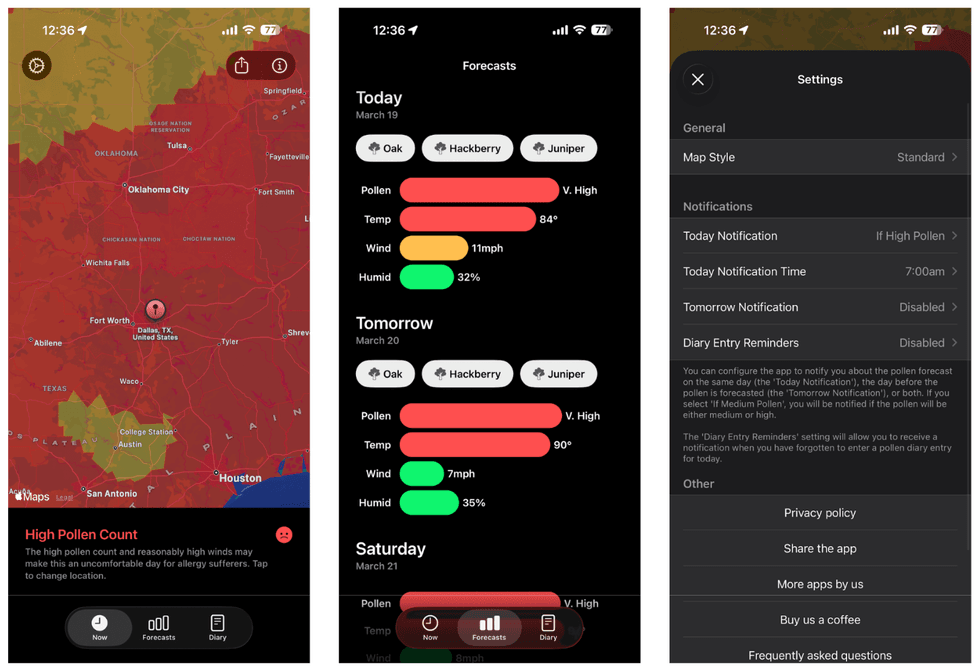 Screenshots by Zach Laidlaw/My Pollen Forecast
WeatherBug
WeatherBug is a powerful app that offers a wide range of helpful information about the weather, air quality, and seasonal allergies. The pollen widget on the front page highlights a quick breakdown of the pollen levels in your area, as well as the predominant offenders for the day (in this case, oak, hackberry, and cedar/juniper). Tap on the widget, and you’ll find a map view that can be enlarged to see color-coded pollen metrics for the entire United States ranging from green (lowest levels) to red (highest levels). Like My Pollen Forecast, WeatherBug can also send notifications to alert you when high pollen levels are expected in your region, making it a must-have for anyone with particularly pesky allergy symptoms.
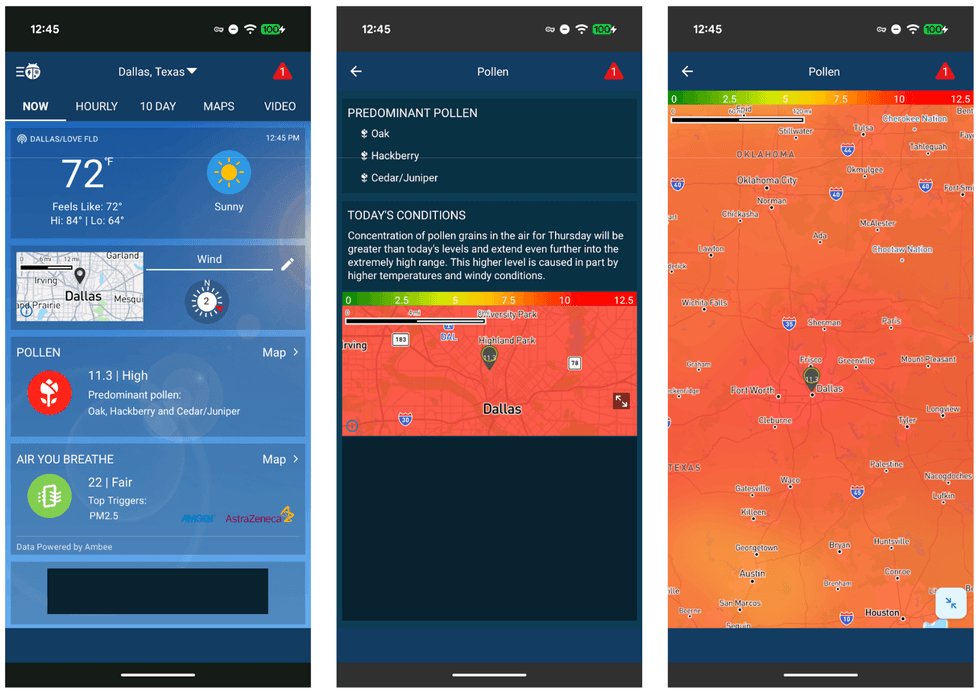 Screenshots by Zach Laidlaw/WeatherBug
Zyrtec AllergyCast
Last but not least, Zyrtec AllergyCast is another option for your allergy-busting arsenal. It requires a free account to unlock all the features. Without an account, however, you can still see a four-day pollen forecast and a color-coded map with conditions for grass, tree, and weeds. The reason this app made the list, though, is for its logging capabilities. Whether you have bad seasonal allergies or you simply want to track your symptoms, the logging feature lets you rate your symptoms (from smiley face to a frowning face), mark down your most troublesome symptoms (itchy nose, runny nose, and sneezing), choose your treatment plan (including medications and nasal sprays), and even write down notes that describe how you feel. With a regular log, you can see how your body reacts to certain allergens over time, giving you broader insights into your seasonal health.
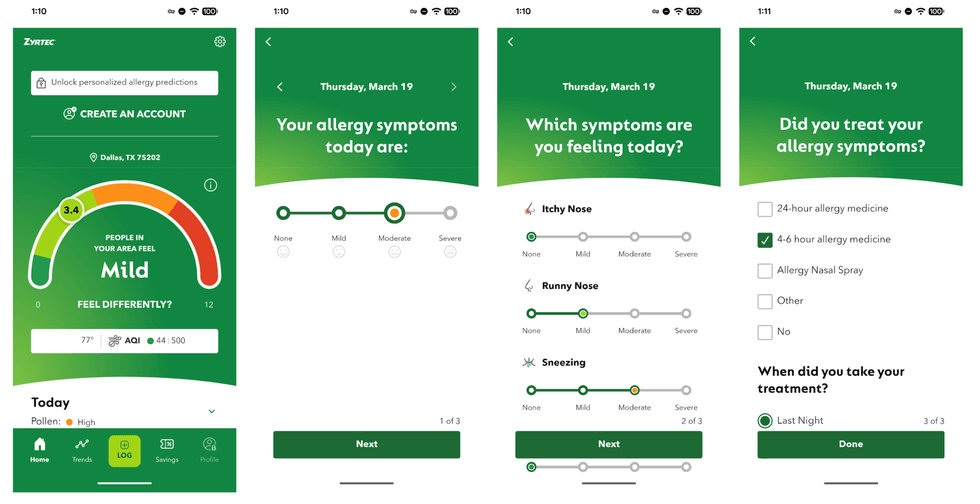 Screenshots by Zach Laidlaw/Zyrtec AllergyCast
Seasonal allergies are an unavoidable part of spring, but with a bit of knowledge and foresight gleaned from the apps in this list, you can identify bad allergy days, minimize your symptoms, and tailor your schedule to keep allergies at bay.
More from this network:
Domains for Sale · GOTPeople.org · TheDSAPlatform · The Truth About Socialism
What's Your Reaction?
 Like
0
Like
0
 Dislike
0
Dislike
0
 Love
0
Love
0
 Funny
0
Funny
0
 Wow
0
Wow
0
 Sad
0
Sad
0
 Angry
0
Angry
0

I am just an average American. My teen years were in the late 70s and I participated in all that that decade offered. Started working young, too young. Then I joined the Army before I graduated High School. I spent 25 years in, mostly in Infantry units. Since then I've worked in information technology positions all at small family owned companies. At this rate I'll never be a tech millionaire. When I was young I rode horses as much as I could. I do believe I should have been a cowboy. I'm getting in the saddle again by taking riding lessons and see where it goes.
Premium domains for sale






















Comments (0)