

The Wicked Little Secret Behind The New Feminist Heroes
Premium domains for sale
Freedom Is Back In Style
Next week, Netflix is dropping a prestige miniseries, “East of Eden,” by Zoe Kazan, adapting John Steinbeck’s magnum opus of the same name and casting the novel’s antagonist, Cathy Ames, as the protagonist. In November, the streaming giant will release an animated musical, “Steps,” which argues that the cruel stepsisters in Cinderella are actually the virtuous heroes, not the kind, innocent girl their family has enslaved.
Freedom Is Back
In Style
Premium domains for sale
While one is a prestige drama adapting a major contender for “Great American Novel” and the other is a silly children’s musical starring a stand-up comedian, the stories share a major structural element: both center the original villain’s experience, reframing her as sympathetic and misunderstood. This has been a growing trend in media, as the popularity of “The Wizard of Oz” retellings like “Wicked” and increasing moral relativism are driving a slew of adaptations that reframe iconic villainesses as misunderstood heroes of their own stories.
Where have all the bad women gone? And why has Hollywood been recently so reticent to let female villains remain villainous?
Cinderella’s stepsister has been here before, and better
Cinderella is a beautifully simple story, a girl persevering through mistreatment and abuse without losing her inherent goodness and being rewarded with true love and a life with people who treat her well. These timeless fantasies, and the eternally relevant moral to not let circumstances rob you of kindness and bravery, have made it one of the most iconic and adapted fairy tales.
“Steps” is far from the only Cinderella story that attempts to rehabilitate the wicked stepsister. But well-handled complications of the character provide nuance and redemption, rather than removing her badness.
“Cinderella III” rose above its cash-grab contemporaries as the best-regarded straight-to-DVD Disney sequel, in part because it develops one of the stepsisters without lessening the eponymous princess’s virtue. This change is portrayed as a redemption, as the stepsister slowly overcomes her mother’s manipulation to become the good person she always had the potential to be.
Likewise, Rodgers and Hammerstein’s musical features one delightfully evil stepsister and one who is much more of a weak-willed follower, whose side plot involves falling in love and gaining the courage to stand up for both herself and Cinderella.
While I love a purely devious villain, these stories provide valuable lessons to the young girls in the intended audience. Not every child is a pure-hearted and perfect Cinderella type, endlessly sweet and good. Some find themselves as followers, going along with others’ mistreatment to protect their own interests, but it’s not permanent. This story works specifically because it doesn’t let the stepsister off the hook for her previously bad behavior.
If the character is merely misunderstood, there is no growth, no moral. Little girls should aspire to be Cinderella, and when they fall short, see the possibility for growth and redemption, not be told that any wickedness is just misunderstanding.
East of evil
Adding moral complexity to the “East of Eden” villainess raises questions about the adaptation’s tone and purpose. The novel is a fairly blunt biblical allegory, depicting generational struggles between good and evil. Cathy is functionally the devil, and is fascinating because of it.
Jane Seymour, who played Cathy in the 1981 miniseries, discussed the “wonderful” experience of playing such a deliciously despicable role: “There is nothing greater than playing evil incarnate. … But Steinbeck said in his journal the reason people are so excited about reading [Cathy] is because they can’t understand it, but a tiny bit inside all of us has that sense that one could be evil. We have the choice to be good.”
Zoe Kazan, whose grandfather Elia Kazan directed the Oscar-winning 1955 film adaptation of the novel, however, seems to see the girl who burns her parents alive as an empowered woman. She stated outright, “I think that Cathy is the most extraordinary character. To see a girl and then a woman who has no care but her own autonomy and gain, who is not doing anything for anyone else’s benefit, it was bracing … I felt like re-atomized by it or something.”
Just a girl
Are women overwhelmingly the ones on the receiving end of this retroactive reframing? While there has been no shortage of villain protagonist stories starring iconic male characters, these works tend not to excuse or rewrite their wickedness in the manner of their female counterparts.
This gendered difference is clearly laid out in the recent adaptational treatment of the Joker. Todd Phillips’ Oscar-winning “Joker” provided the clown prince of crime a tragic backstory in the vein of a Scorsese movie, but the film in no way excuses any evil he commits. So closely inspired by “Taxi Driver” and “The King of Comedy,” it borders on plagiarism; Arthur Fleck’s story is less a hero’s journey and more a tragic descent into villainy. While his abandonment by an uncaring world generates sympathy, viewers are not meant to like or root for him, and if there’s any doubt, the atrocious sequel spells out without subtlety that viewers are not meant to care about or relate to Arthur in any way. Unlike the female counterparts, his sympathy in no way undermines his villainy.
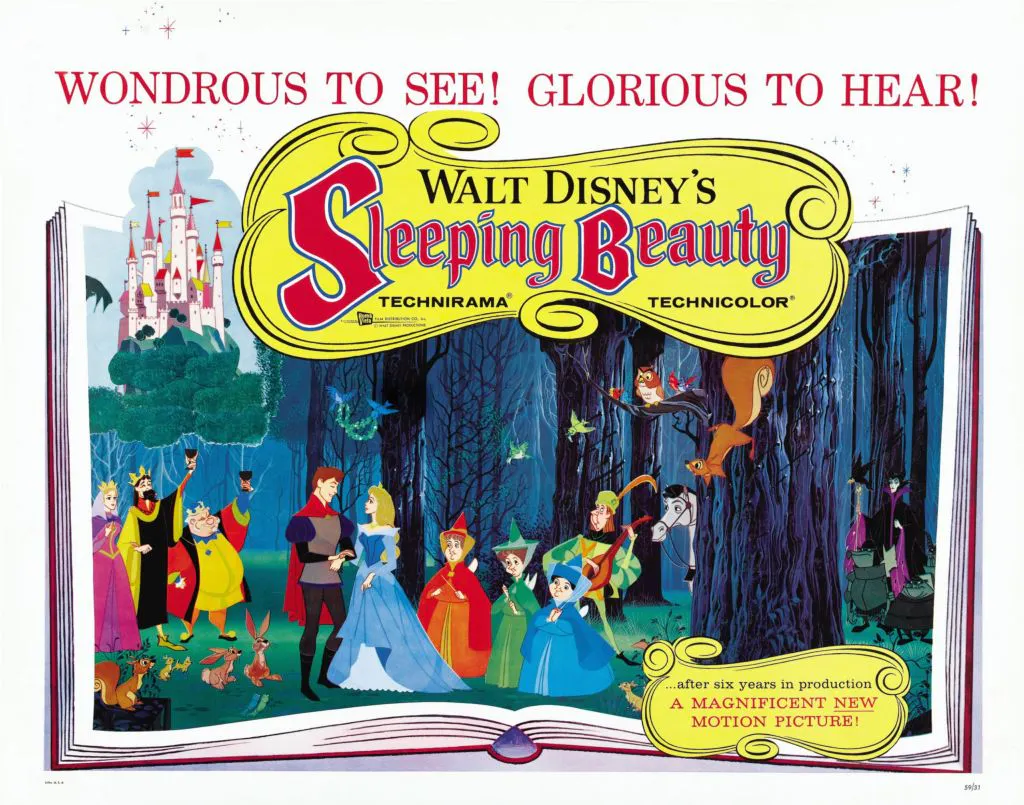
Disney has fallen into this gendered trap. The House of Mouse released two villain-rehabilitation films centered on female characters who were popular because of their audacious evil: Maleficent and Cruella de Vil. The “Sleeping Beauty” villain curses a baby princess to die at 16 because she was not invited to a party. Her self-titled film reframes this violent act as a cruel but regretted moment of lashing out in vengeance at the princess’s father, and spends the rest of the film endeavoring to protect and save the child she grows to love as a daughter.
Despite the relatively successful reframe of “Maleficent,” many wondered how “Cruella” would make a protagonist out of a woman whose entire goal is to murder puppies. And the film opts to just remove her evil entirely. She makes a spotted coat, but spares the Dalmatians, which she keeps as pets despite their having killed her mother on the orders of the film’s actual antagonist.
Meanwhile, the “Lion King” prequel “Mufasa” had the opportunity to offer a similar reinterpretation of its usurper villain, Scar. Rather than treating his takeover as a righteous cause or as inspired by genuine tragedy, Scar betrays his brother to the white lions (the film’s unsubtle racial-allegory villains) out of romantic jealousy and resentment. One has to wonder whether Scar, as a woman, would have the film lessen his culpability.
It’s almost ludicrous to imagine men as evil as Cathy Ames receiving the protagonist treatment. These choices feel comparable to a Judge Holden whose murder and manipulation across Cormac McCarthy’s “Blood Meridian” is a bold act of self-actualization, or a “Lolita” retelling where Humbert Humbert is just a loving stepfather on a perfectly innocent road trip with his orphaned ward, only to be wrongfully perceived as a predator.
True evil
Stories have a rare opportunity to impart lessons and comment on society’s values by convincing rather than lecturing. A great work of art can spur audiences to seek goodness, overcome evil, and work to improve themselves every day.
Stories that treat villainy as misunderstanding and pretend women are incapable of true wickedness don’t inspire the women and girls watching to be better; they excuse the worst impulses as justifiable self-actualization. Our heroes give us models to strive to emulate, villains represent what we must never become, and nuanced middle-ground characters are figures to relate to or learn from.
By eliminating an entire sex from villainy and treating sin as relative and excusable, viewers lose the vital truth that evil exists and can be overcome.
***
Paulina Enck is a media specialist in Washington, D.C.
More from this network:
Domains for Sale · GOTPeople.org · TheDSAPlatform · The Truth About Socialism
What's Your Reaction?
 Like
0
Like
0
 Dislike
0
Dislike
0
 Love
0
Love
0
 Funny
0
Funny
0
 Wow
0
Wow
0
 Sad
0
Sad
0
 Angry
0
Angry
0

I am just an average American. My teen years were in the late 70s and I participated in all that that decade offered. Started working young, too young. Then I joined the Army before I graduated High School. I spent 25 years in, mostly in Infantry units. Since then I've worked in information technology positions all at small family owned companies. At this rate I'll never be a tech millionaire. When I was young I rode horses as much as I could. I do believe I should have been a cowboy. I'm getting in the saddle again by taking riding lessons and see where it goes.
Premium domains for sale

















Comments (0)