

This Movie Tells The Story Today’s Schools Won’t
Premium domains for sale
Freedom Is Back In Style
This article is part of Upstream, The Daily Wire’s new home for culture and lifestyle. Real human insight and human stories — from our featured writers to you.
Freedom Is Back
In Style
Premium domains for sale
***
I was visiting Canada’s East Coast last week and happened to tour the Fortress of Louisbourg, the largest reconstructed historic fort in North America. At one point, a reenactor explained that the French were so keen on keeping their colony dependent that nearly everything there had to be shipped in from France: basic supplies, stone, stonemasons, and even firewood. (For added comic effect, we were literally standing next to a forest.) It was a small but salient detail, underscoring the perennial absurdity of government planning from past to present and the colonial condescension that would eventually help fuel the American Revolution.
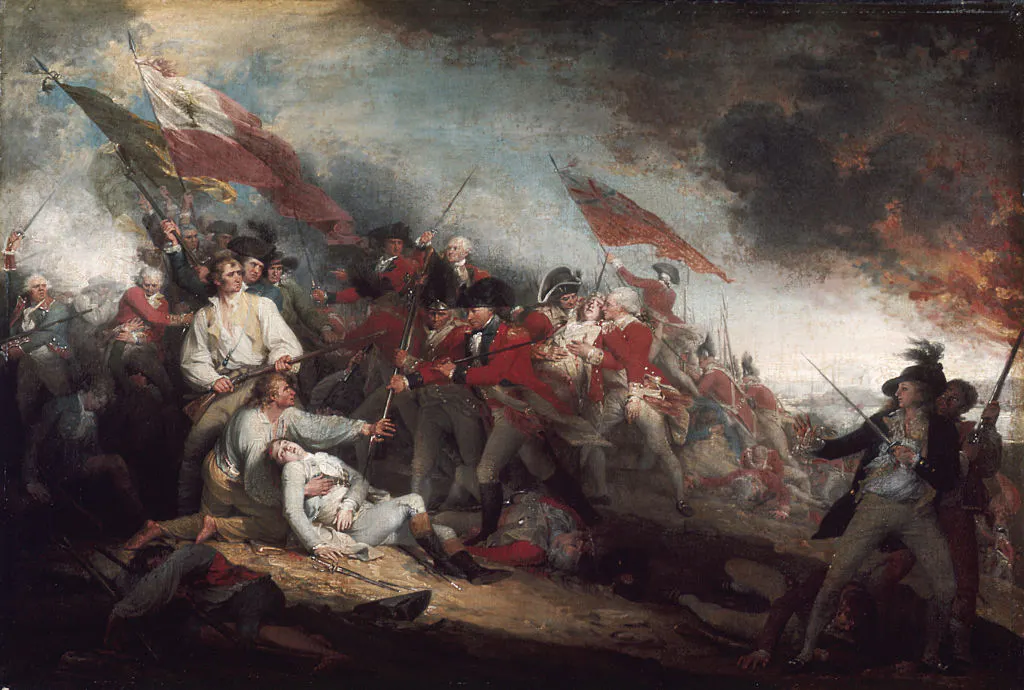
That same tension runs through “Revolutionary America,” Hillsdale College’s first feature-length documentary. Directed by Ian Anthony Reid and narrated by Tom Selleck, the film traces the struggle for independence from the French and Indian War through the Revolution and into the constitutional settlement that followed. Its central question is not merely how the Americans won independence, but why ordinary men risked their lives, fortunes, families, reputations, and futures for what must have seemed, at the time, like political fantasy.
The film begins with the French and Indian War, framing the event as the turning point that reshaped both North America and the relationship between Britain and its colonies. By the war’s end, Britain’s American territories were roughly the size of the Roman Empire at its peak. It was at this moment, the documentary suggests, that the British Empire truly became the Empire.
Yet imperial grandeur came with imperial expenses, and the Crown soon began imposing draconian taxes on the colonies to compensate for its spending — a veritable inspiration for New York’s current mayor. The issue, as the film wisely emphasizes, was not simply money. Taxes are not merely about money; they reveal a theory of government: who has authority, who owes obedience, and who gets to decide the terms of civic life.
This is where “Revolutionary America” is strongest. It shows how the Tea Act and Coercive Acts (among others) were part of a broader imperial posture. As Daily Wire host Michael Knowles observes in the film, Britain treated the colonies like children and resented their success while lavishly profiting from them — like child stars whose parents appoint themselves managers and siphon off the proceeds.
The colonists’ grievance was therefore not reducible to a tepid tax revolt. They were objecting to a form of rule that denied them the rights and responsibilities they believed were endowed by a higher power. The English monarch believed the inverse: that this same higher power had ordained him with the authority to dictate those rights. Hillsdale understands the Revolution as a moral argument foremost, rooted in the conservative preservation of inherited liberties rather than the radical, abstract restructuring of society that later doomed the French model.
Among Hillsdale’s triumphs is the selected cast. Tom Selleck’s earnest narration carries a warm and disarming authority that effortlessly conveys his passion for the period and his esteem for its heroes. The commentators are effective as well, especially Hillsdale professor Wilfred McClay, whose amicable and endearing speaking style is as effective as any advertisement for the college.
The documentary also cleverly layers commentary with letters, speeches, maps, landscapes, paintings, sketches, and architectural footage. The camera deftly moves through them, isolating details and drawing the viewer into the scene with the careful theatricality of one of those immersive Van Gogh exhibitions. The result is visually richer than one might expect from an educational documentary working within what was likely a modest budget.
Ryan Moore’s musical score also gives the film great momentum, from pulsating snare drums placing you squarely amid the chaos of a raging battlefield, to lush, pastoral string arrangements carrying you through the sweeping landscape of the era.
The film’s strongest section comes at Valley Forge, the defining crucible of the American Revolution. Reid combines snowy landscapes, period sketches, animated letters, and intimate narration to evoke the misery of the winter of 1777 to 1778. Letters from soldiers, including Timothy Pickering writing to his wife about the lack of shoes and clothing amid the freezing privation, convey both the hardship and endurance required to wage war against the superpower of their time.
Here, too, the film foregrounds the Christian dimension of the Revolution. The Americans’ determination was driven by the conviction that their rights were not indulgences from the Crown, but truths ordained by a higher power. “We are on a mission from God,” as the Blues Brothers would later proclaim. George Washington and his compatriots believed their rights came from God as firmly as the English monarch believed his right to rule did. Only one vision of authority could prevail.
That is the deeper argument of “Revolutionary America.” Rights do not come from government and therefore cannot rightly be taken away by government. Watching the documentary, I was reminded of what Abraham Lincoln meant at Gettysburg when he described the United States as a government “of the people, by the people, for the people”: The American Revolution was not about changing management but asserting that legitimate government derives from the consent of the governed.
The final stretch moves toward the Constitution and the crucial work of preserving what the Revolution began. Asked whether the convention had produced a monarchy or a republic, Benjamin Franklin famously quipped: “A republic, if you can keep it.” And that is the documentary’s lingering lesson. The Constitution is, in a sense, only a piece of paper. It cannot preserve itself. “We the people” must keep the republic.
***
Harry Khachatrian (@Harry1T6) is a film critic for the Washington Examiner. He is a software engineer, holds a master’s degree from the University of Toronto, and writes about wine at BetweenBottles.com.
More from this network:
Domains for Sale · GOTPeople.org · TheDSAPlatform · The Truth About Socialism
What's Your Reaction?
 Like
0
Like
0
 Dislike
0
Dislike
0
 Love
0
Love
0
 Funny
0
Funny
0
 Wow
0
Wow
0
 Sad
0
Sad
0
 Angry
0
Angry
0

I am just an average American. My teen years were in the late 70s and I participated in all that that decade offered. Started working young, too young. Then I joined the Army before I graduated High School. I spent 25 years in, mostly in Infantry units. Since then I've worked in information technology positions all at small family owned companies. At this rate I'll never be a tech millionaire. When I was young I rode horses as much as I could. I do believe I should have been a cowboy. I'm getting in the saddle again by taking riding lessons and see where it goes.
Premium domains for sale










Comments (0)