

Trump v. Slaughter: Supreme Court Says Constitution Allows the President to Be President
Premium domains for sale
Freedom Is Back In Style
In a 6-3 opinion written by Chief Justice John Roberts, the Supreme Court said that the Constitution grants the president—any president—the power to remove individuals who exercise executive authority. In doing so, it overruled its long-discredited 91-year-old New Deal Era decision of Humphrey’s Executor v. United States.
Freedom Is Back
In Style
Premium domains for sale
Here’s what happened: Democratic operative Rebecca Slaughter was appointed to be a member of the Federal Trade Commission in 2018. The relevant statute says that no more than three commissioners can be from the same political party, so she filled one of the Democratic Party seats on the FTC. President Joe Biden later renominated her, and in 2024 the Senate reconfirmed her to a second term ending in 2029.
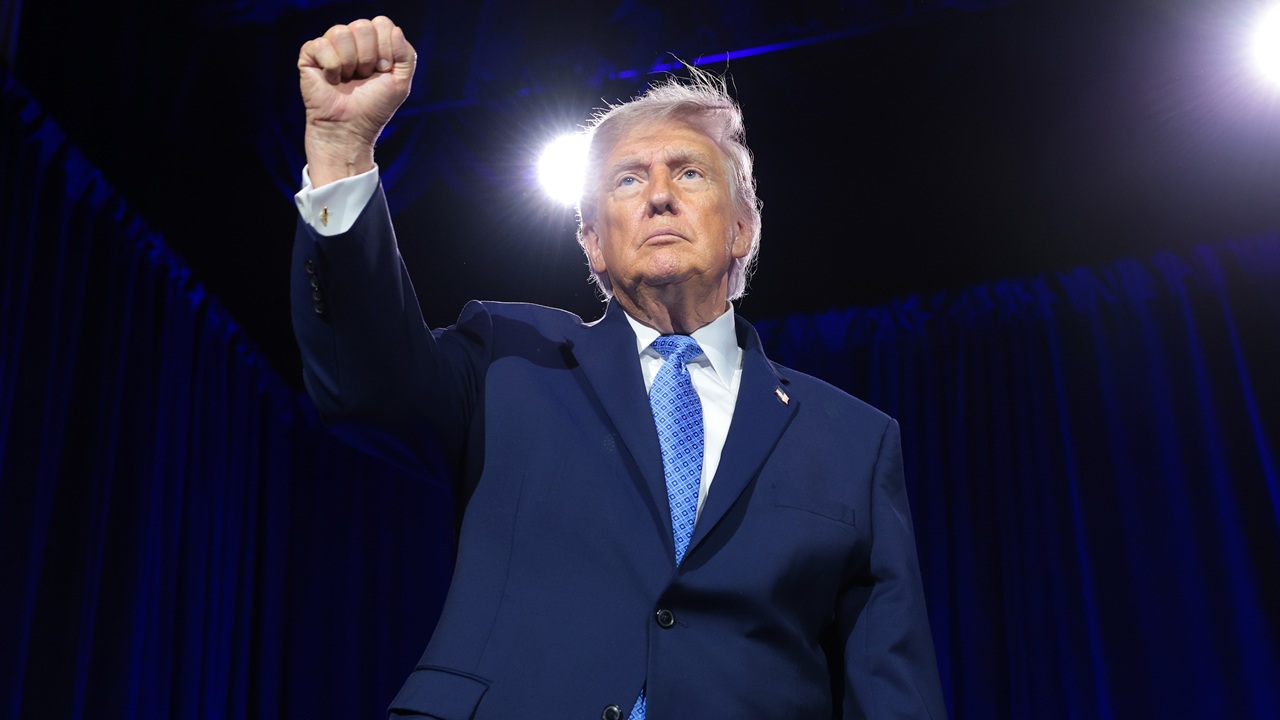
But on March 18, 2025, Slaughter received an email from President Donald Trump stating that her “continued service on the FTC is inconsistent with [his] administration’s priorities” and that he was removing her from office effective immediately.
Slaughter then sued, arguing that the firing violated the Federal Trade Commission Act, which required that the president remove an FTC commissioner only “for cause.” Cause, as delineated in the statute, means “inefficiency, neglect of duty, or malfeasance in office.”
But President Trump pointed to the Constitution, arguing that Article II vests the “executive Power”—all of it—in the “President of the United States of America” and further requires that he “shall take Care that the Laws be faithfully executed.” In his view, this meant that Congress’ efforts to restrict his ability to remove members of so-called independent agencies like the FTC were unconstitutional.
And today, the Supreme Court agreed. Chief Justice Roberts said, “this is not a close case” because the “FTC’s for-cause removal provision violates the separation of powers.”
In reaching this conclusion, the Court overturned its prior decision in Humphrey’s Executor. There, President Franklin Delano Roosevelt removed FTC Commissioner William Humphrey by letter, effective immediately. Because Humphrey had not been removed for inefficiency, neglect of duty, or malfeasance, the president’s authority to act was contested.
Humphrey insisted that he remained a member of the Commission, and after his death his estate sued for the salary it believed he was owed. A unanimous Supreme Court held that Congress could limit the President’s ability to remove FTC commissioners because, in its view, the agency exercised “quasi-legislative” and “quasi-judicial” functions rather than purely executive ones.
Justice Sonia Sotomayor, joined by Justices Elena Kagan and Ketanji Brown Jackson, dissented because she did not find the arrangement problematic, let alone unconstitutional. She said that with its decision “the Court undoes centuries of political practice and concludes that all three branches of Government have been acting in open defiance of the Constitution all this time.” She added that with its decision, “the Court gives the President a power unknown even to the English Crown against which the Founders revolted.”
Justice Neil Gorsuch, for his part, agreed with the majority and joined its opinion. But he concurred separately to emphasize his concern that more work needs to be done.
He said it was doubtful that Congress would have given executive-branch agencies such expansive authority—especially quasi-legislative and quasi-judicial authority—if the president could control them without the other unconstitutional checks Congress had tried to impose. He said that today’s decision is a start, but that this first step is not enough.
Gorsuch wrote, “From here, the only sure path is to finish the journey we start today and restore legislative and judicial powers to where they belong: in Congress and the courts.”
More from this network:
Domains for Sale · GOTPeople.org · TheDSAPlatform · The Truth About Socialism
What's Your Reaction?
 Like
0
Like
0
 Dislike
0
Dislike
0
 Love
0
Love
0
 Funny
0
Funny
0
 Wow
0
Wow
0
 Sad
0
Sad
0
 Angry
0
Angry
0

I am just an average American. My teen years were in the late 70s and I participated in all that that decade offered. Started working young, too young. Then I joined the Army before I graduated High School. I spent 25 years in, mostly in Infantry units. Since then I've worked in information technology positions all at small family owned companies. At this rate I'll never be a tech millionaire. When I was young I rode horses as much as I could. I do believe I should have been a cowboy. I'm getting in the saddle again by taking riding lessons and see where it goes.
Premium domains for sale

















Comments (0)