

Trump’s ‘Economic Fury’ Hits Iran Hard. A Shadow Fleet Keeps The Oil Flowing.
Premium domains for sale
Freedom Is Back In Style
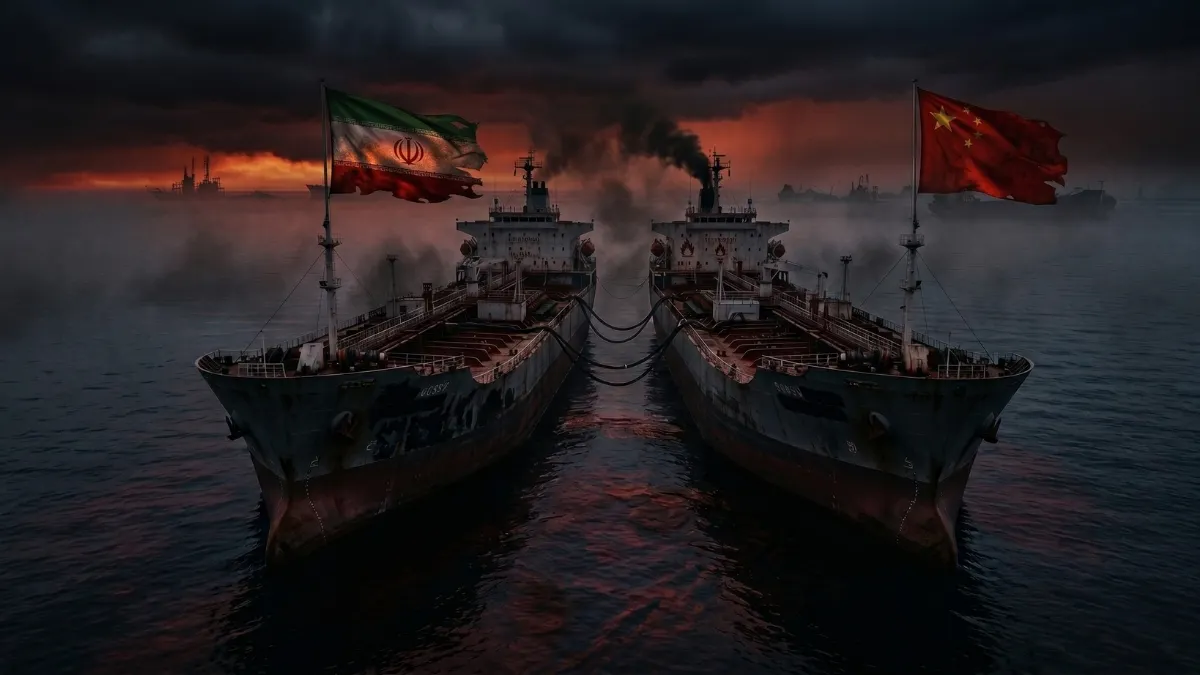
Billions of dollars in Iranian crude are still reaching China through a “shadow fleet” of anonymous, aging oil tankers, evading both U.S. sanctions and the American naval blockade of Iran’s ports, a Wall Street Journal report revealed Wednesday.
Freedom Is Back
In Style
Premium domains for sale
The Journal’s investigation revealed what amounts to a floating black market for Iranian oil roughly 45 miles off the coast of Malaysia, where sanctioned tankers quietly offload their cargo to anonymized vessels bound for Chinese refineries — keeping Tehran’s most vital revenue streams alive despite U.S. efforts to choke off trade.
China, the Iranian regime’s strongest ally throughout its conflict with the United States, has made a significant effort to help the regime sustain its oil industry, which accounted for nearly 15% of China’s oil imports last year.
For Tehran, the black-market arrangement with the Chinese Communist Party is the financial lifeline that has allowed it to persevere through the economic devastation of Operation Epic Fury and U.S. sanctions. The Iranian regime hauled in roughly $31 billion in oil revenue from China over the past year, according to data from the U.S.-China Economic and Security Review Commission. That trade represented about 90% of the oil Iran sold abroad and covered nearly 45% of the regime’s annual government budget.
The Journal observed the process unfold in real time in early May. A U.S.-sanctioned tanker, loaded with Iranian oil, joined dozens of other vessels in a stretch of ocean known as the Eastern Outer Port Limits, or EOPL. The area lies within Malaysia’s exclusive economic zone but outside its territorial waters — a legal gray area that no government has clear authority to police.
After arriving at the EOPL, the Iranian vessel carried out “ship-to-ship transfers,” pumping its cargo through massive hoses into a second, anonymized tanker, which then departed toward Chinese refineries.
These secondary vessels, according to the Journal, belong to a network of about 1,500 aging oil tankers that mask their true owners behind “flags of convenience,” registering in countries like Liberia and Sierra Leone with limited maritime enforcement. As an additional precaution, the ships switch off their tracking transponders to conceal their movements and remove anything on board that could identify them. Many of the ships observed by the reporters were staffed by Chinese crews.
The Trump administration, for its part, is aware of the shadow fleet and has ramped up efforts to clamp down on the illicit oil trade — most recently dispatching U.S. Special Forces to rappel from helicopters onto the decks of two shadow-fleet tankers in the Indian Ocean. As part of the administration’s “Economic Fury” campaign, the Treasury Department also announced new sanctions targeting individual tankers and Chinese oil infrastructure.
“Under President Trump’s strong leadership, Treasury will continue to stop the Iranian regime from plundering the country’s natural resources in the name of terrorism,” a spokeswoman for the Department of the Treasury told the Journal.
The effort is likely to become more effective over time. Energy firm Vortexa estimates that roughly 90 million barrels of Iranian oil were in international waters before the blockade even began. Because Iranian tankers need two to three months to reach Chinese ports and two to three more to collect payment, the regime will eventually exhaust this floating reserve, leaving it with little to no fresh crude able to leave Iran to replace it.
This comes amid reports that U.S. and Iranian negotiators have reportedly agreed to a tentative 60-day framework extending the ceasefire that, pending President Trump’s final approval, would reopen the Strait of Hormuz and draw down the blockade in stages. If finalized, the noose would be at least temporarily loosened around the Iranian oil industry before its offshore reserves run dry in order to pursue a long-term peace deal.
More from this network:
Domains for Sale · GOTPeople.org · TheDSAPlatform · The Truth About Socialism
What's Your Reaction?
 Like
0
Like
0
 Dislike
0
Dislike
0
 Love
0
Love
0
 Funny
0
Funny
0
 Wow
0
Wow
0
 Sad
0
Sad
0
 Angry
0
Angry
0

I am just an average American. My teen years were in the late 70s and I participated in all that that decade offered. Started working young, too young. Then I joined the Army before I graduated High School. I spent 25 years in, mostly in Infantry units. Since then I've worked in information technology positions all at small family owned companies. At this rate I'll never be a tech millionaire. When I was young I rode horses as much as I could. I do believe I should have been a cowboy. I'm getting in the saddle again by taking riding lessons and see where it goes.
Premium domains for sale














Comments (0)