

Utopian Net Zero Just Got Riskier
Premium domains for sale
Freedom Is Back In Style
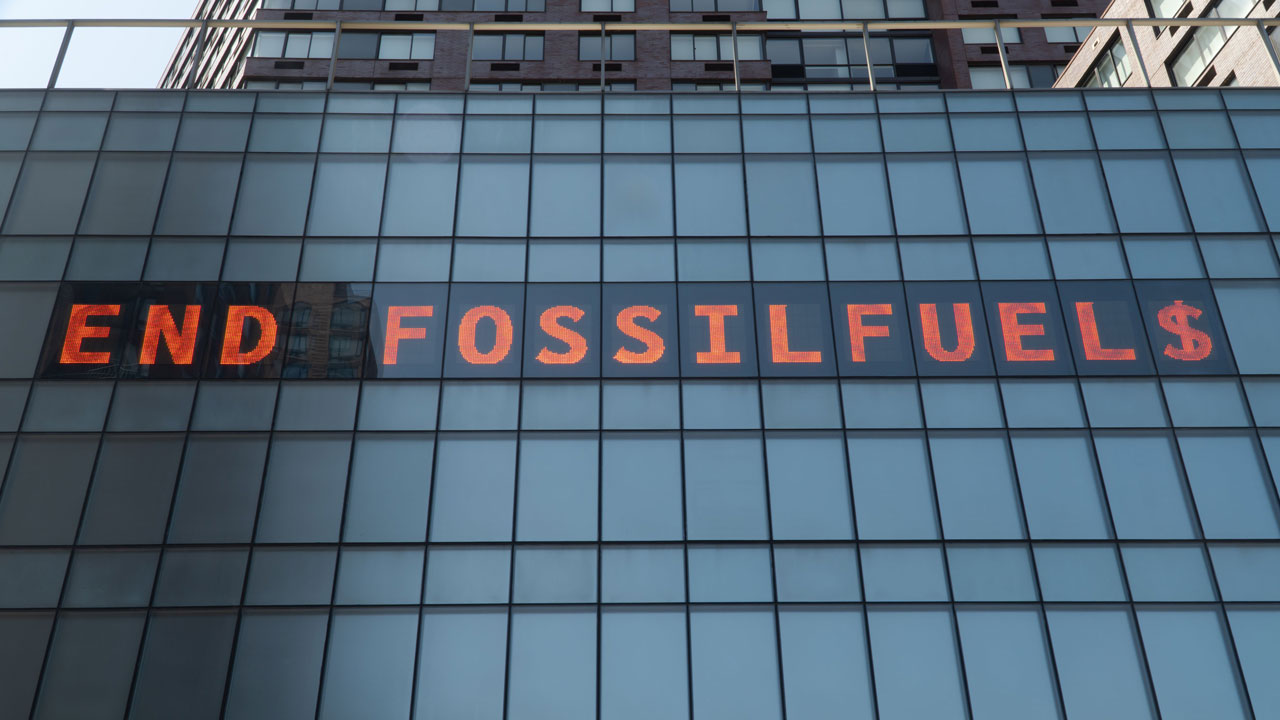
Consider the argument that net zero commitments by U.S. companies are indefensible.
Freedom Is Back
In Style
Premium domains for sale
First, it is possible that every U.S. corporation could meet its net zero commitments and yet have no impact on global warming so long as other countries keep emitting greenhouse gases.
Second, one of the primary beneficiaries of corporate net zero commitments is China, arguably the greatest geopolitical adversary of the United States.
Among other things, while net zero commitments undermine U.S. energy independence, prosperity, and national security, China is not similarly limited.
Third, another problematic beneficiary of U.S. corporate net zero commitments is the European Union.
The EU is home to corporations that have been so hamstrung by climate hysteria regulations as to make them utterly uncompetitive with U.S. firms but for the voluntary self-sabotage of U.S. corporations similarly hamstringing themselves.
Fourth, net zero commitments open companies up to unnecessary litigation for, among other things, greenwashing, and potentially embroil the company in conflict with the Trump administration. They also potentially put a boycott bullseye on the company if customers piece together the connection between corporate net zero commitments and higher energy prices for consumers.
To be sure, corporate leaders touting their net zero commitments will point to things like needing to meet regulatory demands imposed by jurisdictions as anti-growth as California, or that net zero commitments are demanded by important clients, employees, and other stakeholders.
However, I submit you’ll have little luck finding a corporation willing to affirm that all its net zero commitments are required by external regulation.
And I further submit you’ll have just as little luck finding a corporation that has actually crunched numbers to assess the opportunity costs associated with appeasing activist clients and employees, including the costs of implementing and tracking net zero commitments.
Case in point: Have you heard of a corporation publishing the ROI of its net zero investments?
And all the foregoing raises the specter of ideological bias and other conflicts of interest tainting the corporate decision-making process when it comes to corporate net zero commitments.
CEOs arguably want to virtue signal to their peers at the World Economic Forum, while corporate bureaucrats likely understand that net zero is part of a “Sustainability Full Employment Act” for middle managers.
And the employee feedback loop may be similarly tainted given that the pro-ESG views of leadership are well-known and amount to some version of asserting that all smart people are pro-ESG so no corporation would hire an ESG skeptic. (“ESG” stands for Environmental, Social, and Governance factors used in corporate decision-making, and can be used as a stand-in for net zero commitments here.)
But now add to all the foregoing a recent letter sent by “a coalition of 16 state attorneys general … raising concerns over climate-related financial activism in … the ‘Big 4’ accounting firms: Deloitte; Ernst & Young; KPMG; and PricewaterhouseCoopers.”
As set forth in the letter’s introduction, pushing for climate-related disclosures in financial reporting may be causing the Big 4 to: (1) violate professional duties; (2) engage in conflicted decision-making; (3) publish deceptive advertising; and, (4) violate state contractual provisions requiring compliance with applicable law.
For what it’s worth, I got the following when I asked Copilot to summarize the 38-page letter in a blurb short enough for a post on X: “The core problem with the Big 4’s climate-reporting push is that they have promoted expansive climate disclosure and assurance regimes from which they profit, while encouraging companies to report information that may go well beyond traditional U.S. investor-materiality standards, creating conflict-of-interest, governance, and disclosure-liability risks.”
Critically, the Big 4 are not public corporations and so many of the well-known shareholder protection remedies are unavailable. But the corporations relying on the advice of any of the Big 4 to justify expansive climate-related financial reporting are subject to that oversight.
When I further asked Copilot to evaluate how many red flags the letter raises for public company decision-makers relying on the challenged Big 4 guidance, I got back a list of 16 items, including: (1) “Reliance on the Big Four may no longer be presumptively ‘reasonable’ without inquiry”; (2) “Duty-of-care exposure from uninformed decision-making”; (3) “Duty-of-loyalty or bad-faith oversight allegations”; (4) “Securities-fraud risk from materially false or misleading disclosures”; (5) “Waste and corporate-purpose challenges.”
Certainly, auditor reporting recommendations do not automatically translate into net zero commitments, but there are sufficient connections to bring all this to the attention of corporate directors and executives. As has been said: “Gathering and reporting emissions data is typically the first meaningful step a company takes toward climate target setting and action.”
More from this network:
Domains for Sale · GOTPeople.org · TheDSAPlatform · The Truth About Socialism
What's Your Reaction?
 Like
0
Like
0
 Dislike
0
Dislike
0
 Love
0
Love
0
 Funny
0
Funny
0
 Wow
0
Wow
0
 Sad
0
Sad
0
 Angry
0
Angry
0

I am just an average American. My teen years were in the late 70s and I participated in all that that decade offered. Started working young, too young. Then I joined the Army before I graduated High School. I spent 25 years in, mostly in Infantry units. Since then I've worked in information technology positions all at small family owned companies. At this rate I'll never be a tech millionaire. When I was young I rode horses as much as I could. I do believe I should have been a cowboy. I'm getting in the saddle again by taking riding lessons and see where it goes.
Premium domains for sale






















Comments (0)