

Vatican declares ultra-traditionalist sect schismatic, takes grave measures
Premium domains for sale
Freedom Is Back In Style
The Society of St. Pius X is a breakaway Catholic sect founded in 1970 by Marcel Lefebvre, a French archbishop who took issue with the reforms of the Second Vatican Council. After consecrating four new bishops in 1988 without the approval of the Vatican, Lefebvre was excommunicated. He died three years later.
Freedom Is Back
In Style
Premium domains for sale
The Vatican lifted the canonical excommunication on Lefebvre's prelates in 2009 in hopes of restoring the group's "full communion" with Rome, although SSPX remained without canonical status. The Catholic Church's efforts since to bring SSPX back into the fold appear to have been in "vain."
'To tear the seamless garment of Christ is a sin of extreme gravity.'
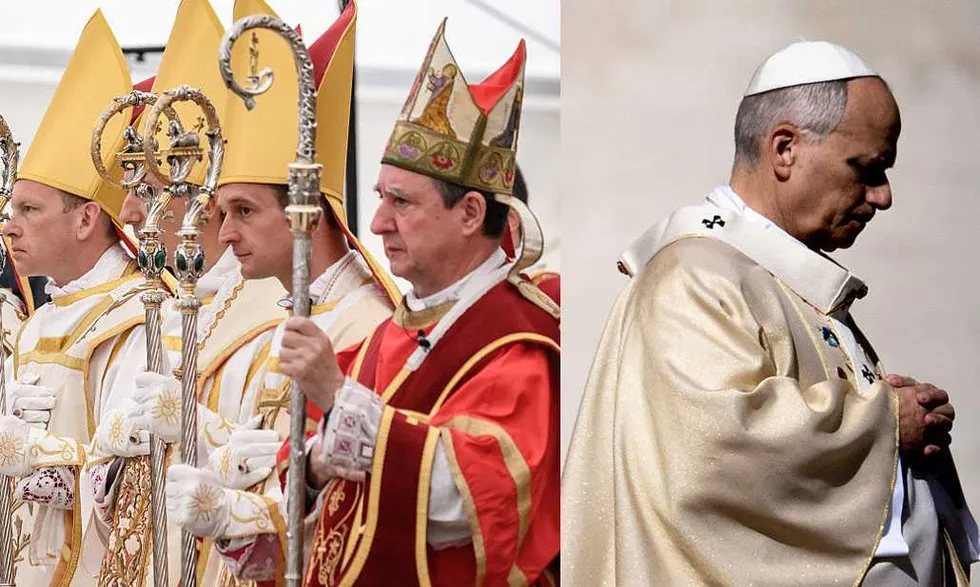
The SSPX, which has a global membership of roughly 600,000 members and 700 priests, crossed the Rubicon on Wednesday with episcopal consecrations that Rome explicitly warned the Lefebvrists not to pursue.
In his last of multiple appeals, Pope Leo XIV wrote on June 29 to Rev. Davide Pagliarani, the superior general of the SSPX, "I plead with you and ask you with all my heart: Please turn back! I urge you to consider carefully the spiritual good of the faithful, because the schismatic act you are about to undertake would deprive them of the licit and, in some cases, even valid reception of the Sacraments, which they love and seek for their sanctification."
"The Church is open to a path of dialogue and understanding that the Holy Spirit can make possible and fruitful," continued the pope. "I pray for you, because to tear the seamless garment of Christ is a sin of extreme gravity."
Pagliarani said in response that the SSPX believes it "to be our very duty to do everything possible to mend Christ's seamless garment, torn by forces and pressures incompatible with a truly Catholic spirit," adding that the SSPX desires to serve the Catholic Church "by means that are extraordinary, as one would assist a mother in distress who requires particular help."
RELATED: Five standout denunciations and warnings in Pope Leo XIV's new papal encyclical
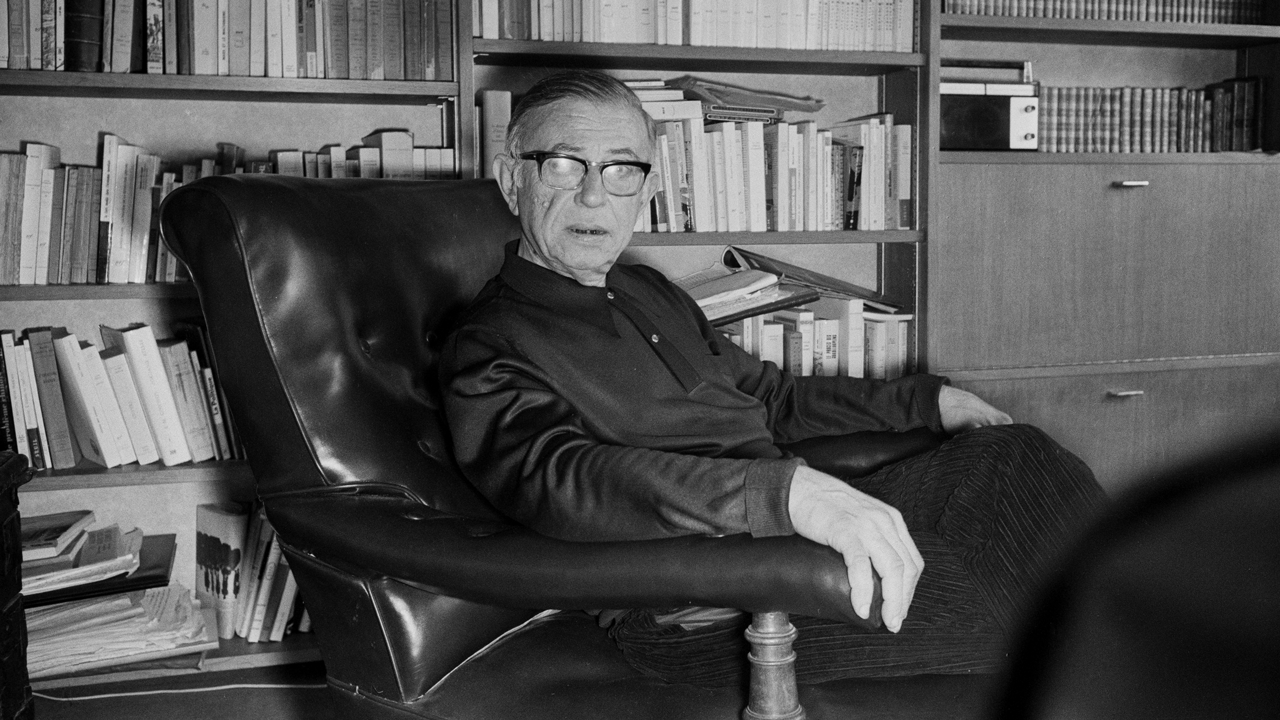
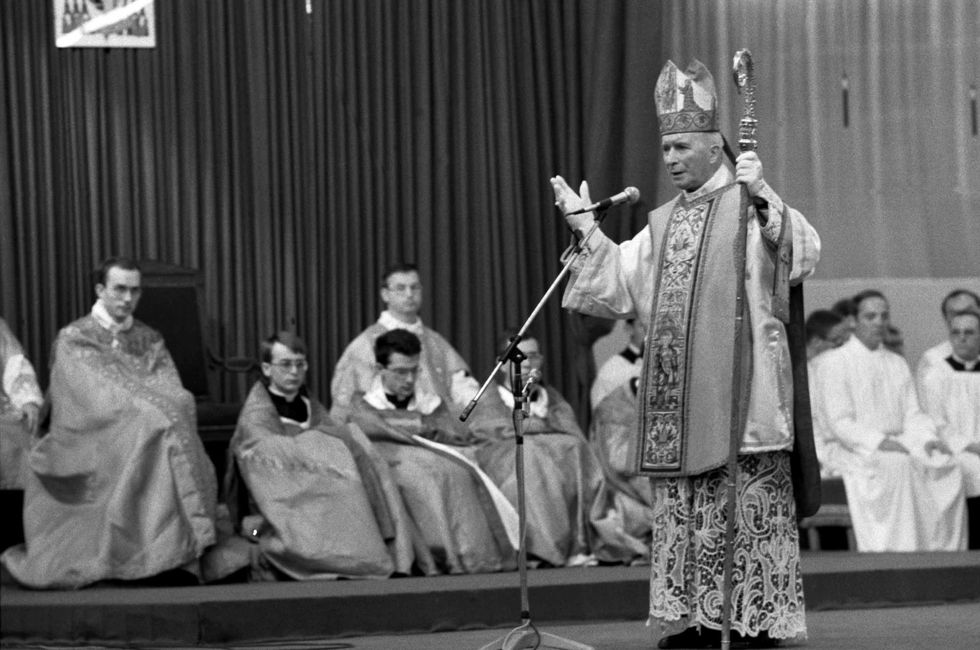 Archbishop Marcel Lefebvre, 1979. Wojtek Laski/Getty Images.
The SSPX proceeded, however, in Switzerland on July 1 to ordain four new bishops — Pascal Schreiber, Michael Goldade, Michael Poinsinet de Sivry, and Marc Happier — without papal approval.
The primary celebrant executing the consecrations was Bishop Alfonso de Galarreta who was joined by Bishop Bernard Fellay — both of whom were among the original Lefebvre prelates.
The SSPX's ordination of bishops without a pontifical mandate is regarded by the Catholic Church as a matter of great gravity and scandal because it breaks the line of succession extending back to the earliest days of the Christian church and undermines church unity.
Pope John Paul II, since declared a saint, noted when recognizing the SSPX as schismatic in 1988 that "it is impossible to remain faithful to the Tradition while breaking the ecclesial bond with him to whom, in the person of the Apostle Peter, Christ himself entrusted the ministry of unity in his Church."
For having carried out "an act of a schismatic nature," namely the "episcopal consecration of four presbyters, without pontifical mandate and against the will of the Supreme Pontiff," Galarreta, Fellay, and their four new bishops incurred automatic excommunications from Rome, according to a decree released on July 2 and signed by Cardinal Víctor Manuel Fernández, prefect of the Vatican's Dicastery for the Doctrine of the Faith.
In addition to those who participated in the ceremony, all of SSPX's priests, bishops, and lay adherents have also been excommunicated and are now considered schismatics by Rome.
The Vatican decree noted further that:
the holy People of God are warned that the sacred ministers of the Priestly Fraternity of Saint Pius X administer the sacraments illicitly, and that the sacrament of penance administered by them and marriages assisted by them are invalid.
In addition to warning Catholics to refrain from taking part in celebrations promoted by the SSPX, the decree noted that "the Church, as a caring mother, will welcome with sincere affection and lively solicitude all those who wish to return to full communion."
According to Catholic canon law, an excommunicated person is prohibited from: celebrating or receiving the sacraments; administering sacramentals; celebrating the other ceremonies of liturgical worship; and from exercising any ecclesiastical offices, duties, ministries, or functions.
Excommunication is regarded as a medicinal spiritual penalty that effectively pushes the offender out of the church in hopes of prompting a change of heart. Although his or her baptism cannot be effaced, the excommunicated person is effectively a stranger to the church until brought back into the fold.
The SSPX General House stated following the ordinations on Wednesday, "The profound joy inspired by these episcopal consecrations cannot, however, be overshadowed."
Like Blaze News? Bypass the censors, sign up for our newsletters, and get stories like this direct to your inbox. Sign up here!
More from this network:
Domains for Sale · GOTPeople.org · TheDSAPlatform · The Truth About Socialism
What's Your Reaction?
 Like
0
Like
0
 Dislike
0
Dislike
0
 Love
0
Love
0
 Funny
0
Funny
0
 Wow
0
Wow
0
 Sad
0
Sad
0
 Angry
0
Angry
0

I am just an average American. My teen years were in the late 70s and I participated in all that that decade offered. Started working young, too young. Then I joined the Army before I graduated High School. I spent 25 years in, mostly in Infantry units. Since then I've worked in information technology positions all at small family owned companies. At this rate I'll never be a tech millionaire. When I was young I rode horses as much as I could. I do believe I should have been a cowboy. I'm getting in the saddle again by taking riding lessons and see where it goes.
Premium domains for sale











Comments (0)