

Victor Davis Hanson: The US Needs to Hit Iran Harder to End the War
Premium domains for sale
Freedom Is Back In Style
Editor’s note: This is a lightly edited transcript of today’s video from Daily Signal senior contributor Victor Davis Hanson. Subscribe to our YouTube channel to see more of his videos.
Freedom Is Back
In Style
Premium domains for sale
Hello, this is Victor Davis Hanson for the Daily Signal.
We’re now in the 134th day of, quote-unquote, “the war with Iran.” I’m speaking on July 12. But we got to remember that we really only had March and April. We started on February 28, about 38 days until we stopped fighting on April 8.
So we’re really talking about 90-plus days of negotiations and 38 days of actual fighting.
That should tell us something about what the Iranian strategy is. They want to talk, talk, talk, and they do not want to fight, fight, fight. We want to fight and get over and go home, and they don’t.
And they … because of the length of the negotiation vis-a-vis the kinetic part, they may be in an advantaged position.
Part of the problem is that we have knocked out at least three centers of the four of their government. The theocracy with the death of Khamenei and the disabling of his son and killing of many of the others is sort of inert. We’ve taken out a lot of the heads of the Islamic Revolutionary Guard Corps.
There’s a lot of military planners that were central to Iran’s military, industrial, nuclear complex that are gone, and we have a few elected leaders. And so that’s who we’re dealing with, but we’re not sure if they are good cops and the rest of what’s left are bad cops, or if anybody’s any cop.
So where do we go from here?
What’s happening right now is we have no war and no peace. That is about every day and a half or every other day, what’s left of the bad cops—that is, the theocracy, the military, and the Guard Corps—freelance, and they hit one of the Gulf states or a tanker.
Notice they don’t ever hit Israel. They don’t ever hit Israel because Israel has announced that their response will be disproportionate and aimed at the surviving government.
So they don’t do that. We haven’t said that. But every other day they do that, and now we’re starting to respond disproportionately, and that means for every 50 or so strikes, we have 120 or 130. But that itself will go on and on and on.
What we need to do is to find a way to do two things: one, stop their ability to make any strikes, and that can be accomplished various ways.
We can either stop all of their supplies, and I mean all of them. That is, we can take out their airlift capacity, their airport. We can take out all the rail lines over land to China. We can take out the Caspian Sea ports. We can not allow any seaborne traffic into Iran.
And we can take out their electrical generation plant, short out the grid take out more.
We can stop their ability to make war rather than just hunt for an individual target, a missile target or a launcher pad or something like that.
And then we have to make the conditions for which we can go home. We did the hard work. They’re no longer a threat. We’ve taken out their 47-year, half a trillion-dollar military investment.
There’s a lot of other interests that would like the Gulf open, particularly the Gulf Council states, the Europeans, the Japanese, the Chinese, South Koreans.
So we need to make Iran so weak, if they do not want to negotiate, and we’re not going to get into this tit-for-tat cycle, that these other countries will be able to keep the Strait of Hormuz open.
In other words, we’ll leave maybe a rotating carrier group that comes in periodically, a few ships, and they will help organize a flotilla that keeps the Strait open if we have done enough damage to their military that it has no ability to oppose the opening of the Strait.
So what am I getting at? I’m getting at we need to up the level of damage we do to Iran, and unfortunately that might entail dual targeting electrical plants, roads, bridges, and the actual barracks, camps, military facilities of all the various aspects of the Iranian military.
And then once we feel that they are so attrited they’re not gonna pose a serious threat to those who are keeping the Strait open, then we can go and remove most of our assets back home and outsource it to the people who have a vested interest in keeping the Strait open. That’s not us. We’re independent of it.
Our only interest in keeping the Strait open is so that our allies don’t suffer from a global recession. There’s some good news. The price of oil has stabilized now. China is importing less. It’s turning to coal power perhaps for its industries to produce electricity, but more likely their electrical car industry is growing and growing and growing.
Maybe they feel they can cut back on oil. They’re cutting back about 4 million barrels. Venezuela’s pumping more. Russia’s trying to pump more. The United States is pumping more. There’s apostates who have left OPEC. UAE is pumping more. The pipelines to the Red Sea and to the Gulf outside the Strait are now open.
So it hasn’t been the catastrophe everybody thought. There’s not a global shortage of oil.
In fact, we’re looking probably at a global glut pretty soon of oil that’ll radically take the price down. The second thing is that the midterms for the Republicans are not lost. The Senate—the Democrats only have a 50–50 chance, maybe perhaps less, to take the Senate.
A lot will depend on who takes Mitch McConnell’s place if he’s unable to continue as senator. There’s a Democratic governor who will appoint somebody if he should not be able to take his place back in the Senate. But the midterms are not lost. There’s been redistricting. Both the Stop Racial Gerrymandering and red states have outdone the blue states in redistricting. That might pick up 9 to 10 to 11 seats.
And then the latest development is in association with what we’ve seen with Graham Platner.
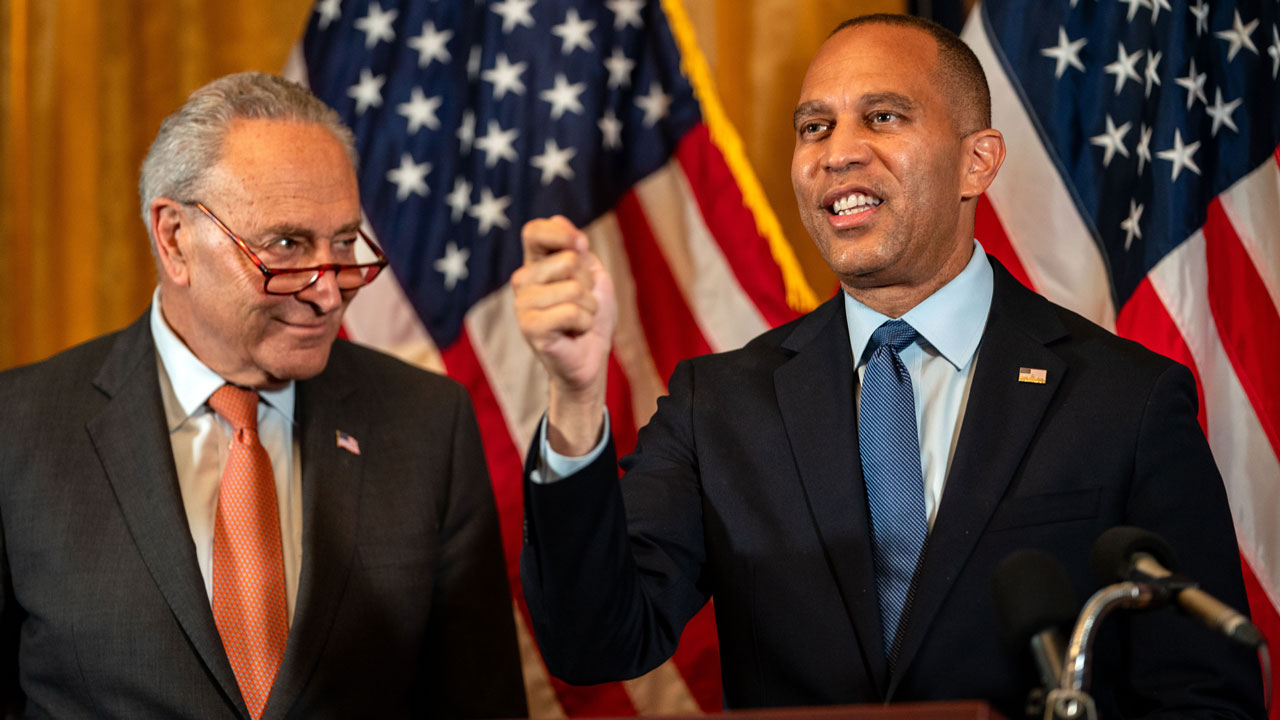
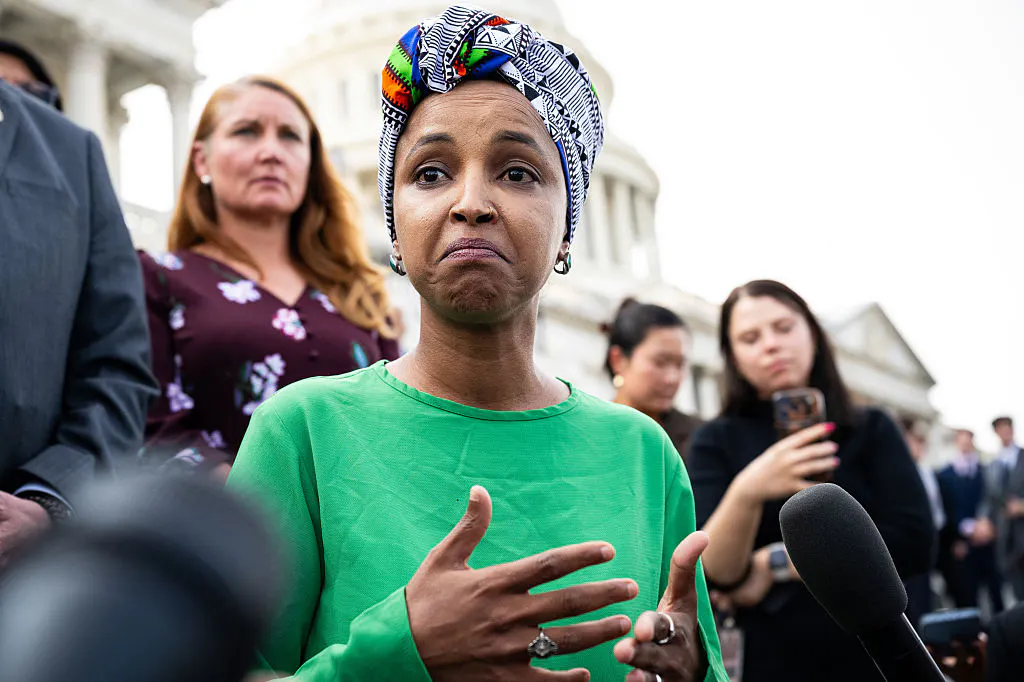
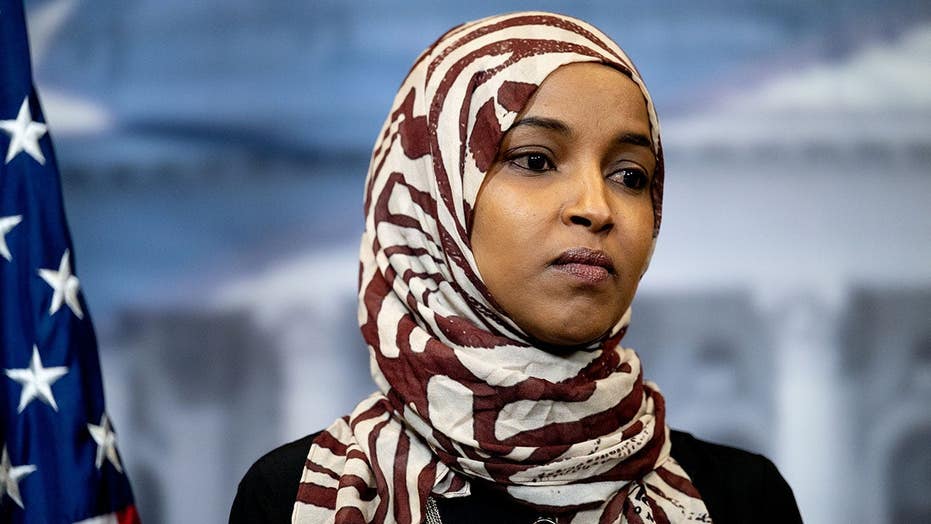
The other aspect is the Democratic Party cannot really hide its socialist, Islamicist, and even communist base, and there’s gonna be a lot of high-profile candidates—not just at the congressional level, but perhaps in Texas and maybe Mr. [Abdul] El-Sayed in Michigan, and in some governor’s races—where they’re openly calling for issues, agendas, policies that are antithetical to not just Americans’ belief now, but the whole idea of founding of America.
That’s not gonna play well. And in addition, the Republicans are probably going to have somewhere between 100 and 200 million more dollars to spend.
What does that mean? It means that if Donald Trump is able to inflict a level of damage that the Iranians will either concede almost immediately—whoever they are, and I mean I’m talking about the most extreme elements—say, “We can’t take any more of this.”
Or if they don’t concede, he’s able to hit a number of sites, as I outlined, dual-use targeting, where they’re not going to be able to hurt anybody else, at least for four or five years, then the bulk of the forces can go home, and a residual force can help organize our allies to keep the Strait open, which will be pretty easy to do if we can get rid of their missile fleet and what’s left of their navy.
So once again, we are in a cycle of tit-for-tat. The good news is militarily that we are starting to respond much more disproportionately, which we should have done in the beginning, and we’re starting to catch on that the Iranians are either not serious, or they’re playing bad cop, good cop, or nobody’s in charge at all.
But that’s all irrelevant. All that matters is that we use enough force to prohibit Iran from hurting its neighbors or attacking. We have that power. If we use it, the war will end.
There’ll be time for the Republican administration to concentrate on the economy and the midterms.
And we have allies in the region that have all the power they need to keep the Strait of Hormuz open.
We publish a variety of perspectives. Nothing written here is to be construed as representing the views of the Daily Signal.
More from this network:
Domains for Sale · GOTPeople.org · TheDSAPlatform · The Truth About Socialism
What's Your Reaction?
 Like
0
Like
0
 Dislike
0
Dislike
0
 Love
0
Love
0
 Funny
0
Funny
0
 Wow
0
Wow
0
 Sad
0
Sad
0
 Angry
0
Angry
0

I am just an average American. My teen years were in the late 70s and I participated in all that that decade offered. Started working young, too young. Then I joined the Army before I graduated High School. I spent 25 years in, mostly in Infantry units. Since then I've worked in information technology positions all at small family owned companies. At this rate I'll never be a tech millionaire. When I was young I rode horses as much as I could. I do believe I should have been a cowboy. I'm getting in the saddle again by taking riding lessons and see where it goes.
Premium domains for sale











Comments (0)