

Washington is finally trying to shut the door on Chinese cars. Europe shows why.
Premium domains for sale
Freedom Is Back In Style
For years, Western automakers looked at China and saw the world's greatest growth opportunity.
Freedom Is Back
In Style
Premium domains for sale
China looked back and saw something else: teachers.
Semiconductor manufacturing offers the obvious lesson. The United States is now spending enormous sums trying to re-create domestic capacity that took decades to move overseas.
American, German, and Japanese automakers wanted access to more than a billion potential customers. China frequently required foreign companies to work with local partners, manufacture inside the country, and share the knowledge that comes with doing so.
The arrangement made enormous amounts of money for Western car companies.
It also helped China learn, very quickly, how to compete with them.
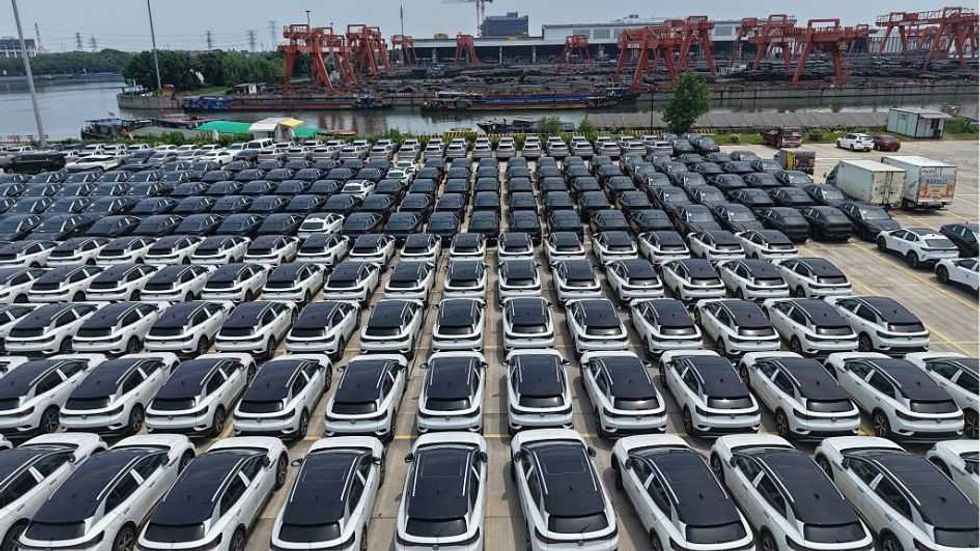
Now Chinese automakers are producing increasingly sophisticated vehicles at prices Western manufacturers struggle to match, and Europe is discovering what happens when those cars arrive in large numbers.
Washington appears determined not to repeat the experiment.
Saving our spot
A bipartisan proposal called the Connected Vehicle Security Act of 2026 advanced unanimously through the Senate Commerce Committee last month. Sponsored in the Senate by Bernie Moreno of Ohio and Elissa Slotkin of Michigan, it would dramatically strengthen restrictions on Chinese vehicles and connected automotive technology entering the United States.
For once, Democrats and Republicans seem to have found something they agree on.
The obvious fear is economic. China can build some astonishingly inexpensive vehicles, particularly EVs, and Chinese manufacturers including BYD, Geely, and others are already putting tremendous pressure on established brands overseas.
But Congress isn't framing this purely as a trade dispute. Modern automobiles are packed with cameras, microphones, GPS equipment, cellular connections, driver-assistance systems, and software capable of receiving remote updates.
That means a connected car is also a data-collection device.
Fast and firewalled
The Commerce Department reached the same conclusion under the Biden administration. In January 2025, it finalized rules restricting connected-vehicle software and hardware with sufficient ties to China or Russia, citing the possibility of espionage, data collection, sabotage, and remote manipulation.
The new congressional proposal would go farther and put many of those protections into statute, making them much harder for a future administration simply to reverse.
The Senate version would restrict vehicles, software, and components associated with designated foreign adversaries. Supporters specifically argue that Chinese-connected vehicles could funnel sensitive information collected on American roads back to Beijing.
That's not a crazy concern.
A new car can know where you live, where you work, where your children go to school, which military installation you enter every morning, and exactly where the vehicle travels every day.
The debate over Chinese cars therefore isn't really just about whether Americans should be allowed to buy a cheap BYD.
It's about who controls the computers rolling around American streets.
Training our replacement?
There is an uncomfortable part of this story that Western manufacturers don't always like discussing.
China did not learn modern automobile production from scratch. Foreign automakers spent decades helping.
As auto industry commentator Michael Harley recently pointed out in a conversation with Karl Brauer and me, intellectual property is only part of what China acquired.
Manufacturing itself is knowledge.
How do you coordinate thousands of suppliers? How do parts arrive at exactly the right moment? How do you engineer a production line? How do you control tolerances, automate assembly, manage quality, and move from prototype to millions of vehicles?
American manufacturers accumulated that knowledge over more than a century.
Chinese companies were able to compress much of that learning curve into a few decades while working alongside some of the world's best automotive companies.
Western executives didn't do this because they were stupid. China was simply too attractive to ignore.
For a long time, the bargain worked.
GM sold enormous numbers of Buicks there. Volkswagen became deeply embedded in the Chinese market. Mercedes-Benz and BMW treated China as essential to future growth.
The problem is that China eventually became very good at building its own cars.
Learning the hard way
The result is now visible in Europe.
Chinese manufacturers have entered European markets aggressively, particularly with EVs. European governments have responded with tariffs and investigations, but domestic manufacturers are still confronting lower-cost competitors at the same time their Chinese sales are under pressure.
That combination is painful.
For decades, German manufacturers could use strong sales in China to support enormous operations back home.
Now they're fighting Chinese companies in China and increasingly fighting them in Europe too.
That's exactly the scenario American lawmakers want to prevent.
The United States already keeps most Chinese-made EVs out through tariffs and national-security restrictions. The new bill would make the wall substantially higher.
There are complications. Reuters reported that the legislation's ownership provisions could even affect Mercedes-Benz because Chinese investors hold nearly 20% of the German company, although lawmakers may revise the language before final passage.
That illustrates how deeply Chinese capital and technology are already woven into the global car business. Untangling it will not be simple.
RELATED: The Senate wants to lock the door on cheap Chinese cars — is 'security' the whole story?
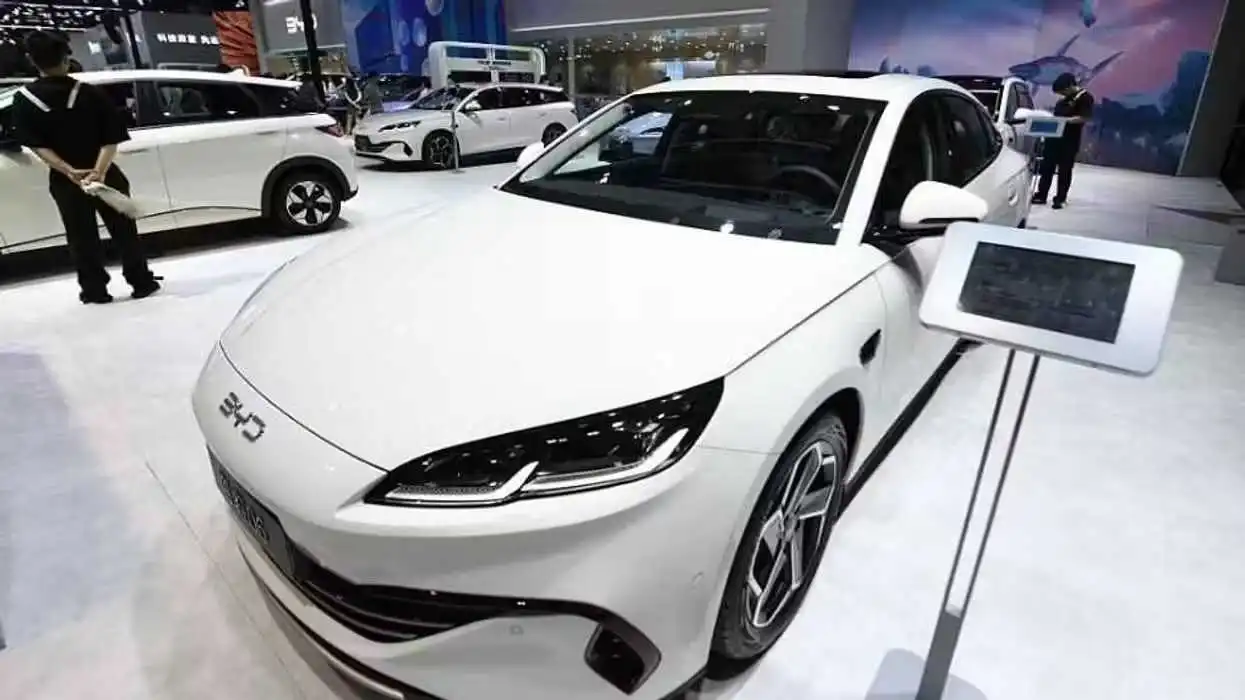 CFOTO/Getty Images
Expensive at any price
Consumers understandably care about price.
If somebody offers an attractive electric SUV for $25,000 while a comparable American vehicle costs $40,000, telling families to spend the extra $15,000 for geopolitical reasons is a difficult sales pitch.
That's precisely what makes China such a formidable competitor.
The Chinese auto industry has enormous manufacturing scale, substantial state support, a massive domestic supply chain, and leadership in battery production.
Americans would benefit in the short term from having access to inexpensive vehicles. The question is what happens afterward.
We've seen this pattern with electronics, consumer goods, pharmaceuticals, and industrial production. Once domestic capability disappears, rebuilding it is painfully slow and enormously expensive.
Semiconductor manufacturing offers the obvious lesson. The United States is now spending enormous sums trying to re-create domestic capacity that took decades to move overseas.
Automobile manufacturing is much harder to rebuild than it is to destroy.
Playing the same game
Free trade works best when everybody is playing something resembling the same game.
China never viewed its automobile industry purely as a collection of private companies competing for customers. It treated automotive manufacturing, batteries, raw materials, and increasingly vehicle software as strategic industries.
America is finally beginning to think strategically too.
There are legitimate questions about exactly how broad the Connected Vehicle Security Act should be, how it treats foreign companies with minority Chinese ownership, and whether some restrictions will increase prices for American consumers.
Congress should work through those problems carefully. But the larger principle is sound. The United States does not need to repeat Europe's mistake simply because a $20,000 Chinese EV looks irresistible today.
Sometimes the cheapest car is not the cheapest decision.
More from this network:
Domains for Sale · GOTPeople.org · TheDSAPlatform · The Truth About Socialism
What's Your Reaction?
 Like
0
Like
0
 Dislike
0
Dislike
0
 Love
0
Love
0
 Funny
0
Funny
0
 Wow
0
Wow
0
 Sad
0
Sad
0
 Angry
0
Angry
0

I am just an average American. My teen years were in the late 70s and I participated in all that that decade offered. Started working young, too young. Then I joined the Army before I graduated High School. I spent 25 years in, mostly in Infantry units. Since then I've worked in information technology positions all at small family owned companies. At this rate I'll never be a tech millionaire. When I was young I rode horses as much as I could. I do believe I should have been a cowboy. I'm getting in the saddle again by taking riding lessons and see where it goes.
Premium domains for sale






















Comments (0)