

What Gen Z’s Expensive Latte Habit Really Means
Premium domains for sale
Freedom Is Back In Style
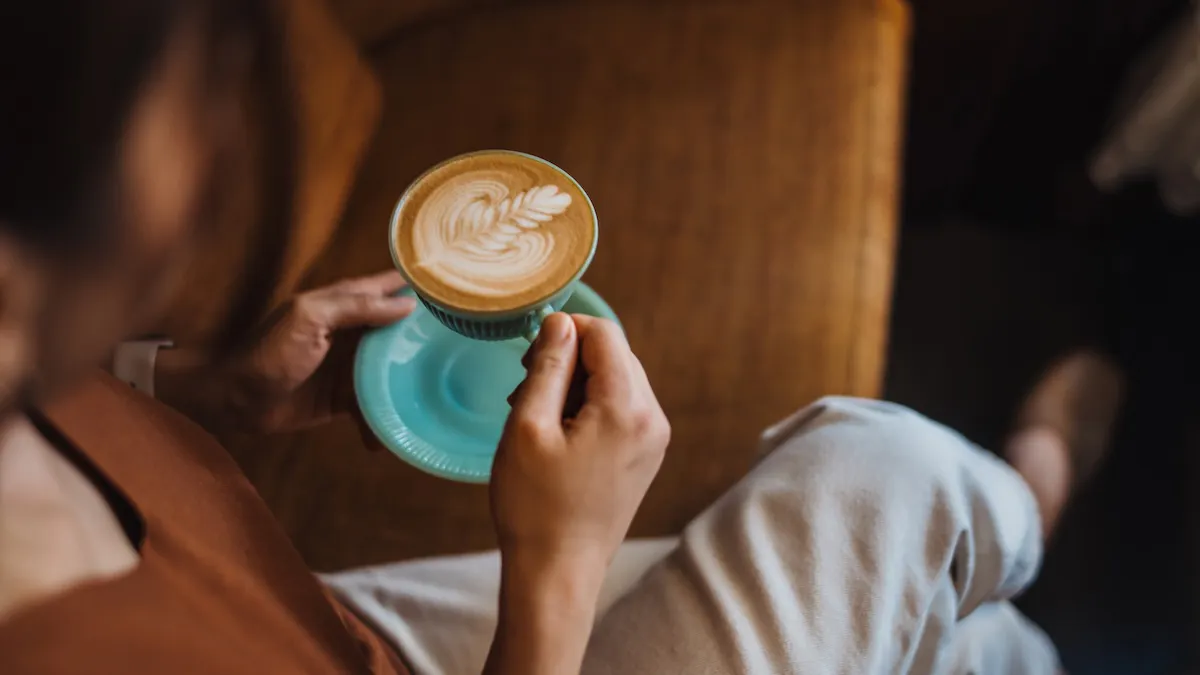
Every generation has had its vice. Boomers had cigarettes. Gen X had Diet Coke. Millennials and Gen Z? We have lattes.
Freedom Is Back
In Style
Premium domains for sale
Somewhere along the way, coffee became a personality trait. It used to be free at restaurants. Now we happily spend $8 for lattes while simultaneously complaining about the cost of living and food.
If coffee were just coffee, this phenomenon wouldn’t quite make sense. But coffee stopped being just coffee a long time ago. A simple cup of espresso and milk has become a cultural institution. So what does that say about our culture at large?
In 2025, the U.S. had 45,000 coffee shops, with the number of shops increasing by roughly 6% over the previous year. The coffee industry is up $10 billion from pre-pandemic levels. In Nashville alone, there are nearly 400 spots to grab a fun drink.
Why this coffee explosion? Well, on the surface, the simple answer is the sugar or the caffeine combo. It’s highly addictive as we all know, and feel, if we don’t have our morning coffee. But needing a coffee has already been a norm since, well, the 15th century Yemen Muslims.
But back then, coffee was a nighttime drink. They used it to stay awake during long nighttime prayers, rather than as a morning necessity. During the 16th and 17th centuries, it spread throughout the Ottoman Empire as coffeehouses began to appear. It slowly turned into a daytime activity.
By the 17th century, when coffee reached Europe, it started replacing existing breakfast beverages of beer, ale, and wine. Thankfully, Europeans upgraded from a people fueled on booze to one fueled on caffeine.
Some historians argue that the rise of coffee houses across Europe contributed to the Enlightenment period. Writers, scientists, and politicians could gather to discuss ideas over coffee rather than alcohol. It’s a good thing that the brilliant minds of the day were not muddling their thoughts with liquor.
But it wasn’t until the Industrial Revolution of the 19th century that the idea of morning coffee came into play. Suddenly, millions of workers now needed to wake up at the same time every day. By the 20th century, advertising secured the idea that no breakfast was complete without a cup of coffee. Today, the classic Folgers theme song is ingrained in our minds.
The 21st century has taken the popularity of the drink and run with it. Not a coffee person? No problem. There are a million other “fun drinks” to get addicted to instead. Caffeine is only one factor. Some of my favorite drinks have little to none in them. Nor do I feel the effects. It’s purely for the fun of it. The coffee run itself has become a lifestyle. As one example, New York magazine reported earlier this year on how “a caffeine-laced strawberry-açai drink became the allowance-draining status symbol of New York’s teen elite.”
There are three waves of the modern-day coffee movement. The first wave resulted in coffee becoming a convenient household staple. The second wave found places such as Starbucks and Dunkin’ popularizing coffee drinks and café culture, as well as social media demanding consumers post their daily latte art. Coffee went from being something you consumed to something you displayed. The latte evolved into a status symbol or personality trait. With wave three of the coffee movement, coffee has become an artisanal product.
Although the price for admission keeps getting higher, many are treating the product with much more value. Someone with espresso knowledge is the new sommelier. In some respects, the fast food classics are now looked down upon as consumers favor more specialized coffee shops. With the local shops that prize themselves on sourcing the beans, the right machine, the right tools, it’s become an art form.
It’s this generation’s form of an adult “treat.” It’s inexpensive enough that it doesn’t feel irresponsible but indulgent enough to feel like a reward. But coffee isn’t necessarily what people are paying for at a shop; it serves as an admission fee for a seat inside.
As the world grows more virtual, the traditional hangout spaces seem to be dwindling away. The sociologist Ray Oldenburg coined the term “third place” in his 1989 book “The Great Good Place.” He argued we spend our lives in three places: home, work (or school), and, third, somewhere we gather simply because we want to.
Historically, those were places such as the mall, church, community center, local diner, or park. You didn’t need to spend much or any money to attend. Their role in society was more interactive and community-focused. For many people, coffee shops serve as the third space we all still need and crave. Whether it’s to meet a friend or go on a first date, the abundance of coffee shops answers the question of what to do or where to go.
Of course, spending too much time at a coffee shop can get pricey. But I don’t think young adults are deciding between lattes or paying a mortgage. Instead, we’re deciding between a cup at the office or an excuse for fresh air, change of scenery, and some human interaction to break up our days.
We half joke that our generation can’t afford homes, but somehow we’ve managed to rent the same coffee shop table every morning for $8 a day. And while the cost of our willingness to pay is certainly a conversation, I find myself to be less interested in the price of lattes and more interested in what we are willing to pay for the simple experience of community.
I started this deep dive set on criticizing my generation for our crazed consumption of costly coffee, but throughout my research — some of which was conducted in these very coffee shops — I realized our coffee run habits may be a sign of what we really crave: craftsmanship, local business, human connection, intentionality, and the simple act of slowing down.
***
This article is part of Upstream, The Daily Wire’s new home for culture and lifestyle. Real human insight and human stories — from our featured writers to you.
More from this network:
Domains for Sale · GOTPeople.org · TheDSAPlatform · The Truth About Socialism
What's Your Reaction?
 Like
0
Like
0
 Dislike
0
Dislike
0
 Love
0
Love
0
 Funny
0
Funny
0
 Wow
0
Wow
0
 Sad
0
Sad
0
 Angry
0
Angry
0

I am just an average American. My teen years were in the late 70s and I participated in all that that decade offered. Started working young, too young. Then I joined the Army before I graduated High School. I spent 25 years in, mostly in Infantry units. Since then I've worked in information technology positions all at small family owned companies. At this rate I'll never be a tech millionaire. When I was young I rode horses as much as I could. I do believe I should have been a cowboy. I'm getting in the saddle again by taking riding lessons and see where it goes.
Premium domains for sale









Comments (0)