

What Hollywood Won’t Tell You About Aslan
Premium domains for sale
Freedom Is Back In Style
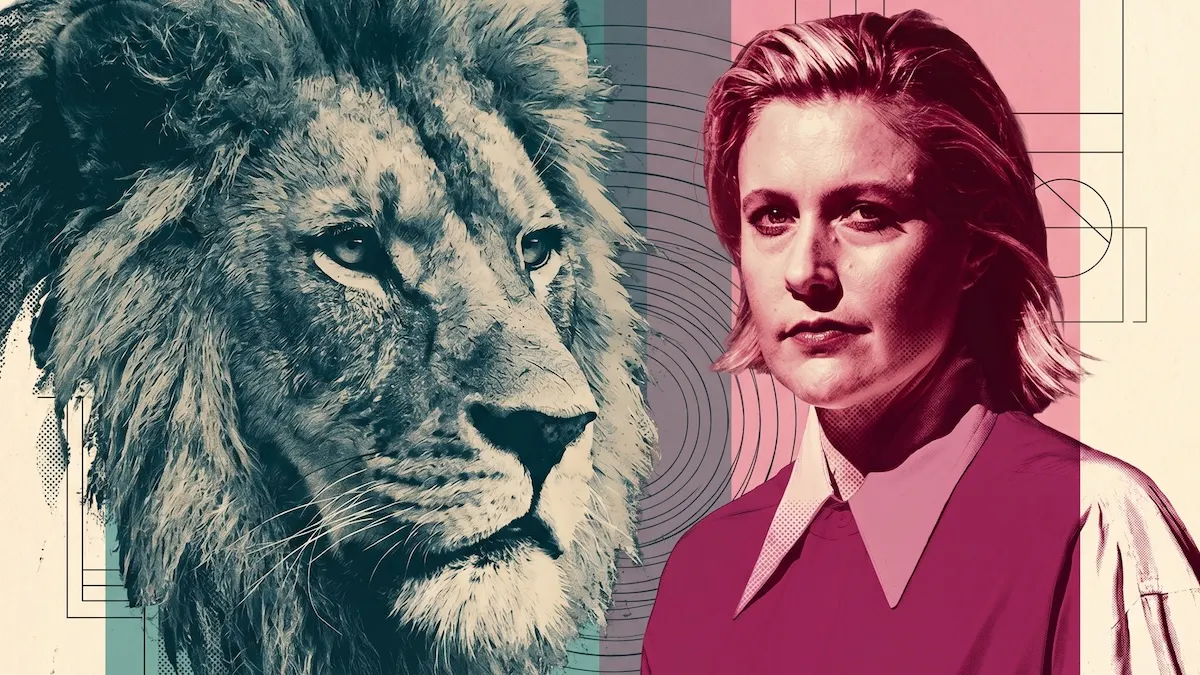
Some months ago, a rumor began: Meryl Streep would voice Aslan in Greta Gerwig’s adaptation of “The Magician’s Nephew.” While X was filled with accusations of “Translan,” some voices, such as “Pints with Jack” hosts David Bates and Andrew Lazo, held out hope that this was nothing but a publicity stunt. The rumor is true. Meryl Streep will voice Aslan. This casting choice has been widely condemned, with a few progressive Lewis writers praising it, and at least one Daily Wire voice telling people to chill out; after all, Aslan is “just a lion.”
Freedom Is Back
In Style
Premium domains for sale
It matters that Aslan is being voiced by a woman. “The Chronicles of Narnia” have been a global phenomenon since their initial publication across 1950-1956. Gerwig, Netflix, and the Lewis Estate share culpability for failing to steward Lewis’s story.
Many authors in the literary tradition leave nothing behind explaining what they hoped to achieve in their stories. Lewis is different; he was reflective and a prolific letter writer, with a personal goal of responding to every letter. As Lewis Institute Fellow Annie Nardone notes, the collection “C.S. Lewis’s Letters to Children” is a treasure trove. In 1954, Lewis replied to a fifth-grade class explaining his goal in “The Chronicles of Narnia”:
Dear Fifth Graders
I am so glad you liked the Narnian books and it was very kind of you to write and tell me. There are to be 7 of them altogether and you are already one behind. No. 4, The Silver Chair, is already out.
You are mistaken when you think that everything in the books “represents” something in this world. Things do that in The Pilgrim’s Progress but I’m not writing in that way. I did not say to myself “Let us represent Jesus as He really is in our world by a Lion in Narnia”: I said “Let us suppose that there were a land like Narnia and that the Son of God, as He became a Man in our world, became a Lion there, and then imagine what would happen.”…The only way for us to [get to] Aslan’s country is through death, as far as I know: perhaps some very good people get just a tiny glimpse before then.
Best love to you all. When you say your prayers sometimes ask God to bless me,
Yours ever,
C.S. Lewis
The key term in this letter is “suppose.” Narnia is no allegory. In an allegory, each element of the story points to something outside the story. Instead, Lewis supposes a world in which the rational creatures are beasts rather than men; in which case, what would God the Son, second person of the Trinity, look like in that world? For Lewis, the answer is obvious: He’d be a lion, the king of beasts, bringing redemption to a world marked by evil.
Aslan, then, is not a character who can be manipulated to express creativity. He is Jesus, but in Narnia. In making Aslan gender-ambiguous, Gerwig is messing not just with a symbol, but with the character of Christ himself. The earliest Christian heresies — Arianism, Gnosticism, Pelagianism — were all Christological in nature. The heart of the Christian gospel, distinguishing it from Jewish law, custom, and tradition, is the proclamation that Christ has come and “there is no other name under heaven by which men might be saved.” To mess with Jesus is to mess with the heart of Christianity.
Lewis’s conversion to Christianity is justly famous; he was a noted atheist who moved first to theism and finally to embrace Christian orthodoxy. He spent the rest of his life defending, articulating, and writing about Christian belief and practice. In his essay “On Stories,” Lewis notes that literary motifs have the power to “sneak past the watchful dragons” of skepticism. Such “sneaking,” Lewis writes, is what he hoped to do with the “Chronicles of Narnia.”
Through these stories, millions of readers over the past 70 years have encountered the themes, doctrines, and narratives of Christianity in a different form. In a 1960 letter, Lewis explains that “At the [very] edge of the Narnian world, Aslan begins to appear more like Christ as He is known in this world. Hence, the Lamb. Hence, the breakfast — like at the end of St. John’s Gospel. Does not He say ‘You have been allowed to know me in this world (Narnia) so that you may know me better when you get back to your own’?”
“The Chronicles of Narnia” are nothing so trite as an evangelistic tract, but they share the same goal: to prepare the reader to encounter the risen Christ.
Into this imaginative space, Greta Gerwig is introducing a female-voiced, rainbow-whiskered, David Bowie-inspired Aslan. Gerwig took something at the heart of Narnia and perverted it. All true Narnians reject this attempt at showing Aslan.
Gerwig’s perversion of Aslan ignores Lewis’s understanding of gender, adopting a contemporary view that gender does not matter. As I show in “Sons of Adam, Daughters of Eve: C.S. Lewis’s Images of Gender,” Lewis held nuanced views on gender. He argued that “gender is more real than sex,” developing a neo-Platonic understanding of gender as the idea that then manifests in biological sex. In shifting Aslan, Gerwig removes Lewis’s structural communication about reality itself.
Lewis draws from Edmund Spenser, author of “The Faerie Queene,” a deep appreciation for the masculine and the feminine together producing life. This process is on full display in “The Magician’s Nephew.” Aslan, the ultimate masculine, son of the Emperor-beyond-the-Sea, sings. The earth, with all the connotations of Gaia, mother earth in ancient Greek mythology, brings forth animals and plants in a beautiful display of creational fertility. Lewis builds into this creation scene a deep appreciation for the masculine and the feminine, and he shows that through their combination, new life emerges. That imagery is ruined if Aslan is gender-bent into something less than he.
Film adaptations must make changes to fit the new medium, but adaptation requires a certain fidelity. Those who retell a beloved story have a duty to first love what it is, and then convey the essence of that story into the new medium. Lewis created an imaginative creation whereby truth, goodness, and beauty greeted each reader. Gerwig is bending Lewis’s story into something else. In doing so, she fails in her stewardship.
***
Josh Herring is the director of the Logres Institute for Classical Liberal Studies, author of “Sons of Adam, Daughters of Eve: C.S. Lewis’s Images of Gender,” and curriculum program manager for the Rafiki Foundation. He and his wife, Jennifer, live in North Carolina.
This article is part of Upstream, The Daily Wire’s new home for culture and lifestyle. Real human insight and human stories — from our featured writers to you.
More from this network:
Domains for Sale · GOTPeople.org · TheDSAPlatform · The Truth About Socialism
What's Your Reaction?
 Like
0
Like
0
 Dislike
0
Dislike
0
 Love
0
Love
0
 Funny
0
Funny
0
 Wow
0
Wow
0
 Sad
0
Sad
0
 Angry
0
Angry
0

I am just an average American. My teen years were in the late 70s and I participated in all that that decade offered. Started working young, too young. Then I joined the Army before I graduated High School. I spent 25 years in, mostly in Infantry units. Since then I've worked in information technology positions all at small family owned companies. At this rate I'll never be a tech millionaire. When I was young I rode horses as much as I could. I do believe I should have been a cowboy. I'm getting in the saddle again by taking riding lessons and see where it goes.
Premium domains for sale
























Comments (0)