

When South Carolina Learned to Resist
Premium domains for sale
Freedom Is Back In Style
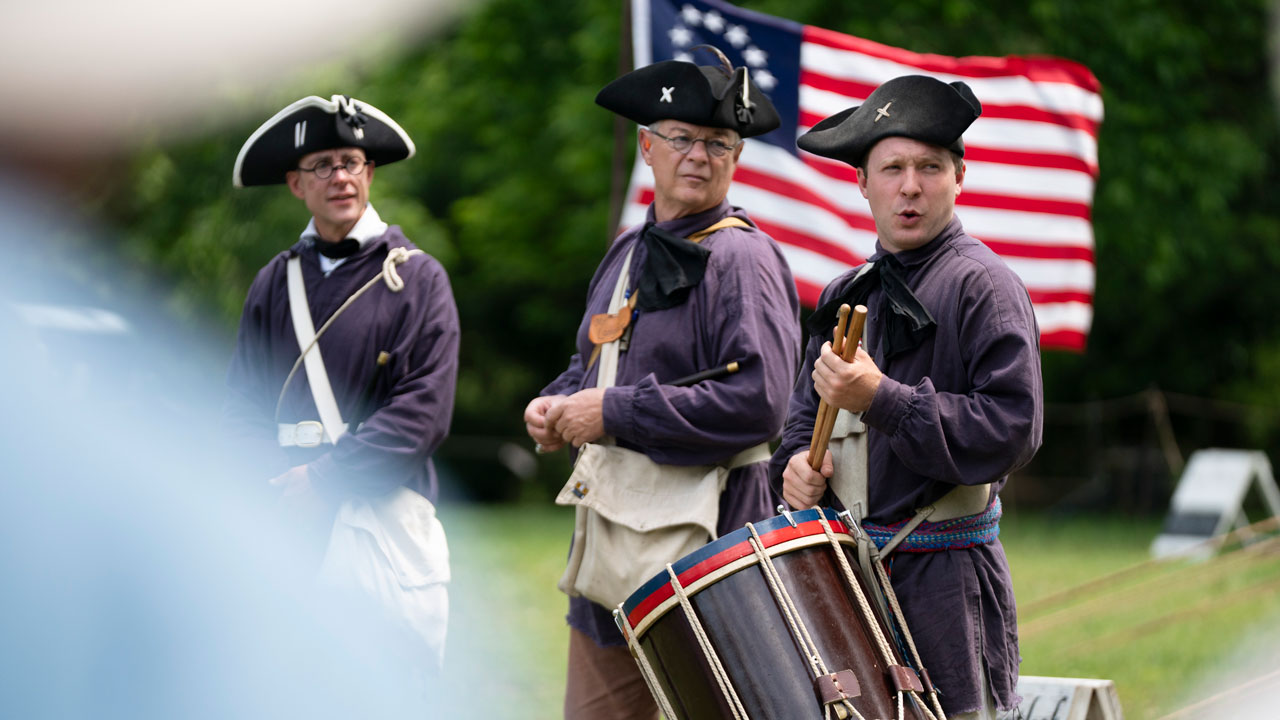
On Oct. 19, 1765, a crowd gathered at the corner of Broad and Church streets in Charleston, South Carolina, and built a gallows.
Freedom Is Back
In Style
Premium domains for sale
An effigy representing South Carolina’s stamp distributor was soon hanging from it beneath a sign that read, “Liberty and no Stamp Act.”
The Stamp Act had been passed by Parliament only months earlier. Now Charleston was showing Britain what resistance looked like. The crowd eventually took the effigy down, carried it through the streets in a procession, and burned it.
And that was only the beginning.
Over the next several days, riled up bands of Charlestonians searched buildings and homes suspected of concealing stamped paper.
Around midnight in late October, about 80 masked and blackened-faced men descended on Henry Laurens’ house on East Bay Street, chanting, “Liberty, Liberty & Stamped Paper,” and forced their way inside.
Laurens, himself an opponent of the Stamp Act, pleaded with them to leave because his wife, Eleanor, was sick and pregnant. They assured him that they “loved and respected” him—but they had come to search the house anyway.
Meanwhile, the pressure on South Carolina’s actual stamp officials was working. George Saxby and Caleb Lloyd, the colony’s stamp inspector and distributor, were pressured at Motte’s Wharf on Oct. 28 to publicly affirm that they would not execute the Stamp Act.
They renounced their commissions, and under a flag bearing the word “Liberty,” a crowd escorted them with bells, drums, music, cannon fire, and cheers to Dillon’s Tavern.
Parliament had passed a law; Charlestonians had decided it would not be enforced.
South Carolina had won its first great confrontation with Parliament without firing a shot at a British soldier.
And at the center of the resistance was a 41-year-old Charleston merchant named Christopher Gadsden.
The surviving portrait by Jeremiah Theus shows a prosperous Charleston gentleman in a blue coat and white satin waistcoat, standing with a cane in one hand and his tricorne tucked beneath the other arm. With a receding hairline, a solid frame, and a relaxed smile, Gadsden hardly looks like the kind of man who would spend the next decade making trouble for the British Empire.
Looks can be deceiving.
Gadsden was blunt, stubborn, hot-tempered, and remarkably certain of his own convictions. One observer compared him to “Harry Hotspur,” Shakespeare’s fiery warrior. Another described him as “plain, blunt, hot” but sensible.
He could irritate cautious men and attract bold ones. He had the confidence of a man who had made up his mind—and the nerve to live with the consequences.
Gadsden wasn’t a man who suddenly became radical in 1775. By then, he had been at it for ten years.
The Stamp Act crisis had convinced Gadsden that Parliament’s claims of authority over the colonies posed a much larger threat than a tax on paper. The question was no longer simply how much Americans would pay; it was whether Parliament had the right to impose its will on people who had no representatives in Parliament.
Gadsden’s answer was increasingly clear: It did not.
By early 1766, the resistance had essentially succeeded. With no stamped paper available, South Carolina’s courts closed and the customs office suspended operations. Parliament repealed the Stamp Act in March.
But Gadsden did not regard the victory as the end of the struggle. He regarded it as proof that resistance worked.
That summer, about 25 Charleston tradesmen gathered under the Liberty Tree to hear Gadsden warn that Britain would try again to restrict American liberties.
The enormous live oak stood in Alexander Mazyck’s pasture near what are now Alexander and Charlotte streets. Those tradesmen became an important core of Charleston’s Sons of Liberty over the next decade, and their Liberty Tree became a symbol of the resistance.
South Carolina had learned that popular resistance could force royal authority to retreat.
It had also learned that resistance could spread.
South Carolina had its own reasons to distrust royal authority. The colony had a long history of conflict with royal governors over taxation, appropriations, appointments, and political affairs.
Charleston, enriched by the enormous profits of rice and indigo, was one of the wealthiest cities in British North America, and its powerful political class was accustomed to exercising considerable control through the Commons House of Assembly.
After the French and Indian War, South Carolina’s political leaders increasingly saw Parliament’s new assertions of authority as an intrusion on that independence.
But beneath their prosperity was a profound contradiction.
Leading proponents of liberty, including Gadsden, were slaveholders who profited from the slave economy. By 1774, more than 90 enslaved people worked Gadsden’s two rice plantations, and enslaved laborers helped build his enormous Charleston wharf. Yet he was also a close friend and supporter of John Adams, an early critic of slavery who called it “an evil of colossal magnitude” and “a foul contagion in the human character.”
The contradiction was real, and it would follow the Revolution from Charleston to Philadelphia and beyond.
Then Parliament tried again. This time, it was tea.
When a ship carrying tea arrived in Charleston, local resistance prevented the tea from entering the market. A mass meeting on Dec. 3 created a committee to enforce a boycott. Resistance was spreading beyond the Commons House and the merchant class and into everyday life.
Parliament could impose a tax, but it couldn’t make a Charleston woman buy British cloth. Parliament could impose its laws, but it couldn’t make a South Carolinian obey them.
The deeper issue was consent. Americans increasingly believed that legitimate government required the consent of the governed.
Resistance was no longer simply something politicians debated. It was becoming something ordinary people practiced.
South Carolina had spent nearly a decade learning how to resist. Now it was learning how to govern without Britain.
When news of the Coercive Acts arrived, South Carolina was a decade into resistance. Now it was learning how to govern without Britain.
In July 1774, delegates from throughout the colony met in Charleston, elected delegates to the First Continental Congress, and created a committee of 99 that quickly became the colony’s de facto government.
South Carolina did not merely protest royal authority; it began replacing it.
And Christopher Gadsden was still there.
He had watched the colony discover that Parliament could be defied, and he had helped organize the men who defied it. He had spent a decade helping South Carolina move from protest to resistance, and from resistance toward something far more consequential.
The Revolution was still months away.
But South Carolina was already becoming revolutionary.
And by the end of 1775, that defiance would acquire a symbol:
A yellow field.
A coiled rattlesnake.
And a warning.
This article is part of a series on the American Revolution in South Carolina, North Carolina, and Georgia.
We publish a variety of perspectives. Nothing written here is to be construed as representing the views of the Daily Signal.
More from this network:
Domains for Sale · GOTPeople.org · TheDSAPlatform · The Truth About Socialism
What's Your Reaction?
 Like
0
Like
0
 Dislike
0
Dislike
0
 Love
0
Love
0
 Funny
0
Funny
0
 Wow
0
Wow
0
 Sad
0
Sad
0
 Angry
0
Angry
0

I am just an average American. My teen years were in the late 70s and I participated in all that that decade offered. Started working young, too young. Then I joined the Army before I graduated High School. I spent 25 years in, mostly in Infantry units. Since then I've worked in information technology positions all at small family owned companies. At this rate I'll never be a tech millionaire. When I was young I rode horses as much as I could. I do believe I should have been a cowboy. I'm getting in the saddle again by taking riding lessons and see where it goes.
Premium domains for sale






















Comments (0)