

When The Klan Came For The Jews, The South Turned On The Klan
Premium domains for sale
Freedom Is Back In Style
The full story of why Jewish Americans felt so deeply connected to the Civil Rights Movement, why they became Democrats in the first place, and why the Left has turned on the Jews, order Batya’s book “The Jews and the Left,” from which this is an excerpt. It comes out on June 2.
Freedom Is Back
In Style
Premium domains for sale
Last week, during NYU’s commencement, a flag was seen flying above one of the university’s buildings. It bore two swastikas on either side of a Jewish star. It was shocking to see, not least because of what it was proof of: The swastika, that symbol of genocidal Right-wing intent against Jews, has been appropriated by the Left, which uses it to call Jews Nazis and to accuse Jews of the Nazi crime of genocide.
How did this happen? How did the Left appropriate the Right’s antisemitic hatred? So shocking is this reversal that if you stop most American Jews on the street in America and ask them where the threat of violence to Jews comes from, most will still tell you that it comes from the Right. Our history of belonging to the Left and fearing the Right is so deeply ingrained that many are simply not able to assimilate this information — that now it’s Republicans that denounce antisemitism and Democrats who cover for it, enable it, promote it.
But what if our historical understanding was wrong too?
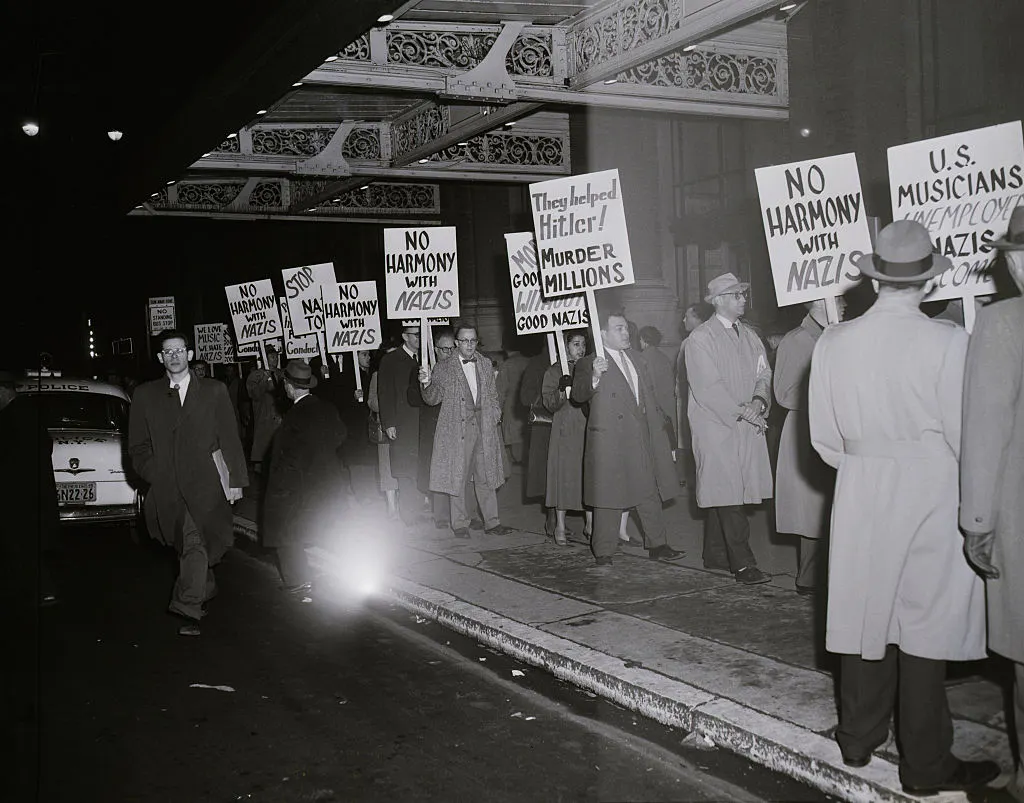
That’s what I learned while researching my new book, The Jews and the Left. Even the worst episodes of antisemitism in America were often mitigated by an outpouring of love for Jews from their Christian neighbors. In the weeks before Leo Frank was lynched, hundreds of thousands of letters poured in from across the nation begging the judge for leniency and deploring the conditions of his trial. Henry Ford had to apologize for his antisemitic publication, The Dearborn Independent, when he wanted to run for office, because it was well known that you couldn’t go full antisemite and expect to succeed politically in America. (When Ford’s candidacy failed, he went right back to publishing it.) And when the Klan came for the Jews, the South turned on the Klan.
This is one of the lost pieces of Jewish American history that most surprised me when I first read about it while researching my book. On at least three occasions, the firebombing of synagogues across the South so shocked and angered white Southerners that it resulted in a more general shift in favor of the Civil Rights Movement.
Rabbi Perry Nussbaum of Jackson, Mississippi, was active in the Civil Rights Movement. He would visit the Freedom Riders in prison (he was astonished to find the prisons filled with Jews), and he almost died for his activism, twice: Once when the Klan firebombed his synagogue and later when they firebombed his home in the late 1960s.
But the horrific violence against one of their Jewish neighbors, and a Jewish member of the clergy at that, had an interesting impact on white Mississippians: It backfired on the Klan, bringing out deeply protective emotions from the white community — so much so that it affected how they viewed the Civil Rights Movement in the name of which Rabbi Nussbaum was attacked.
After the synagogue bombing, a local paper printed a column attacking the “coward who had terrorized blacks and finally resorted to violence against Jews.” “This is Mississippi and we’ve had enough,” read the Clarion-Ledger. “We’ll get you and all the rest of your gutless friends.”
Mississippi’s Christian clergy, who hadn’t had much to say while Blacks were terrorized, came out to express outrage — even guilt. “We are guilty of having allowed a climate to be created about us which lends itself to the propagation of prejudice,” read an editorial in the Methodist Advocate. “We have been silent in the face of obvious injustice and murderers walk the streets of our state because no jury had the courage to convict them. We have been afraid to get involved in anything that might be the least bit disturbing to the established power structure. Just as long as good men of all faiths remain silent and inert, so long will this violence continue. Just as long as one house of worship is unsafe, so long will all houses of worship be the next target.”
Four days after Rabbi Nussbaum’s home was bombed, the Jackson Clergy Alliance held a bi-racial “walk of penance.” It took courage: Out of fear of violent opposition, they ensured they had armed police escorts to accompany their march. But in the end, they didn’t need them. Jackson had closed ranks around its Jews.
And then, an amazing thing happened: On October 20, exactly one month after the synagogue bombing, a Mississippi jury found members of the Klan guilty for the first time — convicting them for crimes against two Jewish activists, Andy Goodman and Mickey Schwerner, and black activist James Cheney. The three had been lynched by the Klan for registering black Americans to vote in 1964.
It was evidence of how deeply impacted the community had been by the violence against their Jewish neighbors.
But this was not the only time this happened. In 1958, the Atlanta synagogue was firebombed by the Klan, shocking the entire city, which always thought of itself as superior to the terrorism of white supremacists. The antisemitic Nazis who bombed the synagogue miscalculated. “They misread the attitudes of the community in which they lived,” Rabbi Jacob M. Rothschild of Atlanta later explained in an interview that was part of a collection of interviews with Southern rabbis that was later compiled into the book, To Stand Aside or Stand Alone: Southern Reform Rabbis in the Civil Rights Movement:
Because the bombing of the temple created a reaction, a response of such horror, of such outrage, that it backfired, and as a result of the bombing of the temple, it now, for perhaps the first time in Atlanta, became possible to speak out. I’m firmly convinced that it was this episode that prevented Atlanta from becoming the same kind of closed society that Birmingham became or Mississippi became … the mayor, the very morning of the bombing, said over TV, “This is the harvest reaped by our politicians and elected officials who have encouraged this kind of action.” Now once you say this then you make it possible for anyone to speak. So the bombing really was quite valuable in the ongoing story of Atlanta and the whole civil rights movement.
It’s one of the most remarkable untold aspects of American history: The horror that Southern Christians felt at acts of antisemitism done in their name opened the doorway for the integration of black Americans.
So beloved were Jews in their communities that when the Klan came for the Jews, the South turned on the Klan.
Rabbi William B. Silverman of Nashville was another example. For preaching the value of equality before the law from the pulpit, he was beaten up by five men in a Methodist church in April of 1957 after giving a speech. He got calls to the house threatening his children: “We are not going to kill them; we are going to mutilate them. To show people what happens to the kids of a n****-loving rabbi.” But Rabbi Silverman refused to cave. Instead of keeping his kids home from school, he bought a gun. He went on television with his .38 and pulled it out and said, “I couldn’t kill a bird, but I’m going to take my boys to school. I will shoot first and ask questions later.”
His neighbors started calling him the Pistol-Packing Rabbi, and he became something of a cause célèbre in the community. His white Christian neighbors rallied to his defense against those who would dare threaten a rabbi. When White Supremacists threatened to firebomb the Jewish community center, the board of trustees asked the rabbi to call off services. Still, he refused, and amid a heavy police presence, the community — Jewish and not — filled the pews.
The Klan painted swastikas all over the synagogue, his car, and his house. And in 1958, they made good on their threats and firebombed the Jewish community center. It proved a pivotal moment — not for the Jewish community but for their Christian neighbors.
“What I think the bombing did was that it compelled people to choose sides,” Rabbi Silverman later said. “Before it was just a matter of, ‘Oh, let’s be quiet and let’s not have any outsiders tell us what to do. We can handle our own problems.’ And, ‘Let’s scuttle into caves of silence and be quiet and everything will pass over and be forgotten.’ But they soon saw that it wasn’t going to pass over and the people had to take action, and I was surprised by the number of people that I never felt would take action who did.”
There was indignation and rage, and it went beyond the Jewish community; the integration of the schools went much more smoothly after the Jewish Community Center was bombed.
Contrary to the narrative we’re always told, Jews were not seen as an oppressed minority in America, and what antisemitism existed was by and large relegated to the elites. One sociologist studying the U.S. between 1939 and 1962 found that Southern whites were the least antisemitic of all Americans. Jews weren’t seen as a minority ethnic group but rather one-third of a community of “three great faiths,” and their clergy were afforded a deep respect. From 1945 to 1970, there were at least 27 Jewish mayors across the South, 38 Jewish state legislators, and 66 Jewish city councilmen.
The Southern rabbis invoked the Bible to insist on the compact the United States had made with its citizens in the name of God, and in so doing, they were reprising the role Jews had played for the Founding Fathers — as founding partners in the creation of this great nation.
Fast forward to today: Can you even imagine a group of Democrats organizing a “March of Penance” to stand by Jews and apologize for the way their cowardice enabled the violence, harassment, and murder of Jews last year?
***
This is republished by permission from the author from her newsletter.
Batya Ungar-Sargon is a NewsNation weekend anchor and the author of the book “The Jews and the Left” from Harper Collins. Subscribe to her daily newsletter at batya-us.com.
More from this network:
Domains for Sale · GOTPeople.org · TheDSAPlatform · The Truth About Socialism
What's Your Reaction?
 Like
0
Like
0
 Dislike
0
Dislike
0
 Love
0
Love
0
 Funny
0
Funny
0
 Wow
0
Wow
0
 Sad
0
Sad
0
 Angry
0
Angry
0

I am just an average American. My teen years were in the late 70s and I participated in all that that decade offered. Started working young, too young. Then I joined the Army before I graduated High School. I spent 25 years in, mostly in Infantry units. Since then I've worked in information technology positions all at small family owned companies. At this rate I'll never be a tech millionaire. When I was young I rode horses as much as I could. I do believe I should have been a cowboy. I'm getting in the saddle again by taking riding lessons and see where it goes.
Premium domains for sale














Comments (0)