

Why Lower Gas Costs Take Time to Reach the Pump
Premium domains for sale
Freedom Is Back In Style
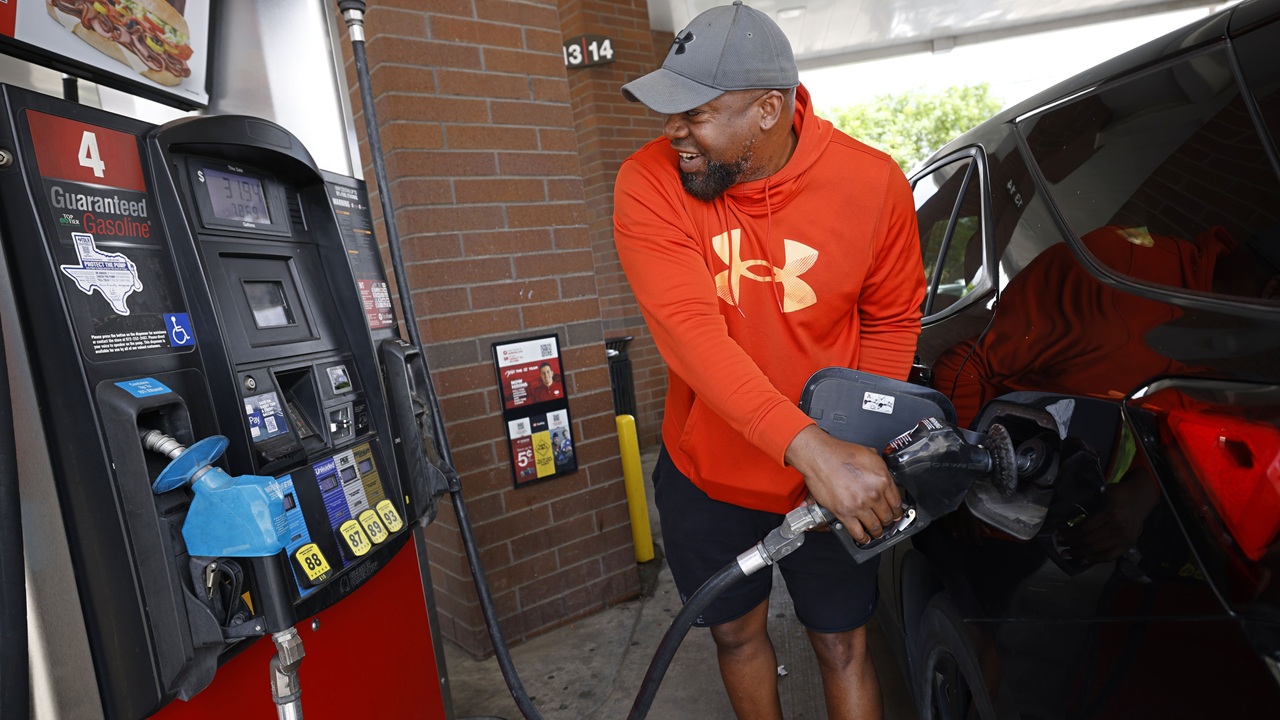
When crude oil prices drop sharply, why do drivers have to wait for relief at the pump? The answer follows a convoluted and policy-constrained path from drill rigs to local gas stations.
Freedom Is Back
In Style
Premium domains for sale
The prices we encounter at the pump result from this complex chain, which begins with global crude and passes through refining, wholesale, independent retail operations, shipping, pipelines, and taxes. When crude oil costs decline, those savings do eventually reach drivers, but the timeline is measured in weeks, since the costs take time to work through the system.
Recent weeks have seen fluctuating prices after a Memorandum of Understanding was signed with Iran, bringing a brief halt to hostilities in the Middle East and prompting shipping traffic to resume moving through the Strait of Hormuz. As military action in the Middle East began again, prices have climbed back to the mid- to high-$70-per-barrel-range.
The short-lived MOU and limited uptick in traffic did help lower world oil prices significantly, bringing them from their near-$120-per-barrel high in April down to a July 6 WTI price of $68 and Brent price of $72 per barrel. As crude prices dropped, the discussion about gasoline prices picked up.
While prices did come down—AAA reported a national average price of $3.80 per gallon on July 6, down from an average price of $4.19 a month ago—they were still much higher than the $3.15 per gallon prices we paid at this time last year.
If global crude prices dropped by roughly 40% between April and early July, why did gasoline prices only drop by about 10%? What causes the delay?
First, crude oil only accounts for a portion of the total cost of gasoline. Energy Information Administration reporting indicates that crude oil accounts for 57% of the price of regular gasoline; refining, 21%; distribution, 8%; and taxes, 14%. Even though crude prices drop, there’s more to the price we pay at the pump than just what it costs to buy a barrel of crude on the world market.
Heritage economist E.J. Antoni covered this issue in a recent Fox News interview, noting that crude oil loaded onto tankers or that entered pipelines weeks ago continues to arrive at refineries for processing. What can appear as prices that are “slow to fall” is really the time needed for lower-cost products to move through inventories, contracts, and diverse ownership structures.
Artificial attempts to override this movement distort the responses that bring more supply and lower costs to markets. The mechanisms that encourage additional supply during shortages also provide price relief when costs decline, provided the market is allowed to respond efficiently.
A second issue is that we have hindered our ability to respond efficiently to changes in global crude markets by delaying pipeline construction and allowing the nation’s refining capacity to stagnate over the past several decades. Complex and restrictive regulations, the growing risk of litigation, and ongoing policy uncertainty stop development at every turn, leaving a system that operates at high utilization rates and responds slowly to changing market conditions.
In energy markets, the presence of efficient infrastructure options (pipelines versus more expensive alternatives, such as trucking or rail) directly affects the speed and cost of responding to changing market conditions. Lack of redundancy leaves costlier options as the only alternatives and lengthens the lag time for cost changes to appear at the pump.
Mandates such as the Renewable Fuel Standard and the Endangerment Finding have aggravated this challenge by forcing refineries to close and pushing others to transition to expensive, inefficient biofuel production. These policies have also limited the ability to build the new energy infrastructure needed to move fuels around more efficiently.
Legislation, such as the Jones Act, further complicates matters by restricting the movement of energy. Recent Jones Act waivers highlighted this problem, as allowing fuels to move on non-U.S.-flagged ships increased the amount of fuel that could be delivered. Reforming or repealing the Jones Act would encourage a more modern fleet serving American ports and allow domestic fuels to go where they are most needed at the best price.
The third issue is even reported by news outlets like CNN, which admits that “the overwhelming majority of gas stations” are independently owned small businesses that are not directly controlled by major oil companies. Like refiners, gas station owners purchase gasoline at the prevailing wholesale price and must increase their selling price to cover overhead and other costs, including credit card processing, fuel delivery fees, and labor.
While recent changes in energy policy have begun to reverse negative energy trends by refocusing the nation on energy dominance, overall refining capacity remains almost 1 million barrels per day below 2020 levels. Much-needed flexibility can come with new investments in energy infrastructure. But even if we begin building today, those investments will take years and require a consistent pro-energy regulatory focus to be completed.
Even as we look forward to new construction—such as the planned refinery in Brownsville, Texas—that promises to improve resiliency and competition, high utilization rates and maintenance schedules at the nation’s refineries will continue to limit the industry’s flexibility. That inflexibility will ensure gasoline prices continue to respond slowly to falling crude prices.
Solutions are straightforward. Lower prices are best achieved by expanding supply and reducing regulatory distortions, rather than attempting top-down interventions that interfere with normal price-setting mechanisms.
American drivers would be best served by continued moves to streamline permitting, remove regulatory impediments, and expand production and pipeline construction. Doing this would strengthen the nation’s energy supply and further reduce prices by encouraging competition.
Recent discussions have focused on the speed of price reductions at the pump. Understanding the processes that make up gas prices helps clarify why lags are normal—and why reducing top-down mandates, expanding domestic drilling and refining, and developing essential infrastructure could speed up price reductions.
Affordable, reliable energy depends on resources and the policy choices that allow markets and infrastructure to function efficiently.
More from this network:
Domains for Sale · GOTPeople.org · TheDSAPlatform · The Truth About Socialism
What's Your Reaction?
 Like
0
Like
0
 Dislike
0
Dislike
0
 Love
0
Love
0
 Funny
0
Funny
0
 Wow
0
Wow
0
 Sad
0
Sad
0
 Angry
0
Angry
0

I am just an average American. My teen years were in the late 70s and I participated in all that that decade offered. Started working young, too young. Then I joined the Army before I graduated High School. I spent 25 years in, mostly in Infantry units. Since then I've worked in information technology positions all at small family owned companies. At this rate I'll never be a tech millionaire. When I was young I rode horses as much as I could. I do believe I should have been a cowboy. I'm getting in the saddle again by taking riding lessons and see where it goes.
Premium domains for sale
























Comments (0)