

After Rush Limbaugh, conservatives stopped listening together
Premium domains for sale
Freedom Is Back In Style
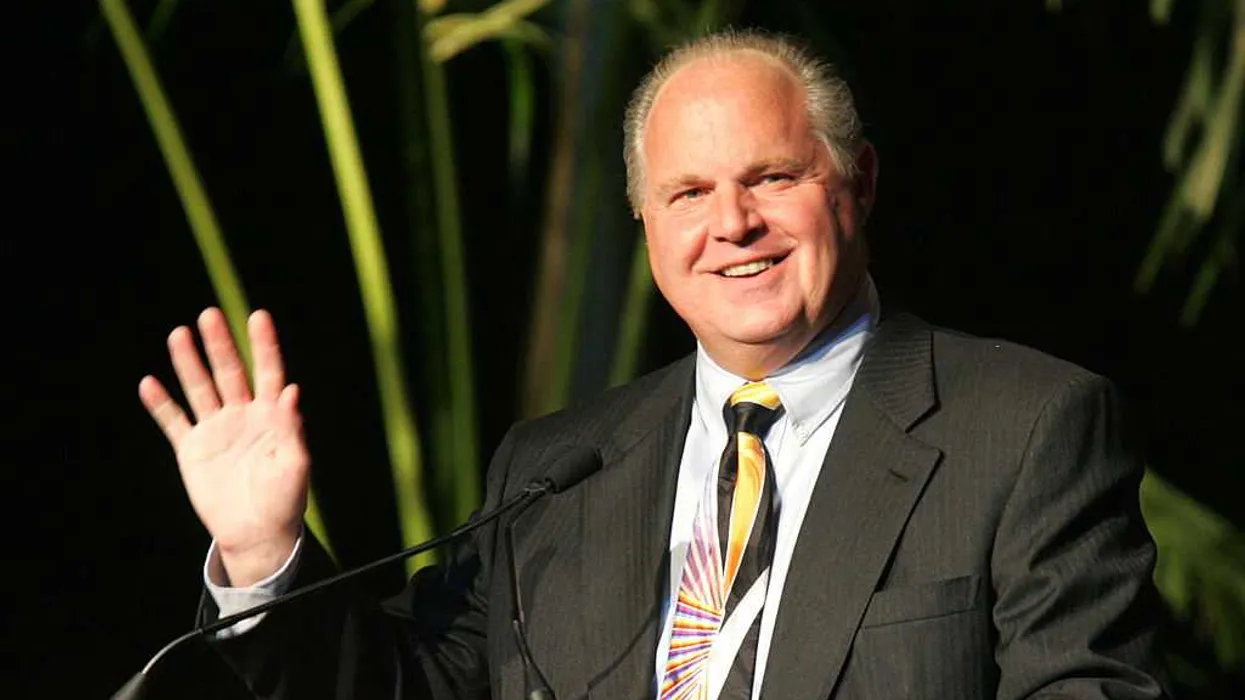
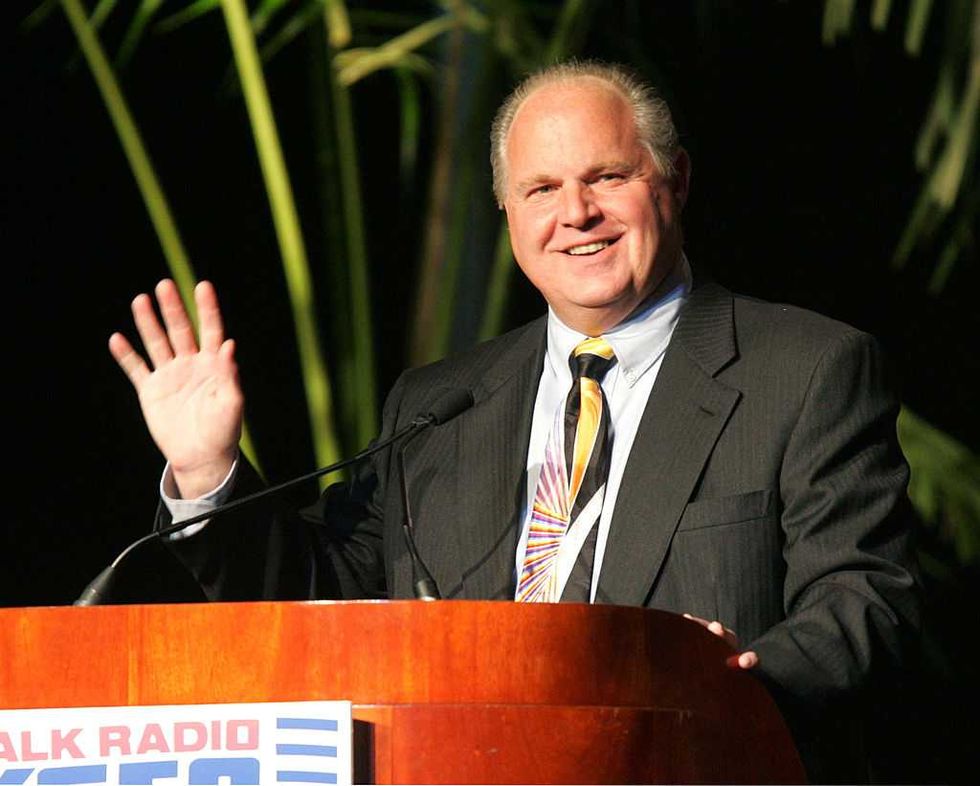
Last month marked five years since Rush Limbaugh’s death. Tributes still appear on schedule. Clips circulate. Familiar phrases — “talent on loan from God,” “doctor of democracy,” “half my brain tied behind my back” — resurface. Every so often his opening theme slides into a feed, and people pause longer than they expect.
Freedom Is Back
In Style
Premium domains for sale
Freedom Is Back
In Style
Premium domains for sale
That reaction says something.
Rush can’t be replaced because the habits that made him possible have largely disappeared.
When life felt unsteady, Rush stayed fixed.
For millions of Americans, his voice arrived at the same hour each afternoon as institutions shifted, headlines fractured, and the culture argued with itself. Agreement was never universal. But steadiness was.
The music still plays. Rush does not.
Five years later, the absence still feels different — in a way modern media can’t quite explain.
When talk show legend Johnny Carson retired in 1992, late-night TV didn’t disappear. It divided. Some viewers followed Jay Leno, who succeeded Carson at NBC. Others moved to CBS with David Letterman. Then the format split again, louder and more elaborate with each successor.
Late-night evolved. It never recovered the King of Late Night’s reach.
By today’s standards, Carson looks almost minimalist: a desk, a band, conversation allowed to breathe. Parents ended evenings there after the kids went to bed. The show closed the day not through spectacle but familiarity.
Rush occupied a different hour but understood his medium just as completely.
As broadcasting technology advanced and competitors added panels, simulcasts, and digital bells and whistles, Rush’s formula barely changed. Behind the golden EIB microphone sat one prepared voice, a “stack of stuff,” and three hours shaped not by focus groups but conviction.
Some days funny. Some days angry. Always patriotic. Sometimes wounded or reflective — even nostalgic.
Listeners heard it when Rush entered rehab in 2003. They heard it again when he announced his cancer diagnosis in 2020. They followed professional triumphs and personal failures, marriages that ended, and later the unexpected joy when he met Kathryn Rogers and married her in 2010. They heard the frustration and adaptation that followed the loss of his hearing.
The humanity never weakened the authority. It reinforced it.
Rush spoke from belief, and listeners found him.
He often said he never set out to build a network of hundreds of stations or reach millions of listeners. His goal was simpler: Be the best broadcaster he could be. Not an alternative. Not a counterpoint. The best at articulating what made America exceptional — and at exposing ideas that threatened it.
The audience followed.
For many people, the show unfolded alongside responsibilities that never paused for politics. For years — through hospital visits, surgical waiting rooms, doctor’s appointments, and pharmacy runs with my wife — Rush kept me company more hours than almost anyone outside my family.
He didn’t interrupt my life. He traveled alongside it.
That relationship is difficult to recreate because modern media now works in reverse. Voices don’t wait to be found; they chase attention. Commentary arrives instantly, tailored to preference and consumed in fragments measured in seconds.
Everyone now broadcasts. No one gathers.
Earlier media required commitment. If you missed Carson, you missed him. When “Seinfeld” was new, millions tuned in at the same hour because there wasn’t an alternative. The next morning’s conversations assumed a shared experience. Rush worked the same way. If you tuned away, the broadcast kept going.
Today almost nothing is truly missed. Everything can be replayed, clipped, streamed, or summarized. Convenience replaced anticipation. Access replaced commitment.
We gained availability and lost presence.
After Rush, commentary didn’t decline. It multiplied. Humor migrated here, outrage there, analysis somewhere else — across podcasts, streaming platforms, and social media personalities.
But coherence thinned.
Audiences scattered into niches large enough to sustain influence but too fragmented to create shared trust. Rush succeeded during one of the last eras when millions practiced the discipline of listening together long enough for familiarity to become confidence.
RELATED: We don’t have to live this way
 Lindsey Nicholson/UCG/Universal Images Group via Getty Images
For conservatives especially, that steadiness mattered. As cultural institutions treated them with ridicule or dismissal, Rush spoke directly to listeners who felt talked about rather than spoken to.
He didn’t echo what people wanted to hear. He anchored them in what needed to be said. He didn’t flatter them. He reasoned with them. He laughed with them. Sometimes he challenged them.
Recognition replaced alienation.
Five years later, the lingering absence shows what was actually lost.
We didn’t lose commentary, Lord knows. We lost a shared reference point.
Rush can’t be replaced because the habits that made him possible have largely disappeared. Shared listening gave way to individualized feeds. Discipline yielded to distraction. Voices rise quickly now, but few endure long enough to be tested.
The spinning never stopped. We just lost the fixed point.
The question five years later isn’t who replaces Rush Limbaugh. He’s irreplaceable. The question is whether a culture trained to scroll still possesses the discipline to listen long enough for trust to form again.
Because Rush was never simply something Americans heard. He was something they chose.
What's Your Reaction?
 Like
0
Like
0
 Dislike
0
Dislike
0
 Love
0
Love
0
 Funny
0
Funny
0
 Wow
0
Wow
0
 Sad
0
Sad
0
 Angry
0
Angry
0

I am just an average American. My teen years were in the late 70s and I participated in all that that decade offered. Started working young, too young. Then I joined the Army before I graduated High School. I spent 25 years in, mostly in Infantry units. Since then I've worked in information technology positions all at small family owned companies. At this rate I'll never be a tech millionaire. When I was young I rode horses as much as I could. I do believe I should have been a cowboy. I'm getting in the saddle again by taking riding lessons and see where it goes.
Premium domains for sale

















Comments (0)